There is a profound, rustic elegance in a true Greek salad recipe that often gets lost in translation across international borders. Forget the wilted romaine lettuce and the heavy, cream-based dressings found in supermarket deli containers. A real Horiatiki, or “Village Salad,” is a masterclass in minimalism, celebrating the peak of summer produce through texture, scent, and vibrant color.
This specific Greek salad recipe is designed to recreate the exact sensory experience of a sun-drenched taverna on the Cyclades. We are focusing on large, irregular chunks of deep-red tomatoes, thick cucumber moons, and that iconic, massive slab of feta cheese that sits like a crown atop the vegetables. Every ingredient is chosen for its ability to shimmer under a generous drizzle of viscous, golden extra virgin olive oil.
Whether you are looking for a refreshing side or a light main course, mastering this dish requires more than just chopping; it requires an understanding of how these specific elements interact. From the matte texture of the dried oregano to the wet, glistening shimmer of the tomato seeds, we are building a visual and culinary masterpiece from the ground up.
Why This Authentic Horiatiki Stands Above the Rest
- No Lettuce Foundation: Traditional Greek salad recipe standards strictly forbid the use of leafy greens, allowing the juice of the tomatoes to form a natural “sauce” with the olive oil.
- The Feta Slab: By serving a thick, rectangular block of feta rather than crumbles, you preserve the creamy integrity of the cheese and allow guests to break off their own perfect bites.
- Textural Contrast: This recipe balances the crunch of partially peeled cucumbers with the translucent, sharp bite of red onion rings and the meaty richness of whole Kalamata olives.
- Sun-Drenched Flavor: Using dried oregano instead of fresh provides a concentrated, earthy aroma that characterizes the authentic Mediterranean flavor profile.
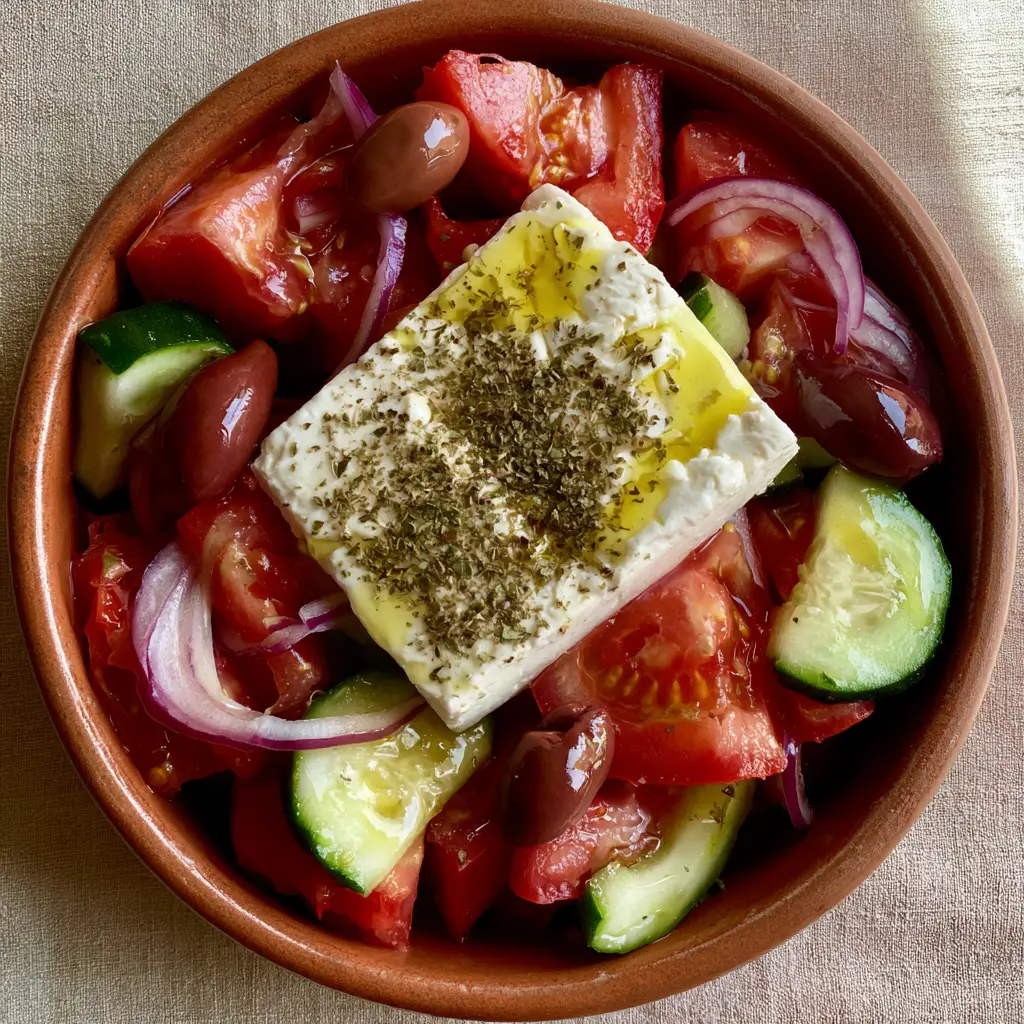
The Essential Components for a Visual Masterpiece
To achieve the look of a professional macro photo, you must be discerning with your shopping list. Each item plays a specific role in the structural and visual integrity of the salad.
Vine-Ripened Deep Red Tomatoes
You need approximately 1.5 lbs (680g) of the juiciest, vine-ripened tomatoes you can find. These are the soul of the Greek salad recipe; they must be deep red to ensure the seeds are wet and shimmering when sliced into irregular, chunky wedges.
Crisp Greenhouse or Persian Cucumbers
Use 2 medium (300g) cucumbers with firm, taut skins. We will partially peel these to create a striped effect, which provides a beautiful visual “moon” shape and a specific snap when bitten into.
Translucent Red Onion Rings
One small (100g) red onion is sufficient. The key is to slice it into paper-thin, translucent rings that can be layered over the heavier vegetables to add height and a delicate, sharp crunch.
Whole, Glossy Kalamata Olives
Include about 1/2 cup (75g) of whole Kalamata olives. They must be whole to maintain their natural sheen and meaty texture, providing a salty, umami-rich contrast to the sweet tomatoes.
The Feta Cheese Centerpiece
Seek out a high-quality, 7 oz (200g) block of Greek feta stored in brine. It must be a solid rectangular slab to sit atop the salad, offering a matte, creamy white surface that contrasts with the glistening oil.
Foundational Seasonings and Oils
You will need 1/4 cup (60ml) of the highest quality Greek extra virgin olive oil and 1 tsp (2g) of dried oregano. Don’t forget a pinch of sea salt (5g) to draw the moisture out of the tomatoes, creating the signature “salata” juice at the bottom of the bowl.
Professional Tools for Mediterranean Preparation
While this is a rustic dish, using the right tools ensures the “handheld smartphone photo” aesthetic is achieved through precision. You will need a heavy terracotta bowl to provide that earthy, neutral base for the vibrant red and green ingredients.
A very sharp chef’s knife is non-negotiable for achieving those translucent onion rings and clean edges on the cucumber moons. A Y-peeler is ideal for the partial skin removal on the cucumbers, and a dedicated wooden salad spoon will help you toss the base vegetables without bruising the delicate tomato seeds.
Step-By-Step Instructions for the Ultimate Greek Salad Recipe
Phase 1: Preparing the Base Foundation
Start by washing your vine-ripened tomatoes and patting them dry. Instead of uniform slices, cut them into large, irregular chunks (roughly 1.5 inches or 4cm) to maximize the surface area for the olive oil to cling to. Place these in your terracotta bowl, ensuring the wet seeds are visible and shimmering.
Take your cucumbers and use a peeler to remove strips of skin lengthwise, leaving a “striped” appearance. Slice them into thick moons, about 1/2 inch (1.25cm) thick. Toss these into the bowl with the tomatoes. If you enjoy diverse vegetable textures, consider exploring other variations of cucumber salads for your weekly meal prep.
Phase 2: Layering for Height and Texture
Slice your red onion into the thinnest possible rings. Gently separate the rings with your fingers and scatter them over the tomato and cucumber base. This adds a “web-like” visual layer that catches the light perfectly.
Scatter the whole Kalamata olives across the salad. Ensure they are distributed so their glossy, dark purple skins provide a stark color contrast against the deep red tomatoes. This layering technique is a staple in many classic Greek food dishes to ensure every bite is balanced.
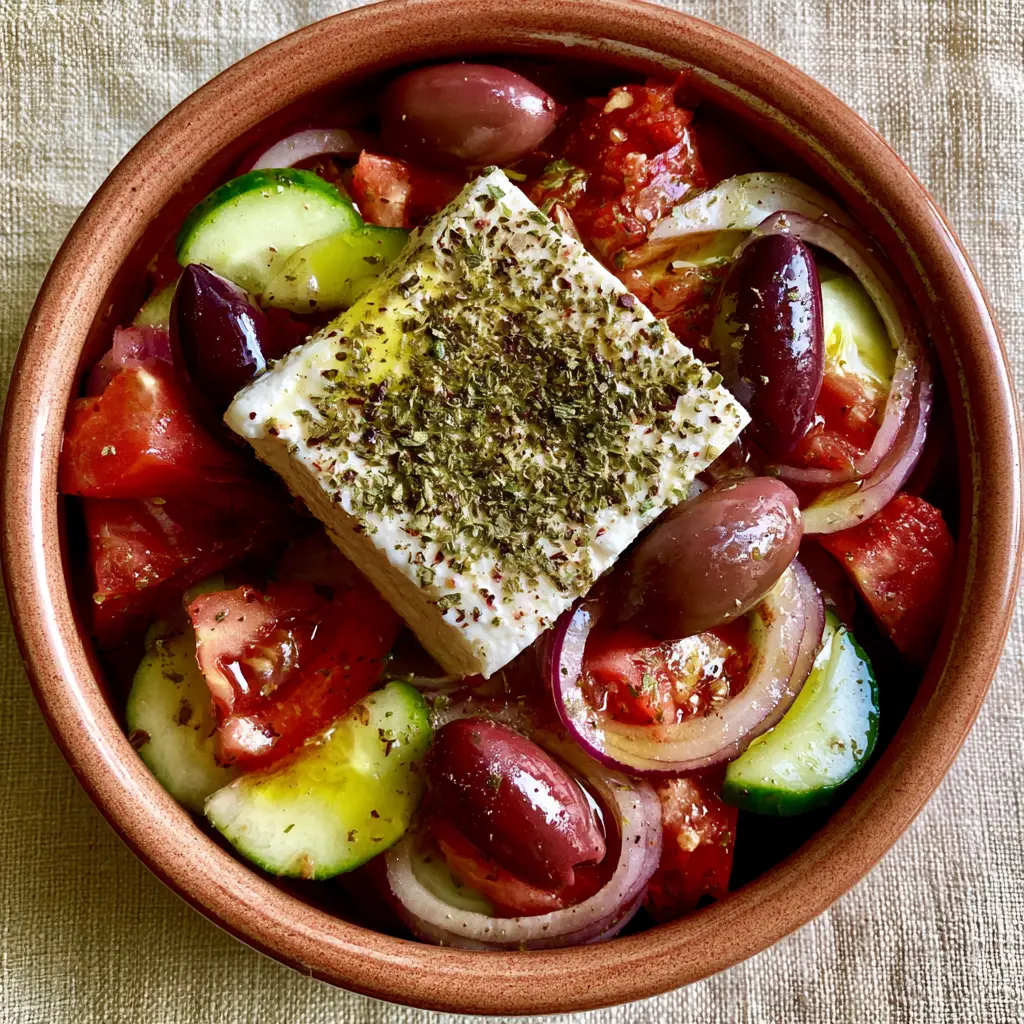
Phase 3: The Finishing Touches and Feta Placement
Place the entire massive block of feta cheese directly in the center of the bowl, resting on top of the vegetables. Do not crumble it. The weight of the block helps anchor the salad and creates a professional, rustic presentation.
Drizzle the golden, viscous extra virgin olive oil over the entire salad, making sure a generous amount hits the top of the feta and the tomato chunks. Finish by dusting the feta heavily with the dried oregano. The herbs should cling to the oil on the matte surface of the cheese, creating a high-texture visual effect.
Expert Tips for Success
- Room Temperature is Key: Never serve this salad ice-cold. Tomatoes lose their aromatic volatility in the fridge; let the salad sit for 10 minutes at room temperature before serving to allow the juices to mingle.
- The “Papara” Factor: The juice at the bottom of the bowl is highly prized. Ensure you have crusty bread nearby to soak up the mixture of tomato water, olive oil, and salt.
- Avoid Vinegar: While some variations use it, a true Horiatiki relies on the acidity of the tomatoes. If your tomatoes are underripe, a tiny splash of red wine vinegar can help, but it’s not traditional for this visual style.
- Salt the Tomatoes Early: If you have 5 extra minutes, salt the tomatoes in the bowl before adding the other ingredients to jumpstart the release of their juices.
Storage and Freshness Guidelines
This Greek salad recipe is best enjoyed immediately. Because there is no lettuce, it won’t “wilt” in the traditional sense, but the tomatoes will eventually lose their structural integrity and become mushy if left for more than 4 hours.
If you must store leftovers, keep them in an airtight container in the refrigerator for up to 24 hours. The cucumbers will lose their snap, but the flavors will intensify. Note that the olive oil may solidify slightly when cold; let it sit at room temperature for 15 minutes to return to its golden, viscous state before eating.
Pairing Your Horiatiki with Mediterranean Classics
This salad is the ultimate versatile side dish. For a complete Mediterranean feast, pair it with a protein-rich lemon and herb grilled chicken that mirrors the oregano notes in the salad. The acidity of the tomatoes also cuts through the richness of grilled meats beautifully.
If you are hosting a vegetarian gathering, serve the salad alongside crispy Greek zucchini fritters or a selection of hearty bean salads to add more plant-based protein to the table. The simplicity of the Horiatiki allows it to complement almost any savory dish without overwhelming the palate.
Frequently Asked Questions
While you can, Kalamata olives are preferred for their almond shape, glossy skin, and rich, fruity flavor which is essential for the authentic Greek profile.
No, a traditional Horiatiki (Village Salad) never contains lettuce or other leafy greens. It is built solely on tomatoes, cucumbers, onions, olives, and feta cheese.
There is no separate emulsified dressing. Authentic Horiatiki is dressed simply with high-quality extra virgin olive oil, dried oregano, and sea salt.
Partial peeling creates ‘stripes’ that offer a balance between the tough, nutrient-rich skin and the soft flesh, providing a better visual moon shape and texture.
Serving a whole slab of feta preserves its creamy texture and prevents it from dissolving into the tomato juices, allowing diners to control their own portions.
The Authentic Greek Village Salad (Horiatiki)
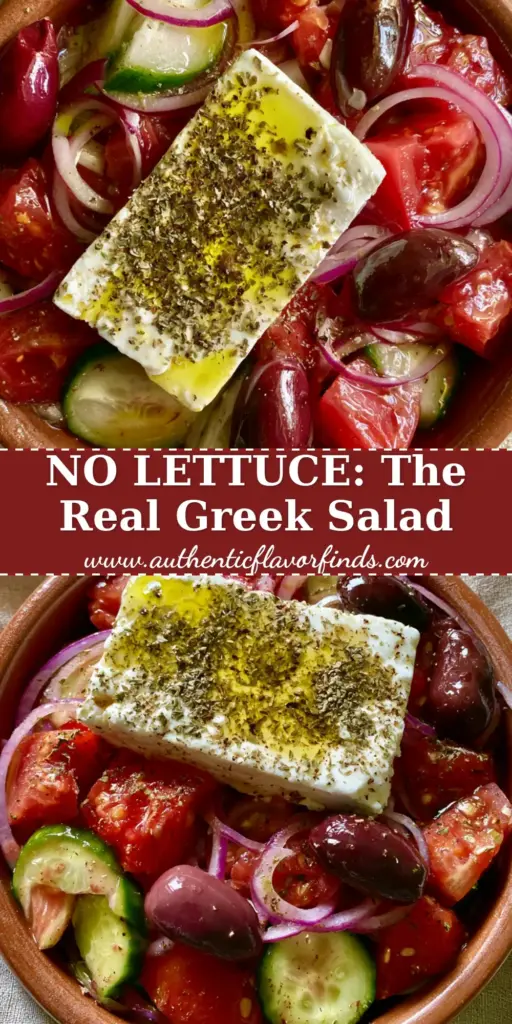
Greek Salad Recipe: The Authentic Horiatiki Village Salad
Ingredients
Equipment
Method
- Cut the deep-red vine-ripened tomatoes into large, irregular chunks and place in a rustic bowl. Ensure seeds are exposed for a shimmering look.
- Partially peel the cucumbers to create stripes, then slice into thick moons. Add to the bowl.
- Scatter thin red onion rings and whole glossy Kalamata olives over the tomato-cucumber base.
- Place the massive rectangular slab of feta cheese directly on top of the vegetables.
- Pour the golden olive oil over the feta and vegetables until glistening. Dust heavily with dried oregano.
Notes
Always use whole olives to prevent the salad from becoming too purple from the brine.
Join Our Flavor Community
Mastering the Greek salad recipe is just the beginning of your Mediterranean culinary journey. This dish proves that with high-quality ingredients and a few simple techniques, you can create a world-class meal in minutes. We would love to see your recreations in their rustic terracotta bowls!
Please leave a comment below and let us know how your Horiatiki turned out, or share this recipe with your fellow home cooks. For more daily inspiration and visual recipe guides, follow us on Pinterest and join our newsletter for exclusive tips.