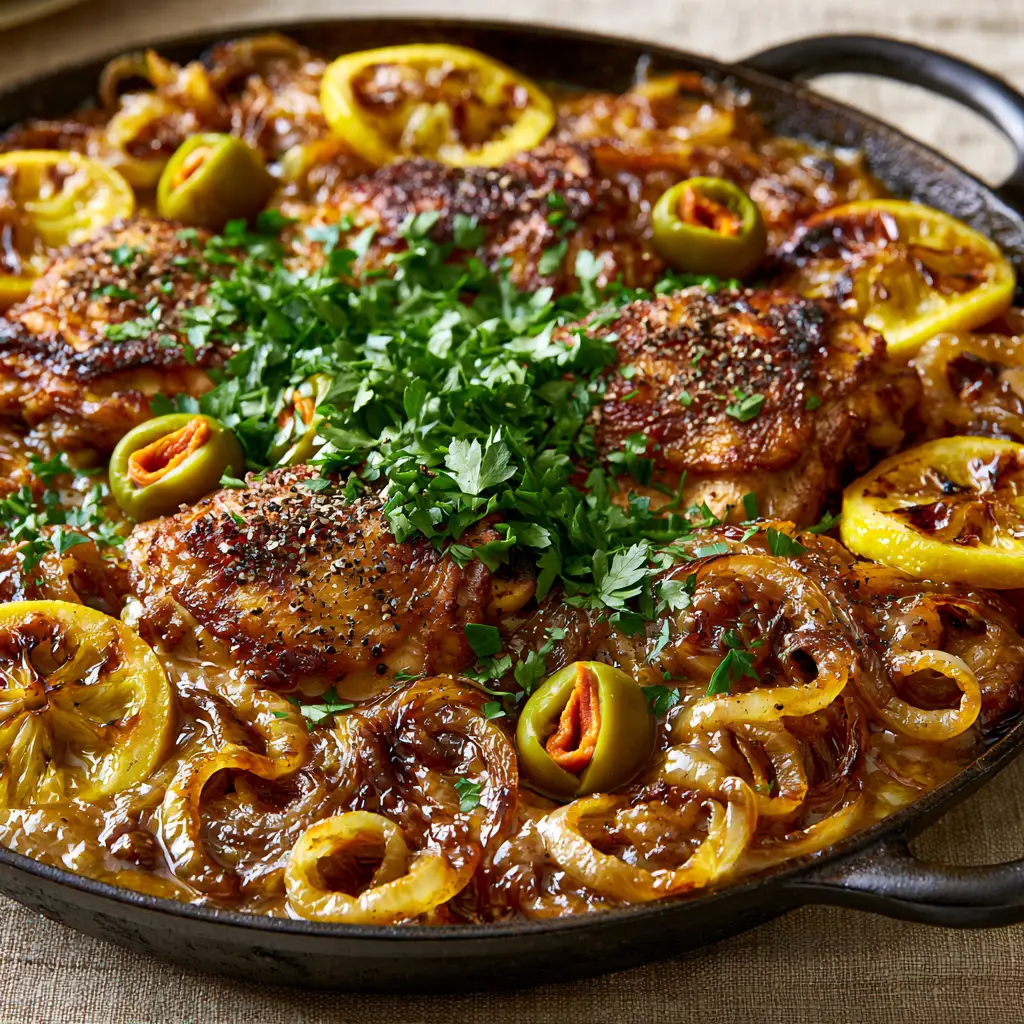
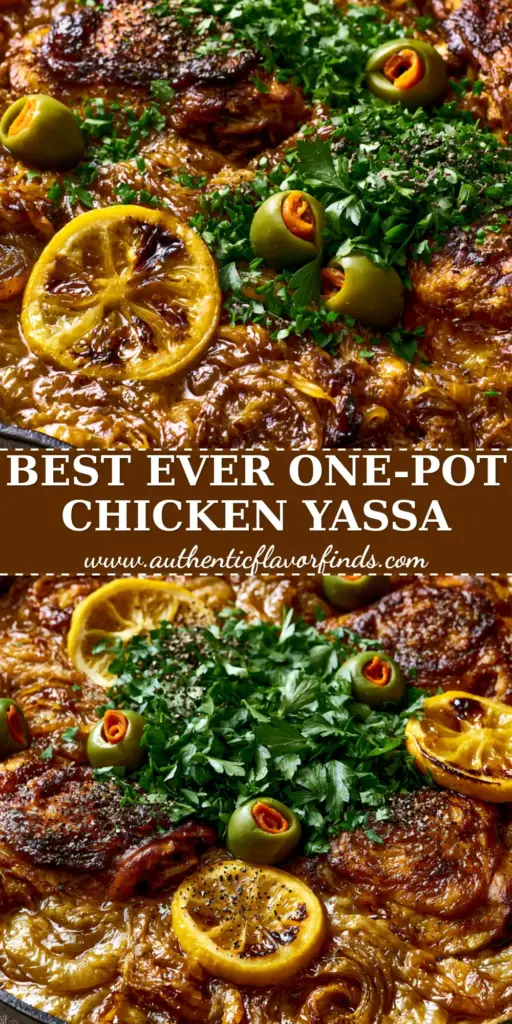
If you are looking for a dish that balances vibrant acidity with deep, savory sweetness, Chicken Yassa is the ultimate culinary destination. This iconic Senegalese comfort food is a masterclass in texture, featuring chicken thighs with perfectly seared, crispy, golden-bronze skin nestled into a bed of deeply caramelized, jammy onions. The visual appeal is undeniable—captured in a rustic black cast iron skillet, the glossy, golden-brown onions provide a luxurious base for the bright yellow charred lemon wheels and vibrant green pimento-stuffed olives.
Every bite of this Chicken Yassa offers a sharp color contrast and a complex flavor profile that lingers on the palate. Whether you are a fan of bright citrus marinades or you crave the richness of a thick mustard-lemon reduction sauce, this recipe delivers a restaurant-quality experience right at home. The addition of freshly chopped flat-leaf parsley and a heavy garnish of cracked black pepper ensures that the dish looks as professional as it tastes, mimicking high-end, unedited food photography.
The Anatomy of a Perfect Senegalese Skillet
What makes this specific version of Chicken Yassa stand out is the forensic attention to visual and textural detail. By following this guide, you will achieve the exact “jammy” onion consistency and the “shatter-crisp” skin that defines a world-class poultry dish. This isn’t just a satisfying weeknight meal; it is a sensory journey through West African flavors.
- Textural Contrast: You will master the balance between the crunch of the bronze chicken skin and the velvetiness of the onion reduction.
- Visual Vibrancy: The use of charred lemon wheels and pimento-stuffed olives creates a professional, high-contrast plating style.
- Deep Aromatics: The marriage of Dijon mustard, fresh lemon, and slow-cooked onions creates a fragrance that fills your entire home.
- One-Pan Simplicity: Utilizing a cast iron skillet ensures even heat distribution for that perfect sear and easy cleanup.
Essential Ingredients for the Ultimate Onion Reduction
To achieve the glossy sheen and rich flavor seen in our visual blueprint, you need a combination of fresh produce and high-quality pantry staples. The secret to a great Chicken Yassa lies in the quality of the onions and the patience used during the caramelization process.
Bone-in, Skin-on Chicken Thighs: 6 pieces (approx. 2.5 lbs / 1.1kg). Skin-on thighs are non-negotiable for achieving that crispy, golden-bronze exterior while keeping the meat succulent.
Yellow Onions: 4 large (approx. 2 lbs / 900g). When thinly sliced and slow-cooked, these transform into the thick, abundant layer of jammy sweetness that forms the sauce base.
Fresh Lemons: 3 large (150ml juice + wheels for charring). The acidity cuts through the richness of the onions, much like a bright citrus marinade.
Dijon Mustard: 3 tbsp (45g). This provides the “tang” and helps emulsify the sauce into a thick, rich, and velvety reduction that clings to every onion slice.
Pimento-Stuffed Green Olives: 1/2 cup (75g). These offer a salty, briny pop of flavor and a sharp green contrast against the golden-brown tones of the dish.
Foundational Fats & Seasoning: 2 tbsp (30ml) neutral oil, 1 tbsp (15g) unsalted butter, 1 tsp (6g) kosher salt, and 1 tsp (2g) freshly cracked black pepper. These are the invisible heroes that ensure a perfect sear and balanced seasoning.
Fresh Flat-Leaf Parsley: 1/4 cup (10g) chopped. A heavy garnish of herbs provides the final “pop” of color seen in professional smartphone food photography.
Tools for Professional Searing and Simmering
To replicate the rustic look of our Midjourney prompt, a 12-inch (30cm) cast iron skillet is the preferred vessel. The heavy bottom retains heat exceptionally well, which is crucial for searing the chicken thighs to a golden-bronze finish without burning the delicate skin.
You will also need a sharp chef’s knife for creating those perfectly uniform onion slices and a pair of sturdy tongs to flip the chicken. A citrus press will help you extract every drop of lemon juice for the mustard-lemon reduction, while a wooden spoon is essential for scraping up the brown bits (fond) from the bottom of the pan.
Mastering the Chicken Yassa Technique
Step 1: The Acidic Marinade Infusion
In a large glass bowl, whisk together the juice of 2 lemons, the Dijon mustard, half of the cracked black pepper, and a pinch of salt. Place the chicken thighs in the marinade, ensuring they are well-coated, and let them sit for at least 30 minutes (or up to 4 hours in the fridge). This technique is similar to building a savory mustard-based sauce, where the acid tenderizes the protein.
Step 2: Achieving the Golden-Bronze Sear
Pat the chicken skin dry with a paper towel—this is the secret to maximum crispiness. Heat the neutral oil in your cast iron skillet over medium-high heat. Place the thighs skin-side down and sear for 6-8 minutes until the skin is deeply bronzed and makes a distinct “cracking” sound when touched with tongs. Remove the chicken and set aside; the meat does not need to be cooked through yet.
Step 3: Creating the Jammy Onion Base
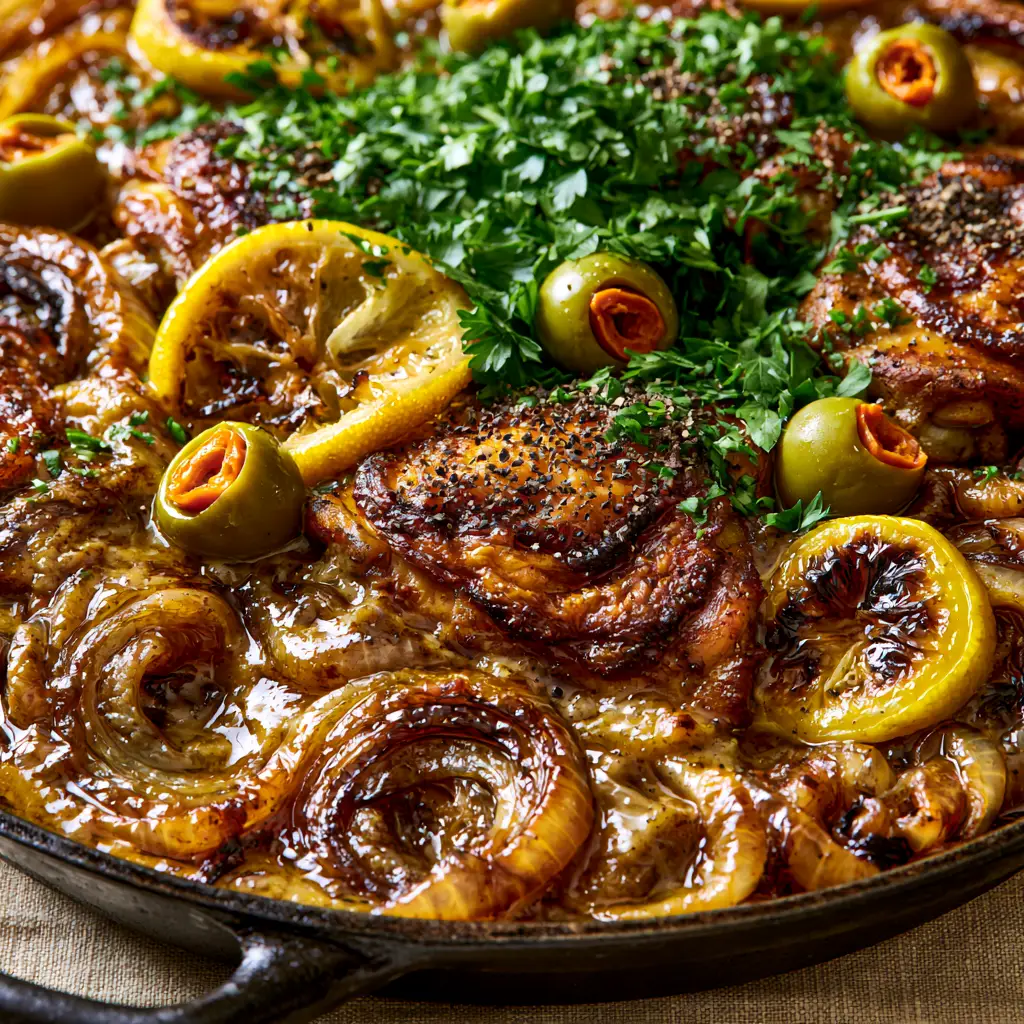
Lower the heat to medium and add the butter to the rendered chicken fat. Toss in your mountain of sliced onions. Sauté them slowly, stirring occasionally, for 15-20 minutes. You are looking for a visual cue: the onions should transition from translucent to a deeply caramelized, glossy, golden-brown sheen. If they stick, add a splash of water to deglaze the pan.
Step 4: The Charred Lemon and Mustard Reduction
Push the onions to the sides and place your lemon wheels directly onto the skillet surface. Sear them for 2 minutes per side until they show dark, charred edges. Stir the lemon wheels back into the onions along with any remaining marinade and the chicken stock. This creates the thick, rich, and velvety sauce that characterizes a high-end Chicken Yassa.
Step 5: The Final Braise and Garnish
Nestle the chicken thighs back into the abundant layer of jammy onions, keeping the crispy skin above the liquid line. Add the pimento-stuffed olives. Cover and simmer for 10-12 minutes until the internal temperature reaches 165°F (74°C). Remove the lid for the final 2 minutes to ensure the sauce is thick and clinging to the onions. Finish with a heavy garnish of parsley and extra cracked black pepper.
Expert Tips for Culinary Forensics Accuracy
- Dry the Skin: Moisture is the enemy of a golden-bronze sear. Use paper towels to remove every drop of marinade from the skin before it hits the oil.
- Don’t Rush the Onions: True “jammy” onions require low, consistent heat. If they brown too fast, they will be bitter rather than sweet.
- Deglaze for Flavor: The brown bits left after searing the chicken are “culinary gold.” Ensure your mustard-lemon reduction incorporates all those flavors from the skillet bottom.
- Preserve the Crunch: When nestling the chicken back into the sauce, ensure the liquid only reaches halfway up the thighs. This keeps the skin crispy while the meat braises.
How to Store and Reheat Your Leftovers
Chicken Yassa actually tastes better the next day as the onions continue to absorb the lemon and mustard flavors. Store leftovers in an airtight container in the refrigerator for up to 3 days. To maintain the integrity of the dish, reheat in a skillet over low heat with a splash of water to loosen the sauce.
While you can freeze this dish for up to 2 months, be aware that the onions may lose some of their “jammy” structure upon thawing. For the best results, enjoy it fresh or within 48 hours of cooking.
What to Serve with Authentic Chicken Yassa
To soak up that thick mustard-lemon reduction, serve this dish over a bed of fluffy white rice or couscous. The acidity of the Yassa pairs beautifully with a simple side of roasted vegetables or a crisp green salad. If you enjoy poultry dishes with international flair, you might also love exploring a fragrant Moroccan-style meal (coming soon).
For those who prefer a lighter accompaniment, a refreshing garden salad provides a cool contrast to the warm, savory onions. Regardless of your choice, ensure the side dish is neutral enough to let the bold flavors of the Senegalese Yassa shine.
Frequently Asked Questions
While you can, chicken thighs are highly recommended because their higher fat content and skin allow for a better sear and stay succulent during the braising process.
The key is low and slow heat. Sauté the sliced onions for at least 15-20 minutes, stirring occasionally, and add a splash of water if they begin to brown too quickly.
Traditional Yassa often includes a Scotch Bonnet pepper for heat. This version focuses on the mustard-lemon reduction, but you can add a habanero for extra spice.
The flavor comes from a combination of deep onion caramelization, the sharp acidity of fresh lemon juice, and the tangy bite of Dijon mustard, creating a rich, velvety sauce.
Charring the lemon wheels over high heat caramelizes their natural sugars, reducing bitterness and adding a smoky, aesthetic visual to the final dish.
The Ultimate Chicken Yassa Recipe Card
Chicken Yassa: Authentic Senegalese Lemon and Onion Chicken
Ingredients
Equipment
Method
- Whisk lemon juice, mustard, salt, and pepper. Marinate chicken for at least 30 minutes.
- Pat chicken dry. Sear skin-side down in a cast iron skillet for 6-8 minutes until golden-bronze and crispy. Set aside.
- Sauté sliced onions in the skillet for 15-20 minutes until deeply caramelized and jammy.
- Sear lemon wheels in the skillet until charred. Stir in remaining marinade to form a thick reduction.
- Nestle chicken and olives into the onions. Simmer for 10-12 minutes until cooked through. Garnish with parsley and pepper.
Notes
Low heat is the secret to jammy onions.
Bring the Flavors of Senegal to Your Kitchen
Chicken Yassa is more than just a meal; it is a celebration of simple ingredients transformed through proper technique. The combination of crispy skin, jammy onions, and charred lemons creates a visual and flavorful masterpiece that will impress any dinner guest. We hope this guide helps you achieve that perfect, high-end food photography look in your own home.
If you enjoyed this recipe, please leave a comment below and let us know how your jammy onions turned out! Don’t forget to sign up for our newsletter for more authentic recipes and share your creations on Pinterest to inspire other home cooks.