There is a specific, intoxicating aroma that fills a Parisian bistro just before the dinner rush—the scent of pungent mustard hitting a hot pan and the herbaceous notes of fresh tarragon. This French Mustard Chicken, known traditionally as Poulet à la Moutarde, is the embodiment of that sophisticated culinary atmosphere. It is a dish that balances the sharp, acidic bite of Dijon with the luxurious, velvety embrace of heavy cream.
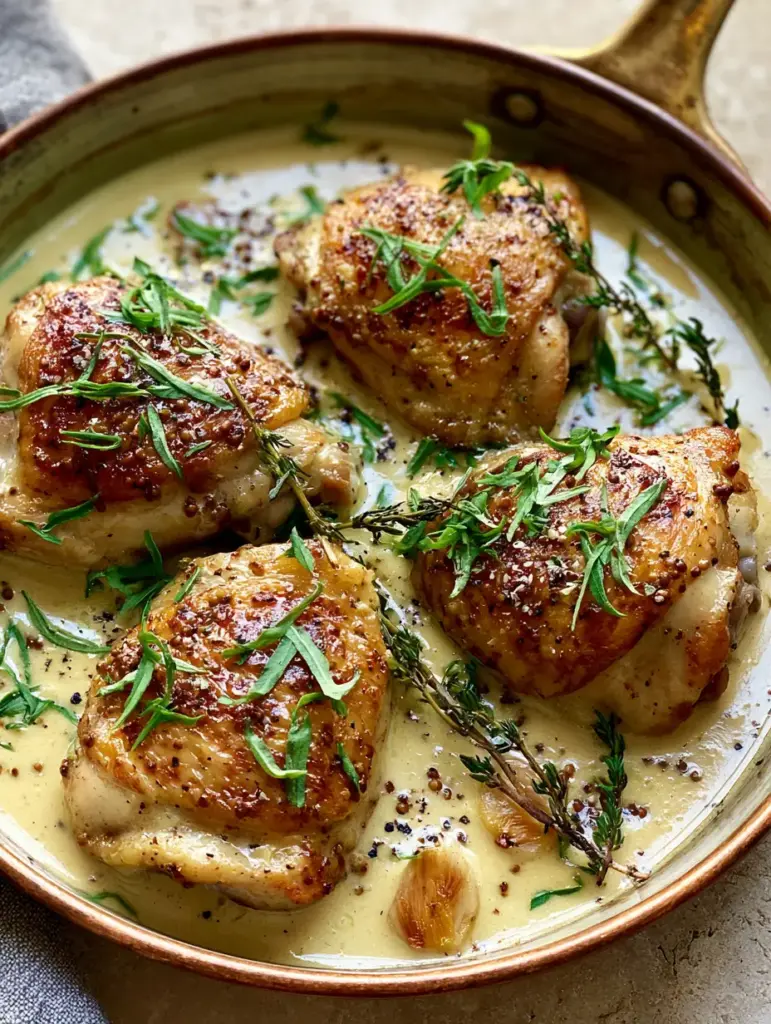
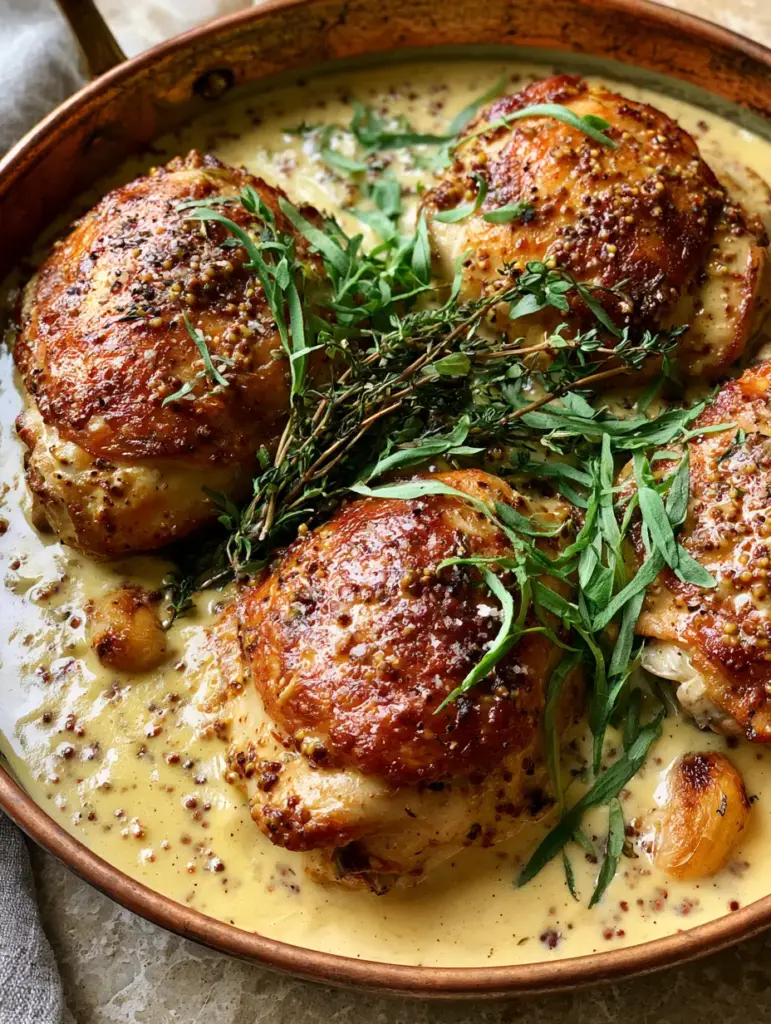
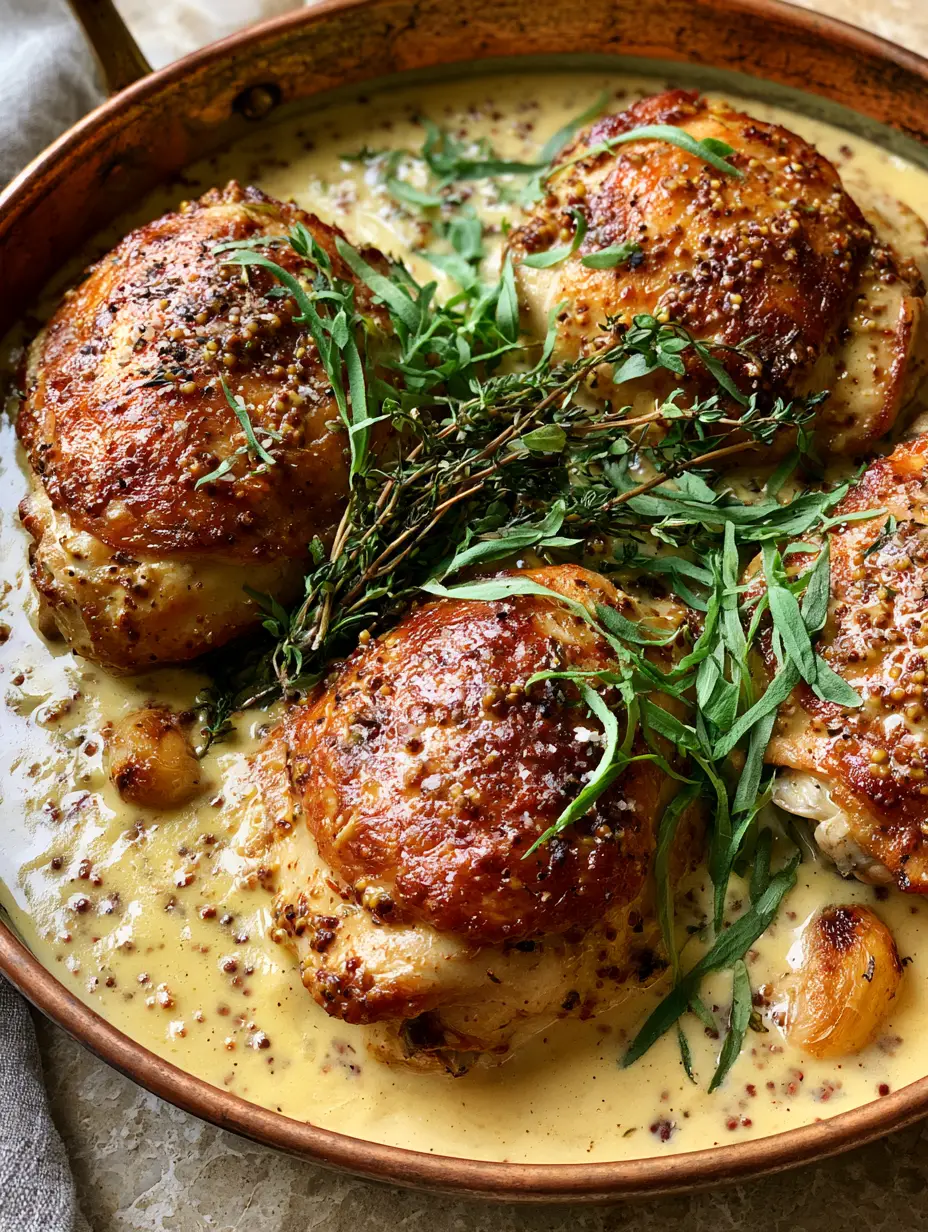
When you look at this dish, the first thing you notice is the contrast of textures. The chicken thighs feature a shattered-glass crispy skin, achieved through a precise pan-sear, nestled into a thick, glossy, pale-yellow sauce. Visible specks of whole grain mustard seeds dot the landscape, promising a pop of texture in every bite. This isn’t just a meal; it’s a masterclass in classic French flavor profiles.
Whether you are looking for a sophisticated weeknight chicken dinner or a centerpiece for a Sunday feast, this recipe delivers. It captures the essence of French comfort food while remaining accessible enough for any home cook to master. Let’s dive into the science of the perfect mustard sauce and the art of the golden sear.
Why This Creamy Dijon Chicken Recipe Works
- Visual Masterpiece: The 45-degree angle of a copper skillet reveals the golden-brown chicken skin contrasting against the bright green tarragon and deep black cracked pepper.
- Layered Mustard Profile: By using both smooth Dijon and whole grain mustard, we achieve a complex flavor that is both sharp and textural.
- Caramelized Aromatics: Whole garlic cloves are softened in chicken fat until they become sweet, buttery gems that meld into the cream sauce.
- Perfectly Balanced Acid: A splash of dry white wine deglazes the pan, lifting the savory fond and cutting through the richness of the heavy cream.
The Anatomy of French Mustard Chicken Ingredients
Skin-on, Bone-in Chicken Thighs: We use four large thighs for this recipe. The bone keeps the meat succulent during the high-heat sear, while the skin provides that essential golden-brown crunch and rendered fat for the sauce base.
Dijon Mustard: This is the backbone of the dish. Use a high-quality French Dijon (like Maille) to ensure a smooth, refined heat rather than a harsh vinegar bite.
Whole Grain Mustard: These seeds provide the “visible specks” seen in the visual blueprint. They offer a delightful popping sensation and a rustic aesthetic to the glossy sauce.
Heavy Cream (Double Cream): 1 cup (240ml) of high-fat dairy is required to achieve the “velvety sheen” and thick consistency described in the Midjourney prompt. It mellows the mustard’s intensity.
Fresh Tarragon and Thyme: Tarragon offers a subtle anise flavor that is quintessential to French cooking, while thyme adds an earthy, floral backbone. Do not use dried herbs here; the “bright green” visual requires fresh leaves.
Caramelized Garlic Cloves: 8-10 whole cloves are used. They aren’t just for flavor; when softened, they become a structural element of the sauce, providing a sweet contrast to the savory chicken.
Dry White Wine: 1/2 cup (120ml) of Sauvignon Blanc or Chardonnay. This is used to deglaze the skillet, ensuring every bit of caramelized chicken flavor is incorporated into the final French Mustard Chicken.
Foundational Seasonings: You will need 1 tbsp (15ml) of high-smoke point oil (like grapeseed) for the sear, 2 tbsp (30g) of unsalted butter for the sauce glossy finish, and plenty of coarse cracked black pepper.
Essential Equipment for a Bistro-Style Result
To replicate the visual of our recipe, a 12-inch (30cm) rustic copper skillet or heavy cast-iron pan is ideal. These materials provide superior heat retention, which is the secret to getting that uniform golden-brown skin without burning the meat.
You will also need a pair of stainless steel tongs for precise flipping and a wire whisk to emulsify the mustard and cream into a cohesive, non-broken sauce. A meat thermometer is highly recommended to ensure the chicken reaches an internal temperature of 165°F (74°C) without overcooking.
The Culinary Process: Step-by-Step Instructions
Phase 1: Achieving the Perfect Golden Sear
Pat the chicken thighs extremely dry with paper towels. Moisture is the enemy of a crispy crust. Season both sides generously with sea salt and the first layer of cracked black pepper.
Heat 1 tbsp (15ml) of oil in your skillet over medium-high heat. Once the oil is shimmering (but not smoking), place the chicken thighs skin-side down. Do not crowd the pan; if necessary, sear in batches to ensure the steam can escape.
Press down lightly with your tongs and sear for 7-9 minutes without moving the chicken. You are looking for a deep, “golden-brown” visual cue. Once the skin releases easily from the pan and looks like parchment paper, flip and sear for another 3 minutes. Remove chicken and set aside on a plate.
Phase 2: Caramelizing Garlic and Deglazing
Lower the heat to medium. In the rendered chicken fat, add the 8-10 whole garlic cloves. Sauté them for 4-5 minutes, tossing occasionally, until they are “softened and caramelized” with a light brown exterior.
Pour in the 1/2 cup (120ml) of dry white wine. Use a wooden spoon to scrape the bottom of the skillet, releasing the “fond” (the brown bits). This is where the deep, savory character of your French Mustard Chicken lives. Let the wine reduce by half.
Phase 3: Emulsifying the Creamy Dijon Sauce
Whisk in 1 cup (240ml) of chicken stock and the 1/4 cup (60g) of Dijon mustard. Bring to a gentle simmer. Once simmering, stir in 1 cup (240ml) of heavy cream and 2 tbsp (30g) of whole grain mustard seeds.
The sauce will begin to thicken and take on a “pale-yellow” hue with a “velvety sheen.” Add half of your fresh thyme sprigs into the liquid to infuse. Simmer for 5 minutes until the sauce coats the back of a spoon.
Phase 4: The Final Braise and Garnish
Nestle the chicken thighs back into the sauce, keeping the crispy skin above the liquid line to maintain its texture. Simmer for an additional 5-8 minutes until the chicken is cooked through. If the sauce becomes too thick, add a splash more stock.
Just before serving, stir in 2 tbsp (30g) of cold butter to give the sauce its final professional gloss. Garnish with a “generous scattering” of fresh bright green tarragon leaves, additional whole thyme sprigs, and a final aggressive dusting of coarse cracked black pepper.
Expert Tips for French Mustard Chicken Success
- The Skin Protection Rule: When adding the chicken back to the sauce, never submerge the skin. If the skin gets wet, it will turn rubbery. Keep it high and dry like an island in a sea of Dijon.
- Mustard Timing: We add whole grain mustard later in the process to preserve the integrity of the seeds, ensuring they remain “visible specks” as described in our visual blueprint.
- Tempering the Cream: If you are worried about the cream curdling, whisk a tablespoon of the hot sauce into the cold cream before pouring the cream into the skillet.
- Cold Butter Finish: This technique, known as “monter au beurre,” creates a glossy, restaurant-quality finish that makes the sauce look “thick and glossy” in photos.
Storage and Reheating Advice
French Mustard Chicken is best enjoyed fresh, but leftovers can be stored in an airtight container in the refrigerator for up to 3 days. Note that the chicken skin will lose its crispness once refrigerated.
To reheat, place the chicken and sauce in a small pan over low heat. Add a splash of water or chicken stock to thin the sauce, as the cream will thicken significantly when cold. Avoid the microwave, as it can cause the cream sauce to “split” or become oily.
What to Serve with Creamy Dijon Chicken
Because the sauce is so rich and plentiful, you need a side dish that can act as a vessel. A pile of garlic mashed potatoes or a crusty French baguette is the traditional choice. For a lighter pairing, consider a simple roasted vegetable side or a crisp green salad.
If you enjoy this flavor profile, you might also love our Chicken Christopher, which shares a similar garlic-heavy base, or for something more global, try the Senegalese Chicken Yassa for a different take on onion and acid-based sauces.
Frequently Asked Questions
Yes. You can substitute the white wine with an equal amount of chicken stock mixed with a teaspoon of lemon juice or white wine vinegar to provide the necessary acidity.
Yes, but be careful not to overcook them. Searing breasts for 5-6 minutes per side is usually enough. Thighs are preferred for this recipe because their higher fat content complements the rich mustard sauce.
Tarragon provides the classic French flavor profile. If you dislike the taste of anise, you can substitute it with fresh parsley or chives, though it will change the traditional character of the dish.
Curdling usually happens if the heat is too high or the cream is added too quickly. To fix a split sauce, whisk in a teaspoon of cold heavy cream or a splash of chicken stock off the heat to emulsify it again.
A combination is best! Use a smooth, sharp Dijon (like Maille) for the flavor base and a whole grain mustard (Moutarde à l’Ancienne) for texture and visual appeal.
The Complete French Mustard Chicken Recipe
French Mustard Chicken: The Ultimate Creamy Dijon Thighs Recipe
Ingredients
Equipment
Method
- Pat chicken dry and season with salt and pepper. Sear skin-side down in oil for 8 minutes until deep golden-brown and crispy. Flip and sear for 3 minutes, then remove from pan.
- Add whole garlic cloves to the pan fat. Sauté over medium heat for 4-5 minutes until softened and caramelized.
- Pour in white wine, scraping up the fond. Reduce by half.
- Whisk in stock, Dijon, whole grain mustard, and heavy cream. Simmer until thickened and glossy.
- Return chicken to pan (skin-side up). Simmer for 5-8 minutes. Stir in cold butter and garnish with fresh tarragon, thyme, and cracked black pepper.
Notes
Use high-quality French Dijon for the most authentic flavor.
Bring the Bistro to Your Kitchen
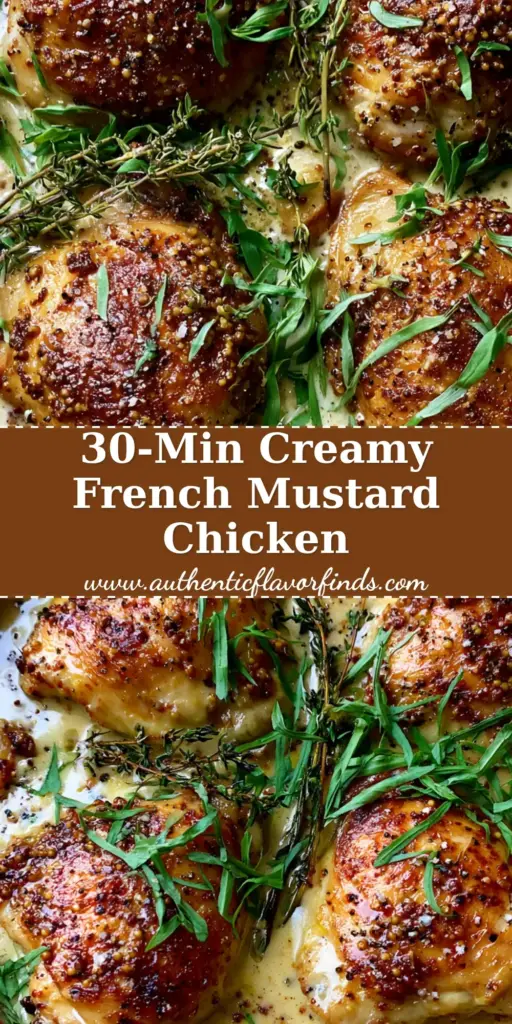
This French Mustard Chicken is more than just a meal; it is a sensory experience. From the audible crunch of the skin to the sharp, herbaceous aroma of the tarragon, it is designed to impress. The thick, pale-yellow sauce and caramelized garlic cloves create a visual and culinary depth that few dishes can match.
We would love to see your results! If you make this dish, please leave a comment below and share your photos with us. Don’t forget to follow us on Pinterest for more inspired French comfort food recipes and stunning culinary visuals.