Fufu is more than just a staple food; it is a culinary experience that defines the heart of West African dining. This snow-white, incredibly silky, and stretchy cassava dough serves as the perfect vessel for soaking up the bold flavors of traditional soups and stews.
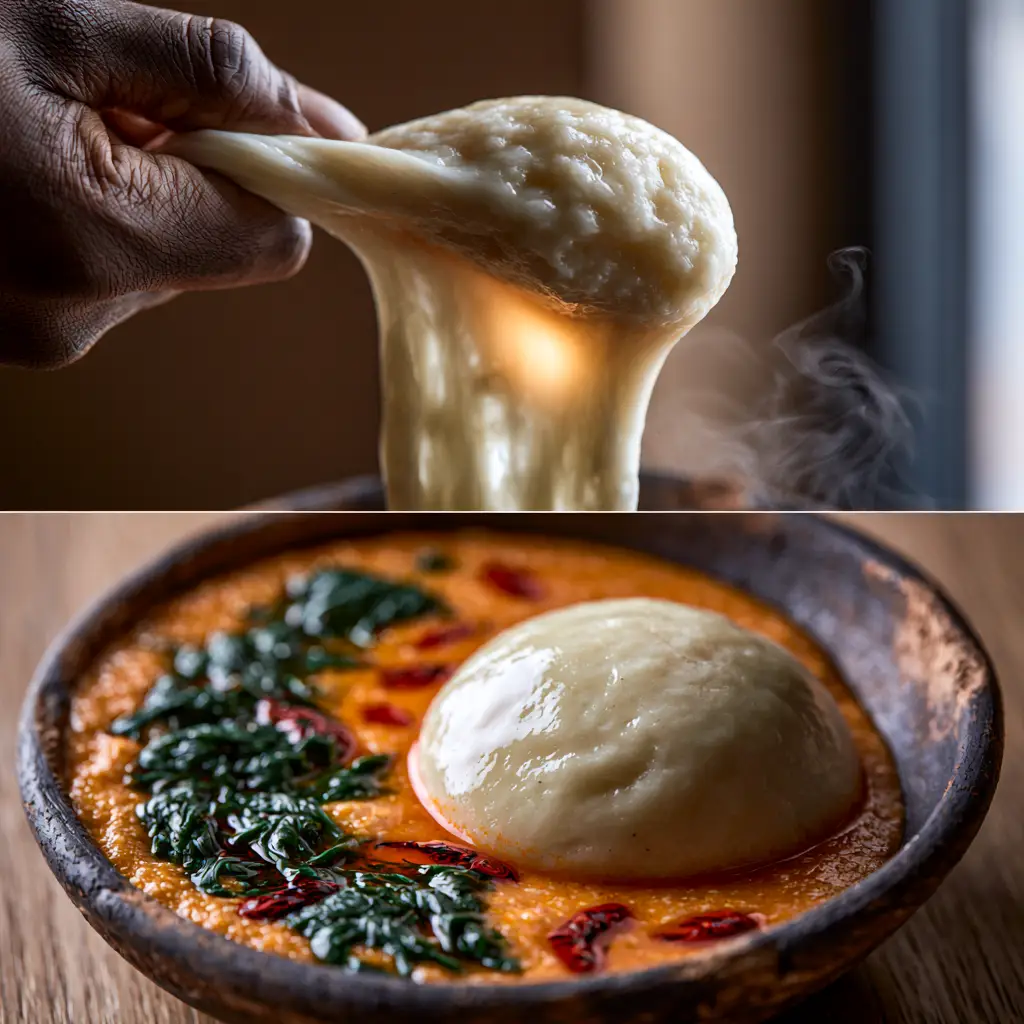
When you master the art of the Fufu, you aren’t just cooking; you are performing a rhythmic dance of heat and muscle to achieve that iconic elastic texture. The visual appeal of a glossy sphere sitting in a rustic dark clay bowl, surrounded by a vibrant orange soup, is enough to whet any appetite.
In this comprehensive guide, we will walk you through the scientific process of starch gelatinization to ensure your dough is lump-free and perfectly translucent. We will also prepare a rich Egusi soup, complete with wilted spinach and droplets of red palm oil, to complete the masterpiece described in our visual blueprint.
The Unmatched Sensory Appeal of Perfect Fufu
Achieving the perfect Fufu requires an understanding of the relationship between moisture and fermented cassava starch. When executed correctly, the results are visually stunning and texturally satisfying.
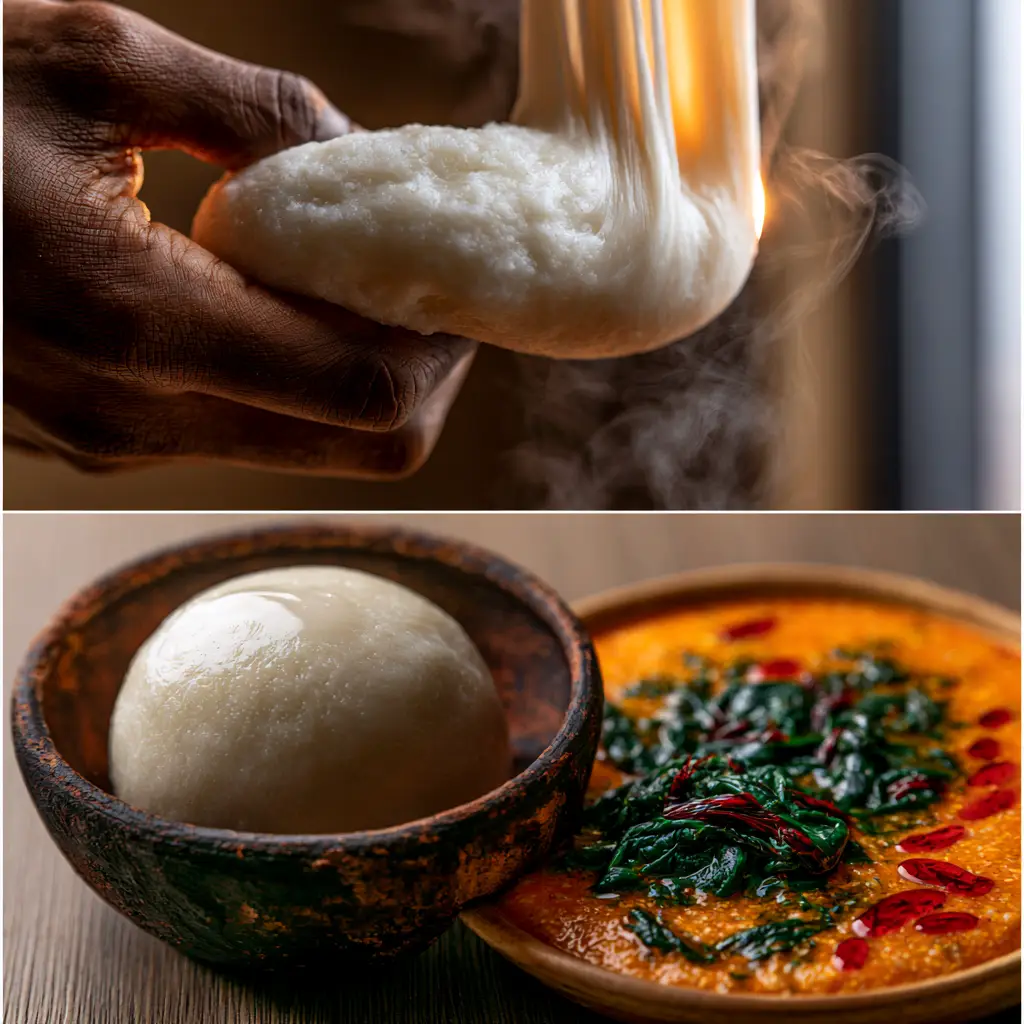
- The Elastic Pull: A hand-pulled piece of fufu should stretch significantly before breaking, indicating a strong starch network.
- The Snow-White Finish: Pure cassava fufu should possess a bright, clean white color with a gentle translucent glow.
- Glossy Sphere Shape: The dough should be smooth enough to be molded into a perfectly round, glossy ball that reflects soft natural light.
- Vibrant Color Contrast: The neutral white of the dough provides a striking backdrop for the rich orange of the Egusi soup and the deep green of wilted spinach.
Foundational Ingredients for an Authentic African Feast
To recreate the visual and culinary depth of the Fufu and Egusi pairing, you need specific ingredients that provide both structure and flavor. Here is what you will need to gather.
The Starchy Core: Cassava Essentials
2 lbs (900g) Fresh Cassava Root or Fermented Cassava Paste: This is the backbone of the dish. Fresh cassava provides the natural starches necessary for that signature elasticity and snow-white appearance.
4 cups (950ml) Water: Water is the medium for steam and hydration. You will use it to blend the cassava and later to adjust the dough’s consistency during the “pounding” phase.
The Savory Pairing: Egusi Soup Components
1 cup (150g) Ground Egusi (Melon Seeds): These seeds provide the protein and the “rich orange” base when toasted and simmered. They create a unique curd-like texture that clings beautifully to the Fufu.
1/2 cup (120ml) Red Palm Oil: This oil is non-negotiable for the “rich orange” color described in our visual blueprint. It adds an earthy, nutty flavor and a beautiful glossy finish.
2 cups (60g) Fresh Spinach: Roughly chopped, this will be wilted into the soup at the very end to provide the “deep green” garnish and a boost of iron.
1 lb (450g) Beef or Goat Meat: Slow-cooked until tender, the meat provides the savory depth required for a hearty dinner. If you’re looking for other meat-heavy inspirations, check out these ground beef dinner recipes.
Essential Equipment for Professional Results
Achieving a “silky, stretchy” texture isn’t just about ingredients; it’s about the tools you use to manipulate the starch. You don’t need a traditional mortar and pestle to get great results at home.
A heavy-bottomed pot, such as a Dutch oven, is vital for maintaining even heat while you stir the dough. You will also need a sturdy wooden spoon or a “fufu stick” to provide the leverage necessary for folding and beating the dough.
A high-speed blender is the modern secret to ensuring the cassava is perfectly smooth before it ever touches the heat. This eliminates the risk of lumps and ensures that “snow-white” uniformity seen in high-end food photography.
Step-by-Step: Crafting the Perfect Fufu Sphere
Preparing the Cassava Base
Begin by peeling the cassava roots, ensuring you remove the thick brown skin and the woody inner core. Cut the white flesh into small cubes and place them in your blender with enough water to cover them.
Blend on high until the mixture is a completely smooth, liquid puree. There should be no visible grains. If you are using fermented paste, simply mash it with a little water until it reaches a thick, pourable consistency.
The Transformation: Stirring and Pounding
Pour the puree into a heavy pot over medium heat. This is where the Fufu begins to take shape. Start stirring immediately with your wooden spoon, moving in a consistent circular motion.
As the heat rises, you will see the liquid begin to thicken into translucent clumps. Continue to stir vigorously, “beating” the dough against the sides of the pot. Look for the visual cue of the dough changing from a chalky white liquid to a thick, stretchy, and semi-translucent mass.
The Final Steam and Shape
Once the dough has gathered into a single mass, add a splash of hot water around the edges, cover the pot, and let it steam for 5-8 minutes. This ensures the starch is fully cooked through to the center.
Uncover and give it one final, energetic stir. The Fufu should now be incredibly elastic. Wet your hands or use a piece of plastic wrap to mold the hot dough into a “glossy sphere” and place it into a rustic ceramic bowl.
Creating the Rich Egusi Soup with Wilted Spinach
Building the Flavor Base
Heat the red palm oil in a separate pot until it is clear but not smoking. Sauté diced onions and blended peppers until the aroma is fragrant and the oil has taken on a deep, shimmering orange hue.
Mix your ground egusi with a little water to form a thick paste. Drop small spoonfuls of this paste into the hot oil. Do not stir immediately; let the egusi “set” for a few minutes to create those beautiful, protein-rich curds.
Simmering and Garnishing
Gently pour in your meat stock and add your pre-cooked proteins. Let the soup simmer on low heat until the oil begins to rise to the top, creating those “red palm oil droplets” mentioned in the visual prompt.
Five minutes before serving, fold in your chopped spinach. The heat of the soup will wilt the leaves into a “deep green” while maintaining their vibrant color. This soup is a fantastic alternative if you usually enjoy a zucchini and spinach casserole.
Expert Tips for Success
- Eliminate Lumps: Always blend your cassava until it is a liquid. If lumps form during cooking, use the “smearing” technique—press the dough firmly against the side of the pot with your spoon.
- Mastering Elasticity: The “pull” comes from the steam. Never skip the steaming step, as it allows the starch molecules to fully hydrate and stretch.
- Maintain the Color: Use stainless steel or ceramic pots to keep your Fufu snow-white. Cast iron can sometimes react with the starch and grey the color.
- The Water Trick: Keep a bowl of water nearby while shaping. Dipping your spoon or hands in water prevents the dough from sticking and helps create that glossy, smooth surface.
Storage, Reheating, and Freezing
Fufu is best enjoyed fresh and steaming hot, but it can be stored. Wrap individual spheres tightly in plastic wrap to prevent a skin from forming. They will stay fresh in the refrigerator for up to 3 days.
To reheat, add a tablespoon of water to a bowl with the fufu, cover with plastic wrap, and microwave for 1-2 minutes. Alternatively, you can steam the wrapped balls in a steamer basket until they are soft and stretchy again.
For freezing, wrap the spheres twice in plastic and place them in a freezer bag. They can be frozen for up to a month. Thaw in the refrigerator overnight before reheating.
What to Serve With This Traditional Dish
While Egusi soup is the classic partner for Fufu, this versatile dough works with many different flavors. If you prefer a lighter side, a crisp cucumber salad can provide a refreshing contrast to the heavy starch.
For those who enjoy a bit of fusion, serving a savory meat dish like cowboy butter steak bites alongside the fufu offers a modern twist on the “swallow” experience. If you are looking for more vegetable-forward sides, consider exploring these zucchini side dishes to round out your meal.
Frequently Asked Questions
Yes, you can use high-quality fermented cassava flour or fufu flour, but the texture and ‘stretch’ are best achieved using fresh root or fermented wet paste.
To maintain the snow-white color, use fresh cassava and cook in stainless steel or ceramic pots. Avoid cast iron, which can cause the starch to oxidize and turn grey.
Traditionally, fufu is a ‘swallow.’ You tear off a small piece, create a small indentation with your thumb to scoop up the soup, and swallow it without much chewing.
The vibrant orange hue comes from red palm oil. It is essential for the traditional look and adds a unique, earthy flavor that complements the neutral fufu.
Lumps occur if the cassava isn’t blended smoothly enough or if the heat is too high during the initial stirring phase. Always blend into a liquid and stir vigorously as the starch begins to set.
The Ultimate Recipe for Silky Cassava Fufu and Egusi Soup
Fufu: The Ultimate Guide to Making Silky, Stretchy Cassava Dough and Rich Egusi Soup
Ingredients
Equipment
Method
- Puree peeled cassava cubes with water in a blender until snow-white and perfectly smooth.
- Pour into a pot over medium heat and stir constantly with a wooden spoon until the mass thickens and turns translucent.
- Add a splash of water, cover, and steam for 5 minutes. Pound and stir until silky and stretchy.
- Heat palm oil and sauté onions/peppers. Add egusi paste in small lumps and let set.
- Add stock and meat. Simmer until oil droplets rise to the top and the soup is a rich orange.
- Fold in chopped spinach until wilted and vibrant green.
Notes
If the fufu is too stiff, add a tablespoon of hot water at a time while pounding.

Closing & Call to Action
Cooking Fufu is a rewarding skill that brings the authentic flavors of West Africa into your kitchen. Whether you are pulling apart that silky dough or dipping it into a rich, orange Egusi soup, this dish is a celebration of texture and tradition.
Did you manage to get that perfect elastic pull? We would love to hear about your experience in the comments below! Don’t forget to sign up for our newsletter for more authentic recipes and share your beautiful creations on Pinterest.