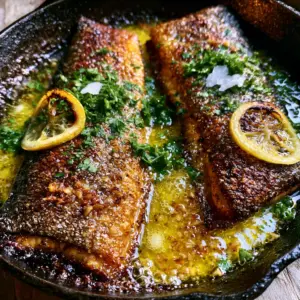
There is nothing quite as satisfying as the sound of a fresh fish fillet hitting a hot pan. This pan seared rainbow trout represents the pinnacle of home-cooked seafood, offering a contrast of textures that most believe is reserved for high-end bistros. By using a seasoned cast iron skillet, we achieve a level of skin-blistering heat that produces a crackling, golden-brown crust while keeping the delicate flesh underneath tender and moist.
In this guide, we aren’t just cooking fish; we are mastering the art of the sear. We will walk through the exact steps to create a shimmering pool of garlic butter, punctuated by toasted aromatics and the bright acidity of charred lemon. Whether you are a seasoned cook or a kitchen novice, this recipe provides the sensory cues needed to ensure every fillet is a masterpiece of color and flavor.
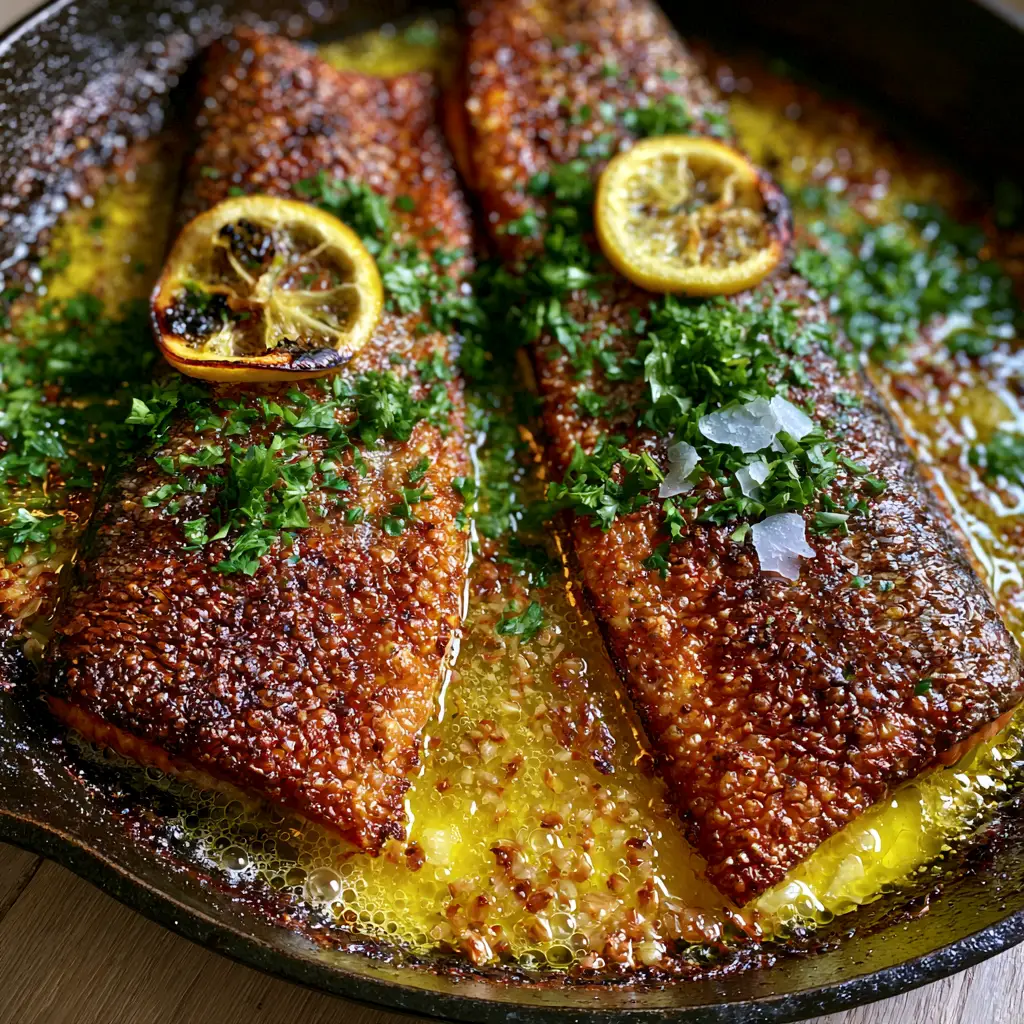
Why This Cast Iron Trout Technique Is a Culinary Game-Changer
- Unrivaled Texture: The skin becomes exceptionally crispy and blistered, providing a structural crunch that balances the flaky fish.
- Deep Flavor Profile: Toasted minced garlic and nutty browned butter create a sophisticated sauce in the same pan used for searing.
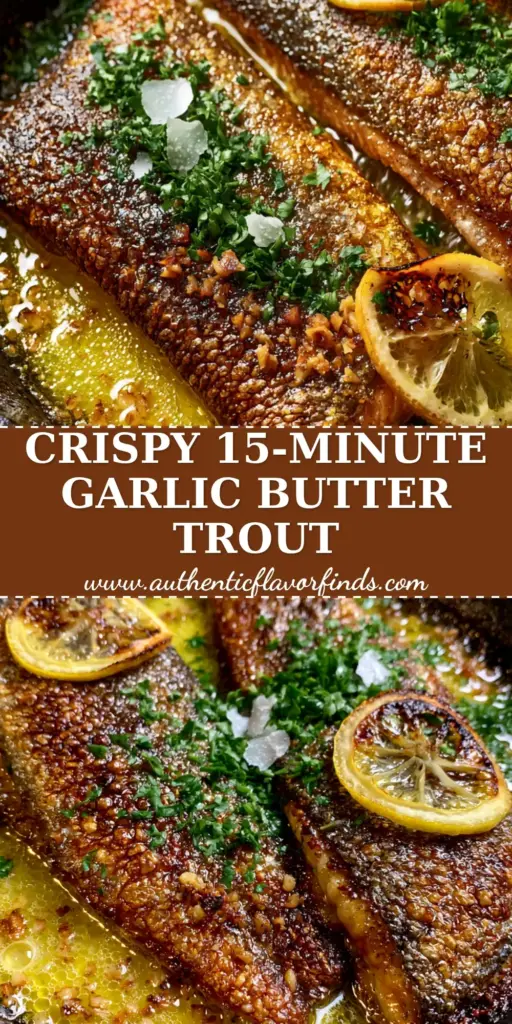
- Visual Elegance: With bright green parsley, charred lemon wheels, and large flakes of sea salt, the presentation is vibrant and professional.
- Efficiency: From the first sizzle in the skillet to the final garnish, this high-protein meal comes together in under 20 minutes.
The Anatomy of the Perfect Crispy Skin Fillet: Ingredients
To achieve the results seen in our visuals, every ingredient serves a specific structural or flavorful purpose. We focus on high-quality fats and fresh aromatics to complement the natural sweetness of the rainbow trout.
Rainbow Trout Fillets: Look for fillets with bright, clear flesh and intact skin. The skin is the star here, acting as a protective barrier that crisps up beautifully under high heat.
Grapeseed or Avocado Oil: You need a high-smoke-point oil (1-2 tbsp / 15-30ml) to handle the intense heat required for blistering the skin without burning. Avoid extra virgin olive oil for the initial sear as it will smoke and turn bitter.
Unsalted Butter: We use 3 tbsp (45g) of butter to create the basting sauce. Using unsalted butter allows you to control the final seasoning precisely with your sea salt.
Fresh Garlic: Four cloves of minced garlic provide the toasted, savory bits that speckle the butter. Ensure they are finely minced so they toast evenly rather than burning in large chunks.
Lemons: You will need one lemon for thin slices to char in the pan and another for a fresh squeeze of juice to brighten the butter sauce. The charring process caramelizes the sugars in the lemon, adding a smoky sweetness.
Fresh Parsley: A generous scatter of finely chopped flat-leaf parsley adds the necessary herbal lift and a pop of bright green color against the golden fish.
Flaky Sea Salt: This is used as a finishing salt. The large crystals provide a “crunch” of salinity that highlights the richness of the garlic butter.
Essential Tools for Achieving the Professional Sear
While you can use stainless steel, a black cast iron skillet is the preferred vessel for this recipe. Its superior heat retention ensures the pan temperature doesn’t drop when the cold fish is added, which is the secret to preventing sticking and achieving that deep golden-brown blister.
You will also need a fish spatula. These are thinner and more flexible than standard spatulas, allowing you to slide under the delicate skin without tearing the blistered surface you’ve worked so hard to create. Lastly, keep a stack of paper towels nearby—dry skin is the only way to get a true crackle.
Mastering the Sizzle: Your Step-by-Step Guide to Success
Preparation: The Secret of Dry Skin
Before the pan even touches the stove, use paper towels to pat the trout fillets bone-dry on both sides. Moisture is the enemy of the sear; if the skin is damp, it will steam rather than fry. Season the flesh side with a pinch of salt, but leave the skin side plain for now to keep it as dry as possible.
The Initial Sear and Blistering Process
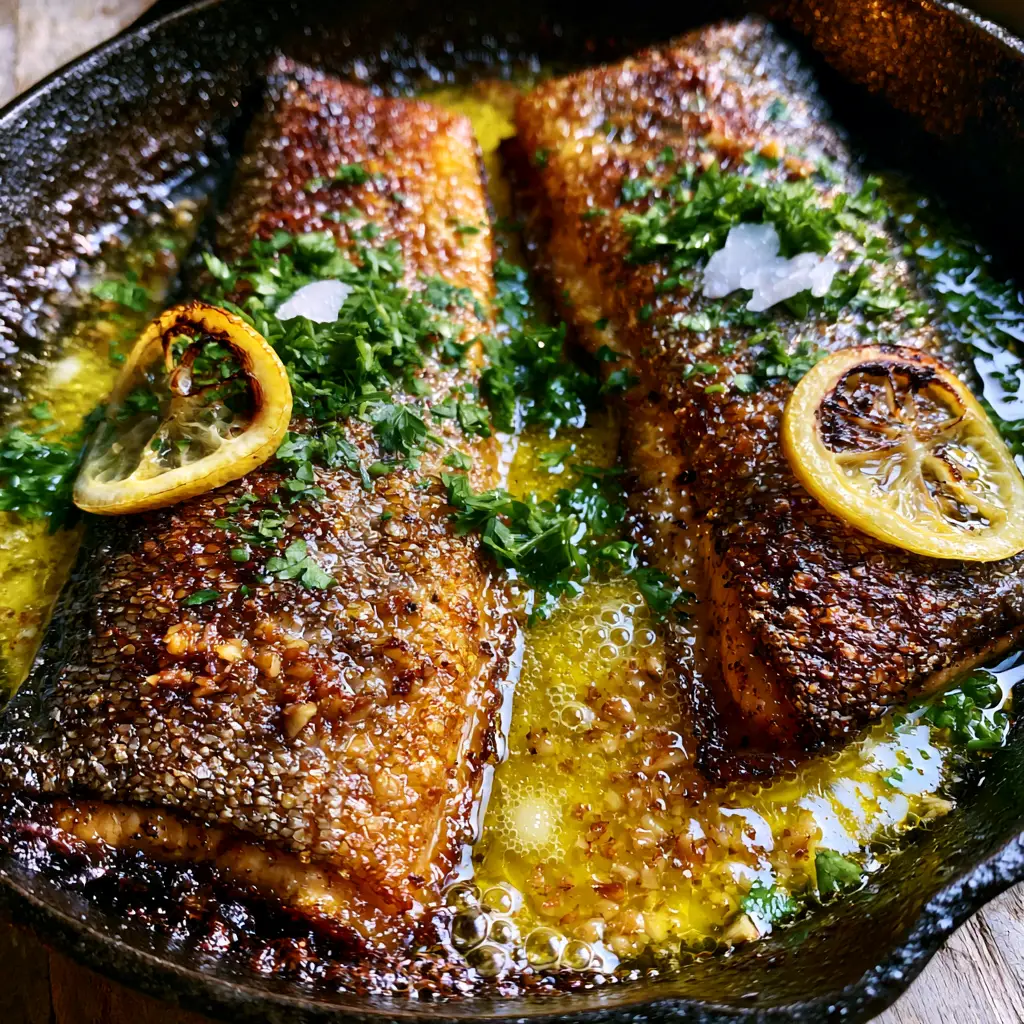
Heat your cast iron skillet over medium-high heat until the oil is shimmering and just beginning to wisps of smoke. Carefully lay the trout fillets skin-side down, pressing them gently with your spatula for the first 30 seconds to ensure total contact with the pan. You will hear an aggressive sizzle—this is the sound of the skin blistering and becoming crispy.
Cook for 3-4 minutes without moving them. You will see the edges of the fish turn opaque and the skin pull away slightly from the pan. Use your fish spatula to peek; you are looking for a deep, golden-brown color with visible crackling textures across the entire surface.
The Flip and Aromatics Infusion
Carefully flip the fillets. Immediately reduce the heat to medium and add the butter, minced garlic, and lemon slices to the empty spaces in the skillet. As the butter melts and begins to bubble, use a spoon to continuously pour the hot garlic butter over the crispy skin. This process, known as arroser, infuses the fish with flavor while keeping the flesh succulent.
Finishing Touches and Visual Garnish
The trout is finished when the garlic is a toasted golden brown and the lemon slices have developed dark, charred edges. Remove the pan from the heat. Scatter the fresh parsley over the sizzling fillets and finish with a generous pinch of flaky sea salt. The residual heat of the cast iron will continue to cook the fish for another minute, so serve immediately to preserve the crispness.
Expert Tips for a Flawless Pan Seared Rainbow Trout
- Don’t Flip Too Early: If the fish resists when you try to slide a spatula under it, the skin hasn’t finished crisping. Give it another 30 seconds to release naturally.
- Temperature Control: If the garlic starts turning dark brown too quickly, slide the pan off the heat element. The cast iron holds enough heat to finish the cook without burning the aromatics.
- Room Temperature Fish: Take the fillets out of the fridge 15 minutes before cooking. Cold fish can cause the pan temperature to plumet, leading to a gummy texture.
- The Butter Bubble: Wait for the butter to stop foaming before you start basting. This indicates the water has evaporated, and the butter is reaching the perfect browning temperature.
Safely Storing and Reheating Your Seafood
While pan seared rainbow trout is best enjoyed immediately, you can store leftovers in an airtight container in the refrigerator for up to two days. To reheat, avoid the microwave, which will turn the skin rubbery.
Instead, place the fillets in a cold skillet and turn the heat to medium-low. This gradual warming helps crisp the skin back up without overcooking the center. You can also flake cold leftover trout over a refreshing Greek salad for a high-protein lunch the next day.
Inspiration for a Complete Gourmet Spread
This trout is incredibly versatile. For a light summer dinner, pair it with one of our favorite crispy cucumber salad recipes to provide a cool contrast to the warm garlic butter. If you prefer a heartier vegetable side, these sauteed zucchini side dishes soak up the extra lemon butter sauce beautifully.
For those who love a bit of heat, serving the trout alongside bold cowboy butter can add a spicy, horseradish-infused kick to your seafood night. No matter what you choose, the key is to keep the sides simple so the delicate flavor of the trout remains the star of the show.
Common Questions About Searing Rainbow Trout
Yes, but they must be completely thawed and patted dry. Frozen fish often releases more moisture, so you may need to use extra paper towels to ensure the skin is dry enough to blister.
Trout is done when the flesh is opaque and flakes easily with a fork. It should reach an internal temperature of 145°F (63°C), though many prefer it slightly under for maximum juiciness.
No! In this recipe, the blistered skin provides a significant portion of the flavor and texture. It is completely edible and is the hallmark of a perfectly seared trout fillet.
Use an oil with a high smoke point like grapeseed, avocado, or canola oil. These can handle the high heat required for crispy skin without burning or smoking excessively.
The skin usually sticks if the pan isn’t hot enough or if the skin was still damp when it hit the oil. Ensure your cast iron is shimmering hot and pat the skin bone-dry with paper towels immediately before searing.
The Ultimate Pan Seared Rainbow Trout Recipe
Pan Seared Rainbow Trout with Crispy Blistered Skin and Garlic Butter
Ingredients
Equipment
Method
- Use paper towels to pat the trout fillets extremely dry on both sides. Moisture prevents the skin from blistering.
- Season the flesh side only with kosher salt and black pepper.
- Heat oil in the cast iron skillet over medium-high until shimmering. Place fillets skin-side down.
- Press fillets gently with a spatula for 30 seconds. Cook undisturbed for 3-4 minutes until the skin is deep golden-brown and blistered.
- Flip the fish. Add butter, minced garlic, and lemon wheels to the pan. Baste the skin with the bubbling garlic butter for 2 minutes.
- Once garlic is toasted and lemons are charred, remove from heat. Top with parsley and flaky sea salt.
Notes
Use a high-smoke-point oil like avocado or grapeseed to avoid bitter flavors at high heat.
Bring This Restaurant-Quality Dish to Your Kitchen
The beauty of the pan seared rainbow trout lies in its simplicity and the high-impact results of proper technique. By focusing on a hot pan and dry skin, you transform a simple fillet into a gourmet experience that hits every sensory note: the sound of the sizzle, the smell of toasted garlic, and the sight of that golden, blistered skin.
If you enjoyed this recipe, please leave a comment below and let us know how your sear turned out! Don’t forget to sign up for our newsletter for more culinary deep-dives and share your creations with us by pinning this recipe to Pinterest.