There is a specific kind of magic that happens when high heat meets a well-seasoned metallic sheet pan. The weeknight chicken dinner is a staple in most households, but this version elevates the humble thigh into a gourmet experience that looks like a professional food photograph.
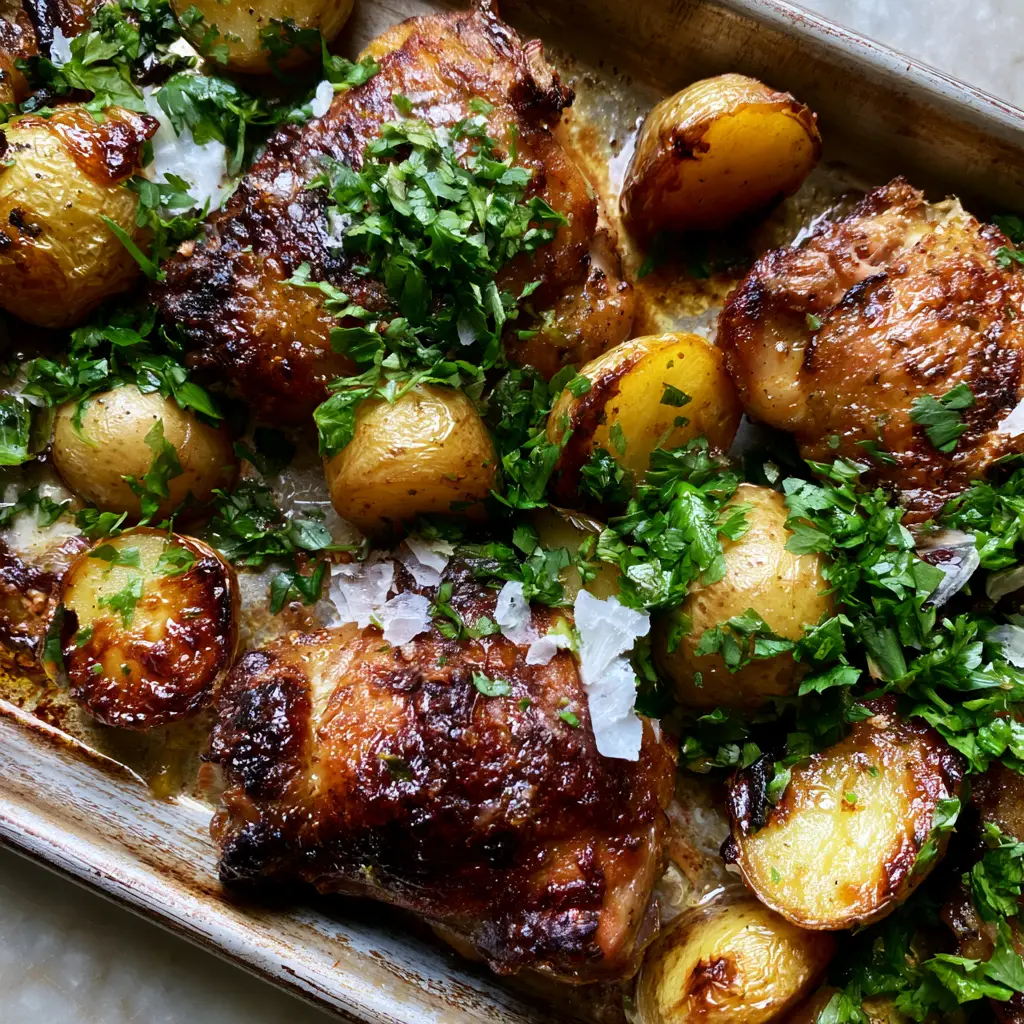
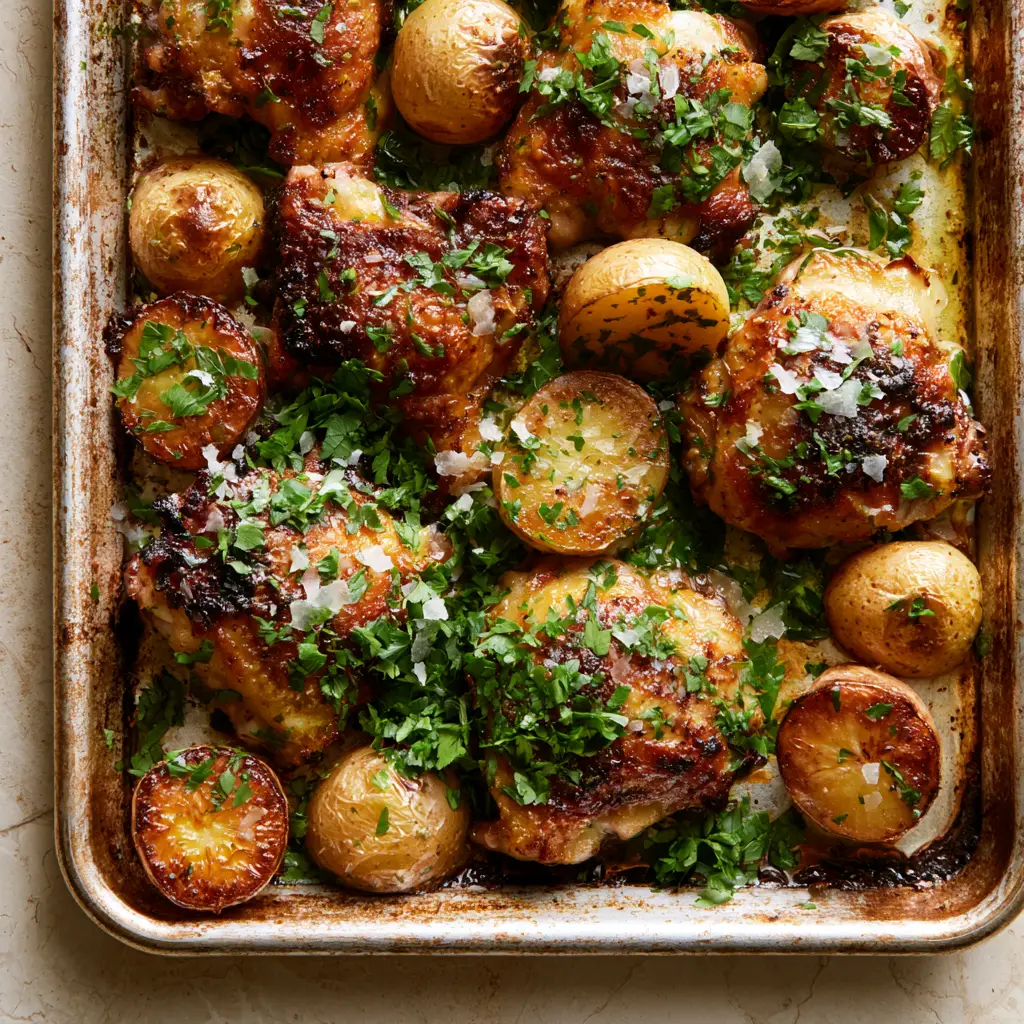
Imagine pulling a pan out of the oven where the chicken skin has been rendered into a deeply blistered, crackling crust with charred, savory edges. Tucked between those thighs are baby gold potatoes that have spent forty-five minutes bathing in natural chicken drippings, resulting in undersides so caramelized they look like stained glass.
This recipe isn’t just about feeding the family; it’s about mastering the textures of a rustic, bird’s-eye view masterpiece. We are focusing on the contrast between the vibrant green of freshly chopped flat-leaf parsley and the golden-brown hues of perfectly roasted poultry.
Why This One-Pan Meal Redefines Your Evening Routine
- Textural Perfection: We achieve a “blistered” skin effect that mimics high-end rotisserie chicken using a specific high-heat roasting method.
- Caramelization Mastery: By placing potato halves cut-side down, we create a crisp, candy-like crust on the baby golds that absorbs the natural chicken juices.
- Minimal Cleanup: This entire weeknight chicken dinner is contained within a single rustic metallic pan, making the post-dinner routine effortless.
- Symphony of Seasoning: The finishing touch of large sea salt flakes and cracked black pepper provides a crunch that elevates the flavor profile beyond basic seasoning.
The Anatomy of Flavor: Essential Ingredients for the Perfect Roast
Every ingredient in this dish serves a specific purpose, from the structural integrity of the potato to the aromatic finish of the herbs. We are not just cooking; we are building a flavor profile that relies on quality and technique.
Bone-In, Skin-On Chicken Thighs (approx. 2 lbs / 900g): This is non-negotiable for achieving that blistered skin. The bone keeps the meat moist during the high-heat roasting process required for the weeknight chicken dinner.
Baby Gold Potatoes (1.5 lbs / 680g): These waxy potatoes hold their shape beautifully. Their thin skins crisp up without peeling, and their creamy interior provides a stark contrast to the crunchy exterior.
Extra Virgin Olive Oil (3 tbsp / 45ml): This acts as the heat conductor. It ensures the heat from the metallic pan is distributed evenly to the potatoes and helps the chicken skin reach its blistered potential.
Fresh Flat-Leaf Parsley (1/2 cup / 20g): Added only at the very end, this provides a “bright green” visual pop and a fresh, herbaceous note that cuts through the richness of the chicken drippings.
Maldon Sea Salt Flakes (to taste): Unlike table salt, these large flakes catch the light and provide a localized burst of salinity. They are the “glisten” factor seen in professional food styling.
Freshly Cracked Black Pepper (to taste): Use a coarse grind here. The large pepper fragments provide a subtle heat and a rustic aesthetic that matches the seasoned metallic pan.
Garlic Powder and Smoked Paprika (1 tsp each / 5g): These are “invisible” flavor boosters. While not the stars, they contribute to the deep golden-brown color and “charred edges” described in our visual blueprint.
Professional Tools for a Rustic Result
To achieve the specific look of a seasoned metallic sheet pan, you need the right equipment. A heavy-duty aluminum or carbon steel pan is superior to non-stick for this recipe because it promotes better browning.
Avoid using parchment paper if you want the “caramelized undersides” on the potatoes. Direct contact with the metal pan is what creates that sought-after crust. A handheld smartphone photo style thrives on these rustic, unedited textures.
The Culinary Science of the Blistered Weeknight Chicken Dinner
Phase 1: Preparing the Foundation
Preheat your oven to 425°F (220°C). High heat is the only way to achieve the blistered skin and charred edges without overcooking the interior of the chicken. Scrub your baby gold potatoes and slice them exactly in half.
Pat the chicken thighs bone-dry with paper towels. Any moisture on the skin will create steam, which is the enemy of the “deeply blistered” texture. If the skin isn’t dry, it won’t crackle.
Phase 2: Seasoning and Pan Placement
In a large bowl, toss the potato halves with half the olive oil, sea salt, and black pepper. In a separate bowl, coat the chicken thighs with the remaining oil, garlic powder, and paprika. This ensures the chicken has the “golden-brown” base color before the roasting even begins.
Place the chicken thighs on the sheet pan, leaving space between them. Nestling the potatoes cut-side down in the gaps is the secret. This allows the chicken drippings to pool slightly around the potatoes, frying the cut surface as they roast.
Phase 3: The High-Heat Roast
Roast for 35 to 45 minutes. Watch for the sensory cues: you should hear a vigorous sizzling sound and smell the rendered fat. The skin will transition from pale to golden, and finally to a blistered, uneven texture with charred bits on the edges.
Do not flip the chicken or the potatoes. We want the heat to remain constant on the skin side of the chicken and the cut side of the potato to ensure maximum caramelization.
Phase 4: The Finishing Touches
Once removed from the oven, let the pan rest for 5 minutes. This allows the natural chicken juices to settle, creating that “subtle glisten” on the pan. Scatter the freshly chopped flat-leaf parsley generously over the entire surface.
Finish with an extra sprinkle of sea salt flakes. The contrast of the bright green parsley against the dark, charred edges of the chicken creates the bird’s-eye view perfection we are aiming for.
Expert Tips for Roasting Success
- The Dry Skin Rule: For the ultimate blistered skin, leave the chicken thighs uncovered in the fridge for 2 hours before cooking. This air-dries the skin perfectly.
- Pan Overcrowding: If the pan is too full, the chicken will steam instead of roast. Use two pans if necessary to maintain the “rustic, seasoned” look.
- Potato Selection: Use gold potatoes rather than russets. Russets are too starchy and will fall apart, whereas golds maintain the “crispy, caramelized” structure.
- Oil Choice: Avocado oil is a great alternative to olive oil as it has a higher smoke point, perfect for 425°F (220°C) roasting.
How to Store and Revive Your Leftovers
Store leftovers in an airtight container for up to 3 days. However, the “blistered” skin will soften in the fridge. To revive that “crispy, caramelized” texture, avoid the microwave.
Reheat the chicken and potatoes in an air fryer at 375°F (190°C) for 5 minutes, or back on a metallic sheet pan in the oven. This restores the crunch and the “natural roasting juices” that make this weeknight chicken dinner so special.
Complementary Pairings for a Full Feast
While this sheet pan meal is a complete thought, you can expand the menu. If you love the flavors of roasted poultry, you might enjoy exploring a savory African chicken stew or the citrusy notes of a Senegalese chicken yassa.
For those who prefer a different protein for their next meal, a classic steak dinner offers a similar rustic appeal. If you want to stay in the realm of poultry but with a more refined sauce, try a Chicken Christopher style preparation.
If you have leftover chicken, it works beautifully in a homemade chicken salad or even tucked into cheesy chicken enchiladas.
Frequently Asked Questions
You can, but breasts cook faster and have less fat, meaning they won’t blister as well and may dry out before the potatoes are fully caramelized.
No! To get that deep caramelization on the undersides, leave them cut-side down for the entire roasting duration.
Yes, metal is a superior heat conductor compared to glass or ceramic, which is essential for the searing and blistering effects seen in this recipe.
Adding the parsley only after the pan has slightly cooled prevents it from wilting and turning dark, maintaining that bright green visual pop.
The two most common culprits are moisture on the skin or a low oven temperature. Ensure the chicken is patted bone-dry and your oven is at least 425°F (220°C).
The Ultimate Weeknight Chicken Dinner Recipe
Weeknight Chicken Dinner with Blistered Thighs and Caramelized Gold Potatoes
Ingredients
Equipment
Method
- Preheat your oven to 425°F (220°C). Scrub potatoes and slice in half. Pat chicken thighs with paper towels until completely dry.
- Toss potatoes in a bowl with 1.5 tbsp oil, salt, and pepper. In another bowl, coat chicken with remaining oil, garlic powder, and paprika.
- Place chicken skin-side up on the metallic pan. Nest potatoes cut-side down around the chicken to ensure caramelized undersides.
- Roast for 35-45 minutes until the skin is blistered and the internal temperature of the chicken reaches 165°F (74°C).
- Let rest for 5 minutes. Scatter fresh parsley and extra sea salt flakes over the pan before serving directly from the sheet.
Notes
Keep potatoes cut-side down for the entire cooking time to maximize caramelization.

Bring This Rustic Roast to Your Table
This weeknight chicken dinner proves that you don’t need complex ingredients to create a visually stunning and culinarily superior meal. The combination of blistered skin, caramelized gold potatoes, and fresh parsley is a timeless trio that never fails to satisfy.
If you enjoyed this masterclass in sheet pan roasting, we would love to hear from you. Leave a comment below with your results, and don’t forget to share your photos! For more visual inspiration and rustic recipes, follow us on Pinterest.