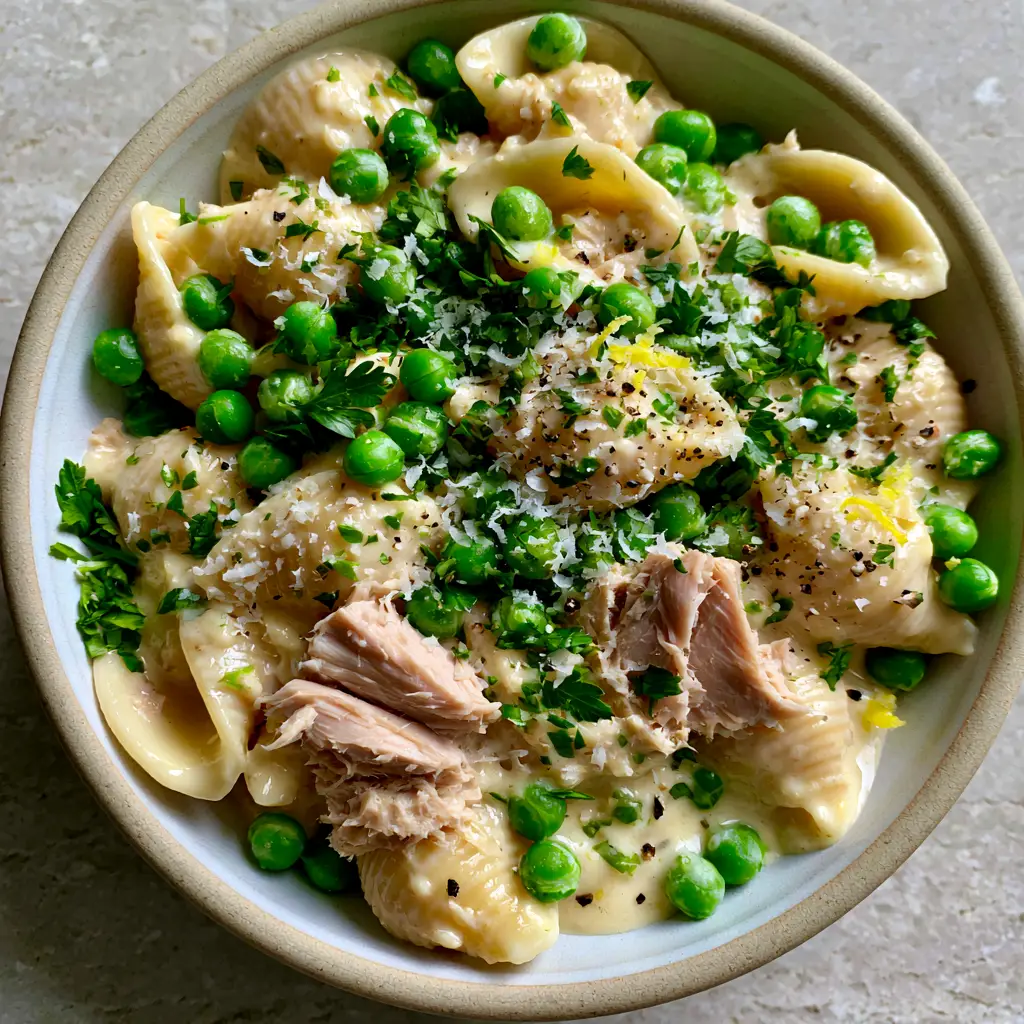
The Creamy Parmesan tuna pasta is a revelation in weeknight cooking, proving that pantry staples can be transformed into a gourmet experience. This dish isn’t just a meal; it is a study in texture and balance, featuring shells that cradle a velvet-thick sauce and large, succulent flakes of tuna that stand out against the ivory cream.
Inspired by the classic comfort of a tuna melt but elevated with the sophistication of a Parisian bistro, this recipe focuses on visual and culinary harmony. Every bite delivers the pop of bright green steamed peas and the sharp, citrusy brightness of fresh lemon zest to cut through the rich parmesan.
Whether you are looking for a quick 20-minute dinner or a sophisticated way to use that high-quality canned tuna in your cupboard, this recipe delivers. The glossy sheen of the sauce and the vibrant herb garnish make it a “smartphone-photo-ready” dish that tastes even better than it looks.
Why This Elegant Shell Pasta Recipe Works
- Textural Contrast: The combination of al dente pasta shells and tender tuna flakes provides a satisfying mouthfeel that goes beyond your average casserole.
- Glossy Emulsification: We use a specific technique to ensure the parmesan cream sauce achieves a thick, ivory-colored glow that clings to every curve of the pasta.
- Pantry-to-Table Luxury: By utilizing frozen peas and canned tuna alongside fresh aromatics, you achieve a high-end result with minimal grocery shopping.
- Balanced Brightness: The heavy dusting of micro-planed parmesan and fresh lemon zest prevents the cream sauce from feeling overly heavy on the palate.
Essential Components for a Glossy Parmesan Sauce
Medium Pasta Shells: 1 lb (454g). Shells are the superior choice here because their concave shape acts as a tiny vessel for the parmesan cream.
Canned Solid White Tuna: 10 oz (280g) drained. Use “Solid” rather than “Chunk” tuna to ensure you get those large, distinct flakes of light pink fish described in our visual blueprint.
Heavy Cream: 1.5 cups (360ml). This provides the essential fat content required for a stable, glossy ivory-colored sauce that won’t break when heated.
Freshly Grated Parmesan Cheese: 1 cup (90g). Use a micro-plane to create a snow-like texture that melts instantly into the cream for a smooth finish.
Frozen Sweet Peas: 1 cup (150g). These should be steamed just until they reach a “bright pop” of vibrant green, adding a burst of sweetness to the salty tuna.
Fresh Italian Parsley: 1/4 cup (15g) finely chopped. This isn’t just a garnish; it adds a necessary earthy freshness that balances the richness of the dairy.
Lemon Zest and Juice: 1 large lemon. The zest provides the aromatic oils visible on the surface, while the juice provides the acidity to lift the entire flavor profile.
Unsalted Butter: 2 tbsp (30g). This is our “invisible” foundational ingredient used to sauté the garlic and provide a silkier finish to the sauce.
Fresh Garlic: 3 cloves (15g) minced. Garlic provides the aromatic base that bridges the gap between the seafood and the cream.
Starch-Rich Pasta Water: 1/2 cup (120ml) reserved. This is the secret weapon for ensuring your sauce is thick and glossy rather than thin and oily.
Professional Tools for Gourmet Results
To achieve the specific visual result of a thick, glossy ivory sauce, you will need a wide, deep skillet or a saucier. This allows for even evaporation and better emulsification of the cheese.
A micro-plane is non-negotiable for the parmesan garnish. Traditional graters create “shreds” that look heavy; a micro-plane creates the “generous dusting” seen in our professional photography prompt. You will also need a fine-mesh zester for the lemon and a standard pasta pot.
The Culinary Blueprint: Mastering the Creamy Parmesan Tuna Pasta
The Secret to Perfect Al Dente Shells
Bring a large pot of salted water to a rolling boil. Use about 1 tablespoon (15g) of salt per 4 quarts (3.8L) of water; it should taste like the sea.
Cook the shells for exactly 2 minutes less than the package instructions. This “undercooking” is vital because the pasta will finish cooking inside the warm cream sauce, absorbing flavor without becoming mushy.
Building the Aromatic Base
In your large skillet, melt the butter over medium heat until it begins to foam. Add the minced garlic and sauté for 60 seconds until fragrant but not browned.
If the garlic begins to turn golden, the flavor will become too bitter for this delicate ivory sauce. Keep the heat controlled to maintain that clean, creamy profile.
Achieving the Glossy Ivory Cream Sauce
Pour the heavy cream into the skillet and bring to a gentle simmer. Do not let it reach a hard boil, as this can cause the dairy to separate.
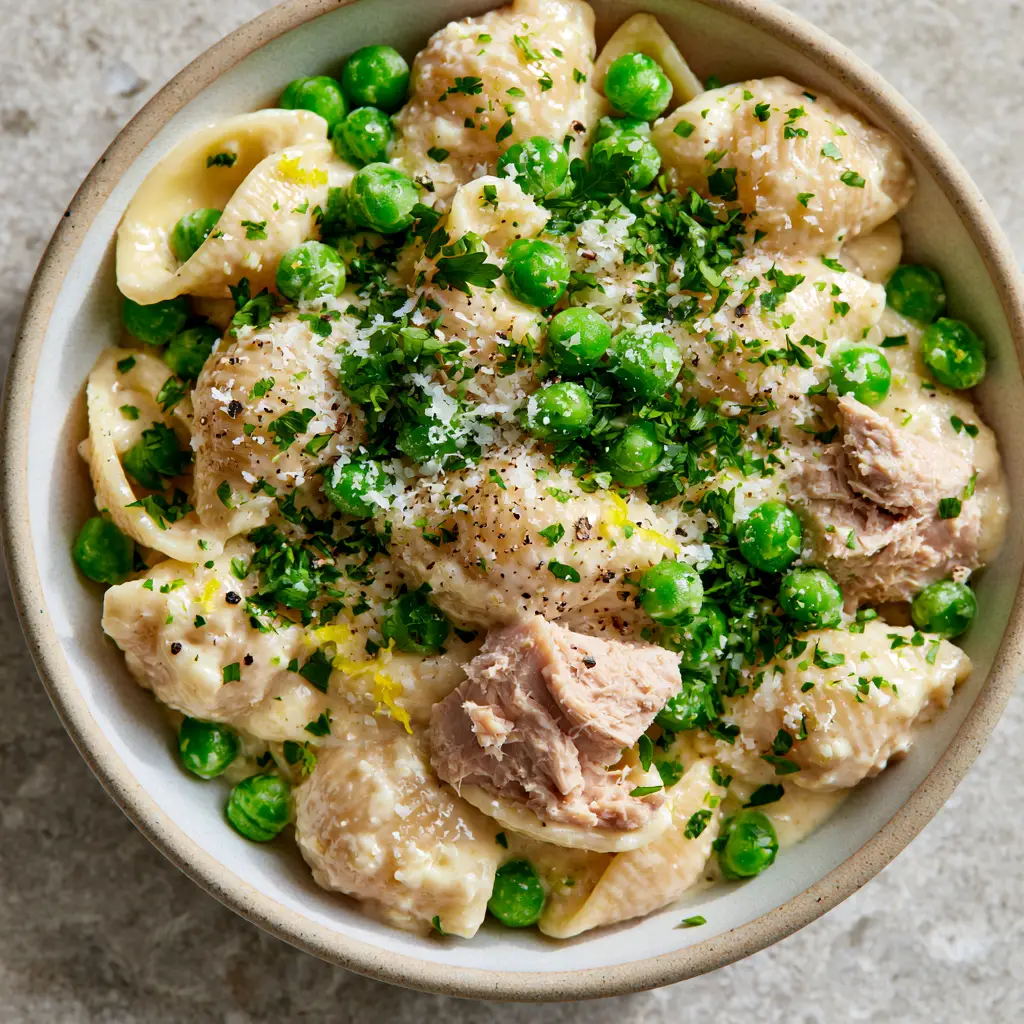
Slowly whisk in the micro-planed parmesan cheese. Use a circular motion, adding the cheese in small handfuls. You are looking for a visual cue of “glossy and thick” where the sauce coats the back of a spoon without running off immediately.
Incorporating the Protein and Vegetables
Gently fold in the drained tuna. Use a spatula to keep the flakes large; do not over-stir, or you will end up with a “mushy” texture rather than the “large, distinct flakes” in our blueprint.
Add the steamed peas at the very last moment. This ensures they maintain their vibrant green color and “pop” texture against the pale ivory sauce.
The Final Emulsification and Garnish
Toss the al dente shells into the skillet. If the sauce is too thick, add a splash of the reserved pasta water. The starch in the water acts as a bridge between the pasta and the fat in the sauce.
Finish the dish with a heavy dusting of micro-planed parmesan, finely chopped parsley, and a scattering of lemon zest. The specks of cracked black pepper should be the final touch for visual contrast.
Expert Tips for Success
- Mind the Tuna: Always drain your tuna thoroughly. Excess water or oil from the can will dilute the parmesan cream and prevent it from reaching that glossy consistency.
- The Heat Factor: Never add the parmesan cheese to boiling cream. Residual heat or a low simmer is best to prevent the cheese from clumping into a rubbery mass.
- Vibrant Peas: If you aren’t serving immediately, shock your steamed peas in ice water. This locks in the “bright green” color seen in our professional photos.
- Pasta Water Reserve: Always scoop out your pasta water before draining. It contains the liquid gold (starch) needed to adjust your sauce’s viscosity at the end.
Storage, Reheating, and Make-Ahead Advice
This dish is best served immediately to appreciate the glossy texture of the sauce. However, leftovers can be stored in an airtight container for up to 2 days in the refrigerator.
To reheat, add a splash of milk or cream to the bowl before microwaving or heating on the stove. This mimics the original hydration of the sauce, which the pasta will have absorbed while sitting.
We do not recommend freezing this recipe. The high dairy content and the delicate texture of the tuna do not survive the thawing process well, often resulting in a grainy sauce.
What to Serve with This Creamy Pasta
To balance the richness of the Creamy Parmesan tuna pasta, we recommend starting with a light, acidic appetizer like our creamy cucumber salad. The vinegar notes provide a sharp contrast to the parmesan.
If you enjoy this flavor profile, you might also love our bright lemon pasta or the more rustic classic tuna tetrazzini. For those who want a bit more heat with their seafood, our lemon garlic salmon pasta is a fantastic alternative.
If you’re hosting a larger dinner, consider pairing this with a side of garlic parmesan zucchini to keep the flavor theme consistent throughout the meal.
Frequently Asked Questions
You can, but the sauce will be significantly thinner and less glossy. If using milk, you may need to create a light roux with flour and butter first to achieve the desired thickness.
Yes, but for the ‘bright pop’ of green seen in the recipe, it is best to steam them separately for 2 minutes before folding them into the sauce at the very end.
Avoid boiling the heavy cream once the cheese is added. Keep the heat on a low simmer and stir constantly while adding the parmesan to ensure a smooth, glossy emulsification.
For the best visual and textural results, use Solid White Albacore tuna. It provides the large, distinct flakes seen in the photos, whereas ‘chunk’ tuna tends to break down into smaller bits within the sauce.
Medium shells are ideal because their shape captures and holds the thick parmesan cream sauce, ensuring every bite is perfectly balanced with sauce and tuna.
The Ultimate Creamy Parmesan Tuna Pasta Recipe Card
Creamy Parmesan Tuna Pasta with Lemon and Sweet Peas
Ingredients
Equipment
Method
- Cook pasta shells in salted water for 2 minutes less than package directions until al dente. Reserve 1/2 cup (120ml) of pasta water before draining.
- Melt butter in a large skillet. Sauté minced garlic for 60 seconds until fragrant but not browned.
- Add heavy cream and bring to a low simmer. Gradually whisk in micro-planed parmesan until the sauce is thick and glossy ivory.
- Gently fold in large flakes of tuna and steamed peas, being careful not to break the fish apart.
- Add cooked shells to the skillet. Toss to coat, adding pasta water if needed. Top with parsley, lemon zest, and cracked black pepper.
Notes
Use a micro-plane for the cheese to ensure it melts smoothly without clumping.
Closing & Call to Action
This Creamy Parmesan tuna pasta is the ultimate proof that simple ingredients can produce a world-class meal. With its thick, glossy ivory sauce and vibrant pops of green peas, it’s a dish that satisfies both the eyes and the appetite. It’s a sophisticated upgrade to your weekly rotation that feels like a treat every time.
Did you make this recipe? We would love to hear how those large tuna flakes and lemon zest turned out for you! Please leave a comment below and share your photos with us. Don’t forget to follow us and save this recipe to your favorite boards on Pinterest for your next easy dinner night!