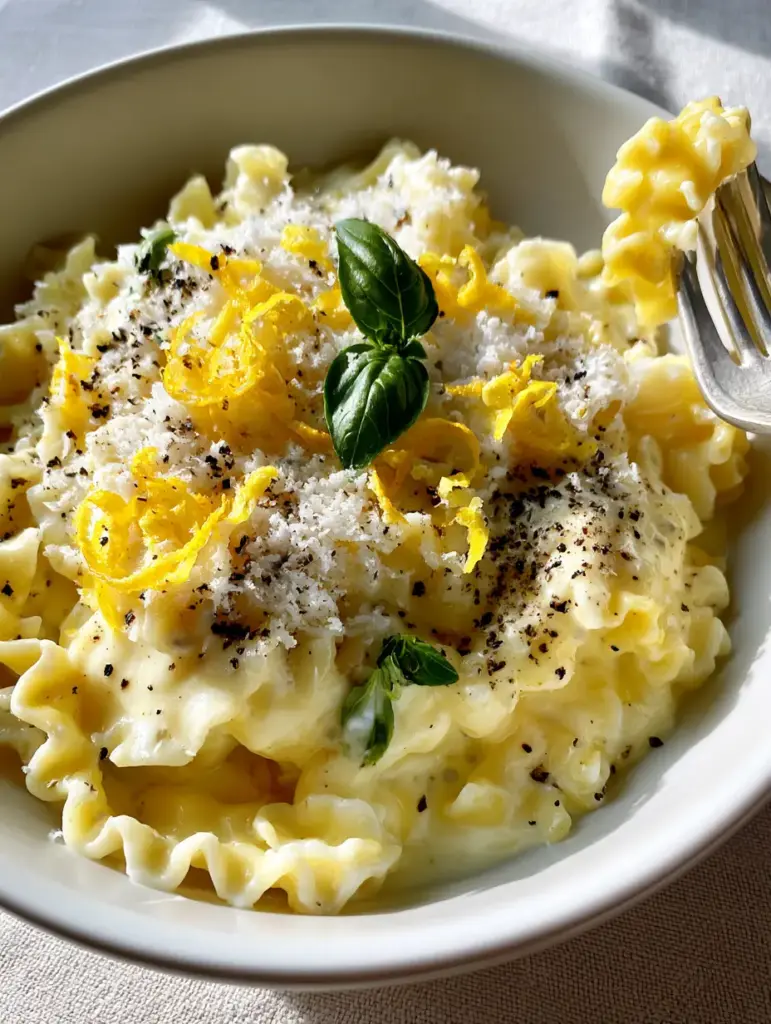
There is a specific kind of magic that happens when citrus meets heavy cream and artisanal pasta. The Mafaldine Pasta Limone is not just a meal; it is a visual and sensory masterpiece that captures the essence of a sun-drenched Italian afternoon. With its long, ruffled edges designed to trap every drop of velvety sauce, this dish is a staple for those who crave elegance without complexity.
This particular recipe focuses on achieving a professional-grade “mantecatura.” This is the Italian technique of finishing pasta in the pan to create a marriage between the noodle and the sauce. The result is a glossy, pale yellow coating that clings to every ribbon, exactly like the high-end photography you see in luxury culinary magazines.
Whether you are hosting a sophisticated dinner party or simply want to elevate your weeknight routine, this Mafaldine Pasta Limone delivers. It balances the sharp brightness of fresh lemon zest curls with the deep, savory notes of micro-planed Parmesan cheese. Let’s dive into the science of making this silky, citrusy dream a reality in your kitchen.
Why You Will Fall in Love with This Ruffled Citrus Masterpiece
- Architectural Texture: The ruffled edges of the Mafaldine (also known as Reginette) create the perfect “sauce trap,” ensuring no drop of the lemon cream is left behind.
- Glossy Emulsion: Using a specific ratio of pasta water and high-fat cream, we achieve a sauce that is thick, velvety, and shimmering.
- Zesty Vibrancy: The dual use of fresh lemon juice and delicate zest curls provides a multi-layered citrus experience that cuts through the richness of the butter.
- Visual Sophistication: Topped with fluffy, micro-planed cheese and fresh basil, this dish looks like it was plated by a Michelin-starred chef.
The Ultimate Pantry List for Silky Mafaldine Pasta Limone
Mafaldine Pasta: Use 16 oz (450g) of high-quality bronze-die extruded pasta. The rough surface of bronze-die pasta is essential for the glossy lemon sauce to adhere properly to the ruffled ribbons.
Heavy Cream: You will need 1 cup (240ml) of heavy whipping cream. This provides the foundational body for the sauce, creating that pale yellow, velvety texture described in our visual blueprint.
Unsalted Butter: Include 4 tbsp (56g) of high-quality unsalted butter. As the butter melts, it leaves a slight residue that adds a luxurious mouthfeel and a golden sheen to the final plating.
Fresh Lemons: You require 2 large lemons for both 4 tbsp (60ml) of juice and several long, vibrant zest curls. Freshness is paramount here, as bottled juice lacks the essential oils found in the peel.
Parmesan Cheese: Use 1 cup (90g) of freshly micro-planed Parmigiano-Reggiano. Using a micro-plane creates the “fluffy” dusting effect seen in the visual prompt, which melts instantly into the heat of the pasta.
Fresh Basil: A handful of small, tender whole basil leaves. These provide a peppery aromatic contrast to the creamy sauce and a pop of vibrant green color.
Black Pepper: Use freshly cracked black pepper for a heavy garnish. The coarse grind provides a sharp bite that punctuates the richness of the lemon cream.
Kosher Salt: Essential for seasoning the pasta water until it “tastes like the sea.” This is the only chance you have to season the pasta ribbons from the inside out.
Essential Kitchen Tools for Professional Results
To achieve the specific textures in this Mafaldine Pasta Limone, you will need a few specific tools. A large wide-rimmed skillet or sauté pan is better than a pot for the final toss, as it allows for better evaporation and emulsion. A micro-plane grater is non-negotiable for that “fluffy” cheese effect.
You should also have a sturdy pair of pasta tongs or a silver fork for swirling the ribbons into the bowl. A channel knife or a very sharp vegetable peeler will help you create those elegant lemon zest curls. Finally, a heavy-duty pepper mill will ensure your cracked black pepper has the right coarse texture.
The Culinary Blueprint: Step-by-Step Evolution
Perfecting the Al Dente Mafaldine Ribbons
Bring a large pot of water to a rolling boil and season generously with salt. Add 16 oz (450g) of Mafaldine pasta and cook for approximately 8-10 minutes. You are looking for a true “al dente” texture where the center of the ribbon still has a slight, firm bite.
Before draining, use a measuring cup to reserve at least 1 cup (240ml) of the starchy pasta water. This “liquid gold” contains the starch needed to bind your lemon cream sauce to the ruffled edges. Drain the pasta but do not rinse it; the surface starch is vital for the emulsion.
Crafting the Glossy Lemon Cream Base
In your large skillet, melt 4 tbsp (56g) of butter over medium heat until it begins to foam. Pour in 1 cup (240ml) of heavy cream and 4 tbsp (60ml) of fresh lemon juice. Whisk the mixture gently as it begins to simmer and slightly thicken.
Observe the sensory cues: the sauce should transition from a liquid state to a thick, pale yellow coating. It should smell intensely of citrus and warm butter. If the sauce looks too thin, let it reduce for another 60 seconds until it coats the back of a spoon.
The Art of the Mantecatura
Transfer the cooked Mafaldine directly into the skillet with the lemon cream. Add 1/2 cup (120ml) of the reserved pasta water and toss vigorously with tongs. This motion encourages the fats and starches to emulsify into a glossy, velvety finish.
Continue tossing over low heat until the sauce clings to every ruffle of the pasta. You will hear a distinct “slapping” sound as the pasta moves in the pan, indicating the sauce has reached the perfect consistency. If it looks dry, add a splash more pasta water until it shimmers.
Plating with Visual Precision
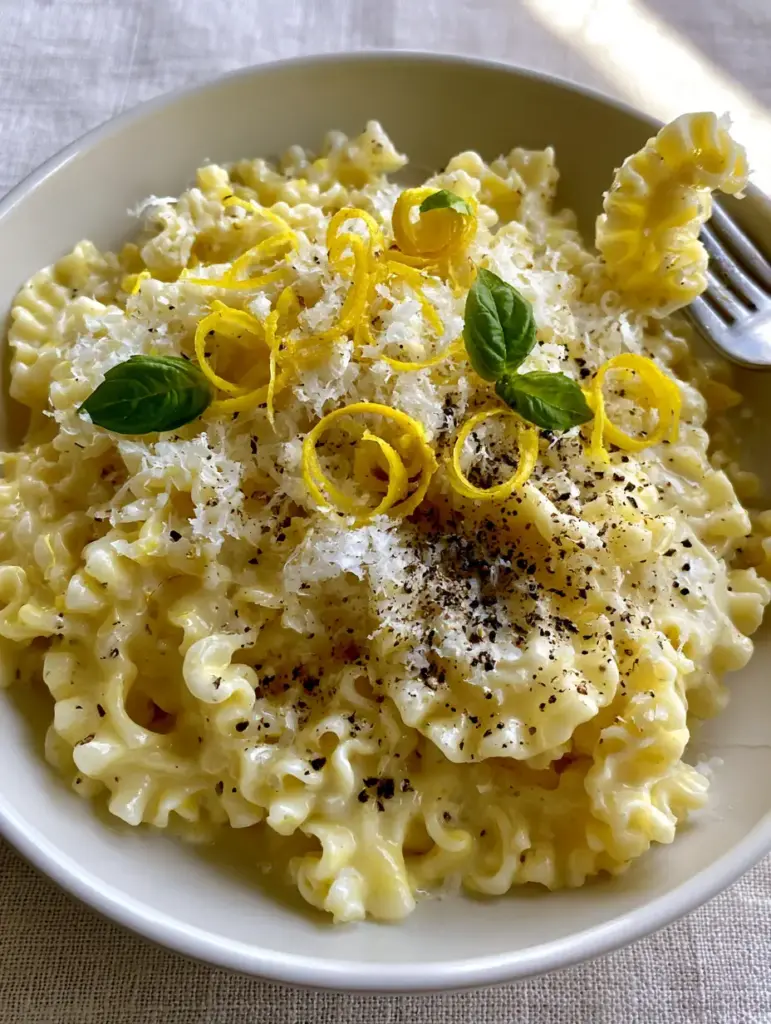
Twirl a generous portion of the pasta into a white ceramic bowl using a silver fork to create height. Ensure the ruffled edges are prominently displayed and well-coated in the glossy sauce. The sauce should pool slightly at the bottom, showing its silky texture.
Immediately top with a generous dusting of micro-planed Parmesan cheese so it sits fluffily on the surface. Add the long curls of lemon zest and the fresh, whole basil leaves. Finish with a heavy sprinkle of cracked black pepper and a final drizzle of any remaining melted butter from the pan.
Expert Tips for a Five-Star Mafaldine Pasta Limone
- Temperature Control: Never boil the cream sauce once the cheese is added. High heat can cause the Parmesan to clump or the cream to break, ruining the “velvety” texture.
- Zest Before Juicing: Always remove your lemon zest curls before cutting the lemon for juice. It is much easier to get clean, vibrant curls from a whole, firm fruit.
- Warm the Bowls: To keep the glossy sauce from thickening too quickly, warm your ceramic serving bowls in a low oven before plating.
- The “Slap” Test: When tossing the pasta, look for the sauce to look like a thin glaze. If it’s too thick, it won’t get into the ruffles; if it’s too thin, it will slide off.
How to Store and Revive Your Lemon Pasta
Mafaldine Pasta Limone is best enjoyed immediately while the emulsion is at its peak. However, if you have leftovers, store them in an airtight container in the refrigerator for up to 2 days. The sauce will naturally thicken and be absorbed by the pasta as it sits.
To reheat, avoid the microwave as it will cause the butter to separate. Instead, place the pasta in a small skillet with a splash of cream or water. Heat gently over low, tossing constantly until the sauce becomes glossy and fluid once again.
What to Serve with This Citrus Delight
This dish is incredibly rich, so it pairs beautifully with light, crisp side dishes. Consider starting with a vibrant Greek salad to provide a refreshing acidic contrast. The cucumbers and olives in the salad work perfectly with the lemon notes.
If you want to add more greenery to your table, these savory zucchini side dishes offer a wonderful earthy balance. For those who want to turn this into a multi-course Italian feast, you might follow it with a lemon garlic salmon pasta if serving a larger crowd.
For a more casual pairing, a simple side of crusty bread is essential for mopping up any leftover glossy lemon cream sauce. The bread provides a neutral base that allows the complex flavors of the Parmesan and basil to shine.
Frequently Asked Questions About Mafaldine Pasta Limone
Yes, while Mafaldine is ideal for its ruffled edges, you can use Fettuccine or Pappardelle. However, the unique texture of the ‘ruffle’ is what makes the Limone sauce cling best.
Absolutely. Pre-grated cheese contains anti-caking agents that prevent it from melting smoothly into the sauce, which will ruin the glossy finish of your Mafaldine Pasta Limone.
Use a channel knife or a sharp vegetable peeler to take long, thin strips of the yellow peel only. Avoid the white pith, as it is bitter and will overpower the delicate cream.
Yes, this recipe is naturally vegetarian as long as you use a vegetarian-friendly hard cheese (some Parmesan uses animal rennet).
Curdling usually happens if the heat is too high or the lemon juice is added too quickly to low-fat milk. Use heavy cream and keep the heat at a gentle simmer to ensure a velvety emulsion.
The Definitive Mafaldine Pasta Limone Recipe
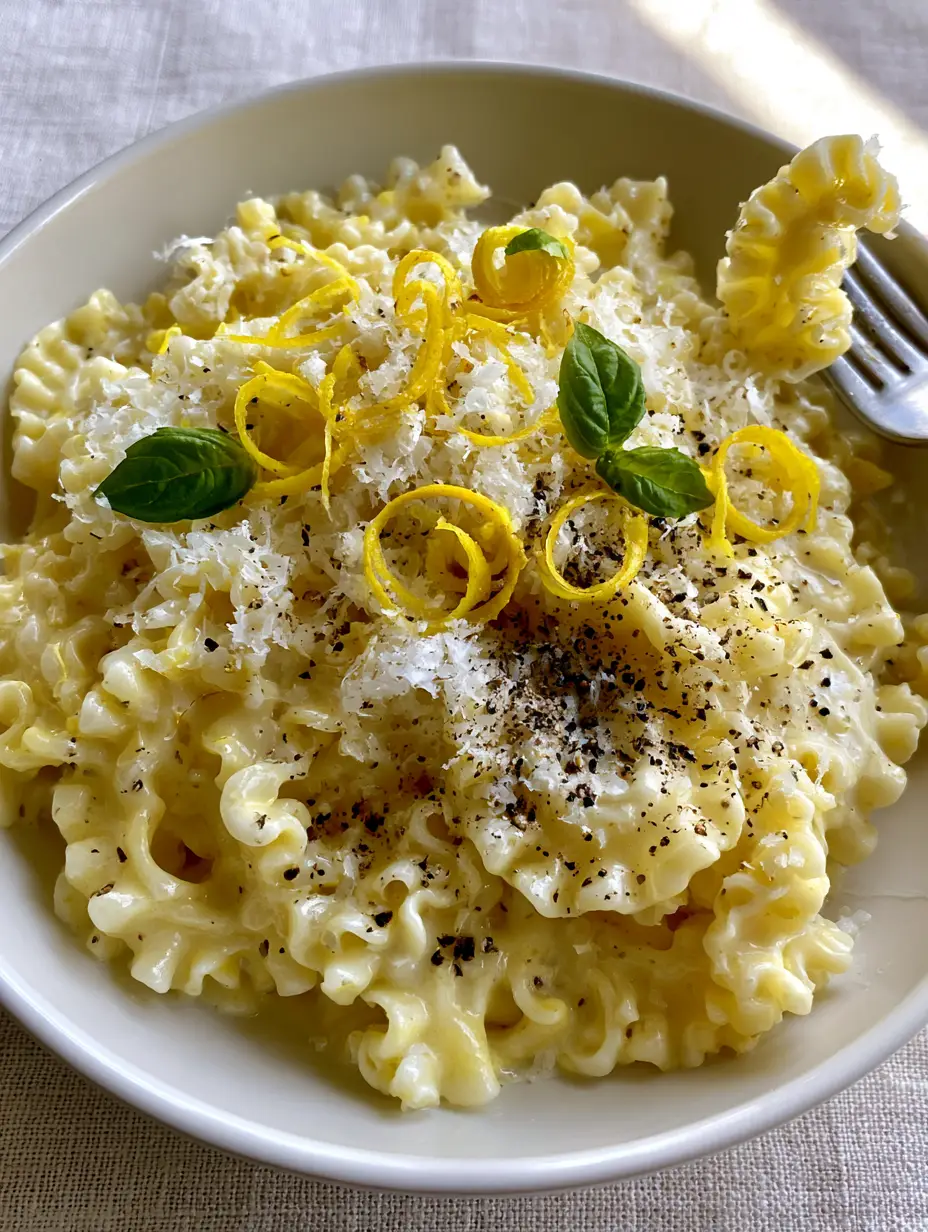
Mafaldine Pasta Limone with a Glossy Lemon Cream Sauce
Ingredients
Equipment
Method
- Boil the pasta in salted water for 8-10 minutes until al dente. Reserve 1 cup (240ml) of pasta water before draining.
- Melt butter in a skillet. Add cream and lemon juice, simmering until the sauce becomes a thick, pale yellow gloss.
- Toss the pasta with the sauce and reserved water over low heat until a velvety emulsion forms and coats every ruffle.
- Top with fluffy micro-planed Parmesan, lemon zest curls, fresh basil, and a heavy sprinkle of black pepper.
Notes
If the sauce breaks, add a tablespoon of cold cream and whisk vigorously.
Closing & Call to Action
Mastering the Mafaldine Pasta Limone is a rite of passage for any home cook who loves the intersection of simple ingredients and high-end results. The combination of the ruffled pasta ribbons and that signature glossy lemon cream sauce creates a dining experience that is both comforting and sophisticated. We hope this recipe brings a touch of Italian elegance to your dining table.
If you enjoyed making this dish, please leave a comment below and let us know how your emulsion turned out! Don’t forget to share your beautiful plating photos on Pinterest and tag us. For more pasta inspiration, sign up for our newsletter to receive weekly gourmet recipes delivered straight to your inbox.