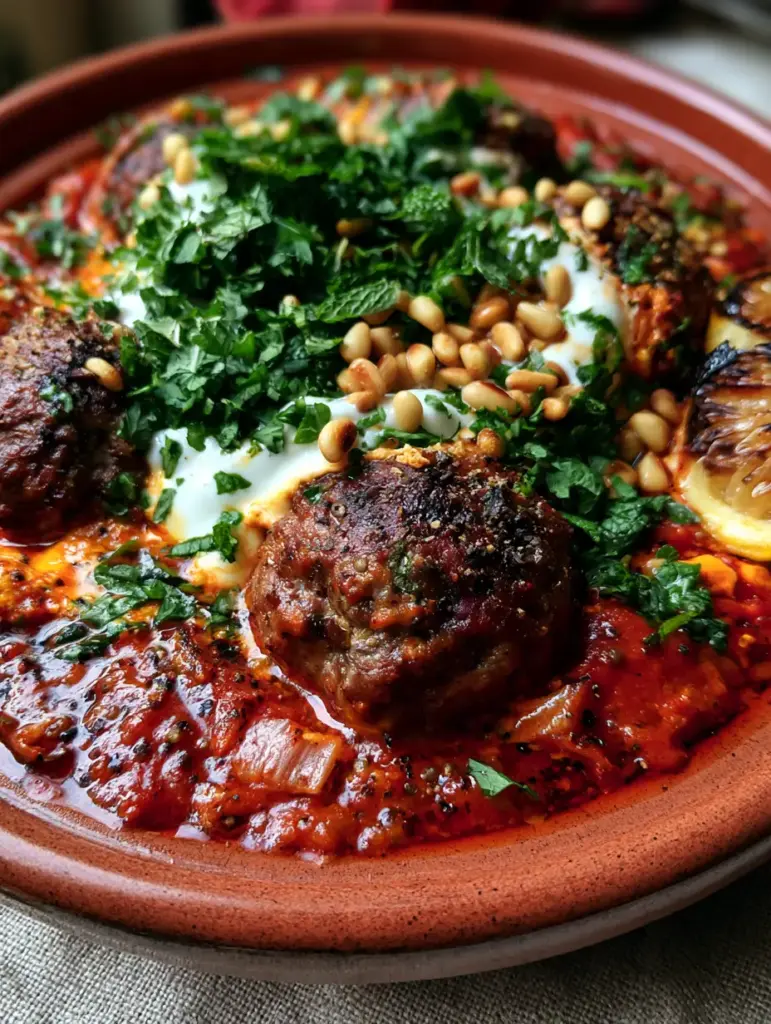
Moroccan meatballs, known traditionally as Kefta, are a masterclass in balancing heat, herb-infused freshness, and deep, savory richness. Imagine a rustic terracotta tagine arriving at your table, wisps of steam carrying the aroma of toasted cumin and warm cinnamon. The meatballs are perfectly browned with subtle char marks, nestled in a bubbling, vibrant deep-red harissa tomato sauce that glistens under the kitchen lights.
This recipe isn’t just about feeding a family; it is a sensory journey that transforms simple ground beef into a gourmet centerpiece. Each bite offers a contrast between the spicy, thick tomato reduction and the cooling dollops of creamy Greek yogurt. Finished with a heavy scattering of bright green cilantro, mint, and the crunch of golden pine nuts, this dish is as visually stunning as it is delicious.
Whether you are looking for a weekend project or a sophisticated weeknight dinner, these Moroccan meatballs deliver a restaurant-quality experience right in your home kitchen. The secret lies in the layering of spices and the high-heat sear that locks in moisture while creating that essential charred exterior shown in our visual blueprint.
Why You Will Crave These Spicy Kefta Meatballs
- Perfectly Seared Texture: We use a high-heat browning technique to ensure every meatball has a savory crust that stands up to the thick sauce.
- Complex Spice Profile: A blend of harissa, cumin, and coriander provides a heat that builds slowly without overwhelming the palate.
- Vibrant Visual Appeal: The contrast of the deep red sauce, white yogurt, and emerald-green herbs makes this a “wow” dish for guests.
- One-Pot Simplicity: By using a rustic terracotta pot or a heavy cast-iron skillet, you develop deep flavors that only a single-vessel simmer can provide.
Essential Ingredients for Authentic Moroccan Meatballs
Ground Beef (80/20 Blend): 1.5 lbs (680g) of high-quality ground beef provides the necessary fat content for a juicy, tender interior. The fat renders during the searing process, creating the “glistening” effect seen in the sauce.
Harissa Paste: 3 tbsp (45g) of spicy North African chili paste acts as the soul of the dish. It provides a smoky, peppery depth that defines the vibrant deep-red color of the tomato base.
Crushed Tomatoes: 1 can (28 oz / 800g) of high-quality crushed tomatoes creates a thick, luxurious texture. This serves as the medium for the meatballs to simmer and absorb flavor.
Diced Yellow Onion: 1 large onion (approx. 200g), finely diced and sautéed until translucent. These provide the visible “flecks of onion” that add sweetness and body to the reduction.
Warm Spice Blend: A combination of 1 tsp (2g) ground cumin, 1 tsp (2g) ground coriander, and 0.5 tsp (1g) cinnamon. These spices bridge the gap between the savory meat and the piquant sauce.
Fresh Herbs: 0.5 cup (15g) each of chopped cilantro and mint. These are not just garnishes; they provide a cooling, aromatic finish that cuts through the richness of the beef.
Greek Yogurt: 0.5 cup (120ml) of full-fat yogurt. Dolloped on top, it provides a creamy, acidic counterpoint to the spicy harissa.
Toasted Pine Nuts: 0.25 cup (35g) of pine nuts, toasted until golden brown. These add a buttery crunch and a sophisticated nutty finish to every spoonful.
Charred Lemon Slices: 1 lemon, sliced and seared. The heat caramelizes the natural sugars in the lemon, providing a mellow acidity that brightens the entire pot.
Foundational Elements: 2 tbsp (30ml) olive oil for searing, 1 tsp (6g) kosher salt, and 0.5 tsp (1g) freshly cracked black pepper. These are invisible but vital for achieving the correct seasoning and char.
Must-Have Tools for the Perfect Tagine Result
To achieve the rustic look of a traditional Moroccan kitchen, a terracotta tagine is the ideal vessel. The conical lid allows steam to circulate, keeping the meat incredibly moist while the sauce thickens.
If you don’t have a tagine, a large heavy-bottomed cast-iron skillet or a Dutch oven will work perfectly. The key is using a vessel that can retain high heat for the initial sear and even heat for the long simmer.
You will also need a stainless steel whisk for smoothing the sauce and a pair of tongs for carefully turning the meatballs without breaking them apart. A small dry pan is also necessary for perfectly toasting the pine nuts to a golden hue.
Mastering the Moroccan Meatballs: Step-by-Step Guide
Crafting the Spiced Kefta Mixture
In a large mixing bowl, combine the ground beef, half of the diced onions, garlic, cumin, coriander, cinnamon, and half of the chopped herbs. Use your hands to gently mix the ingredients until just combined, being careful not to overwork the meat, which can lead to a tough texture.
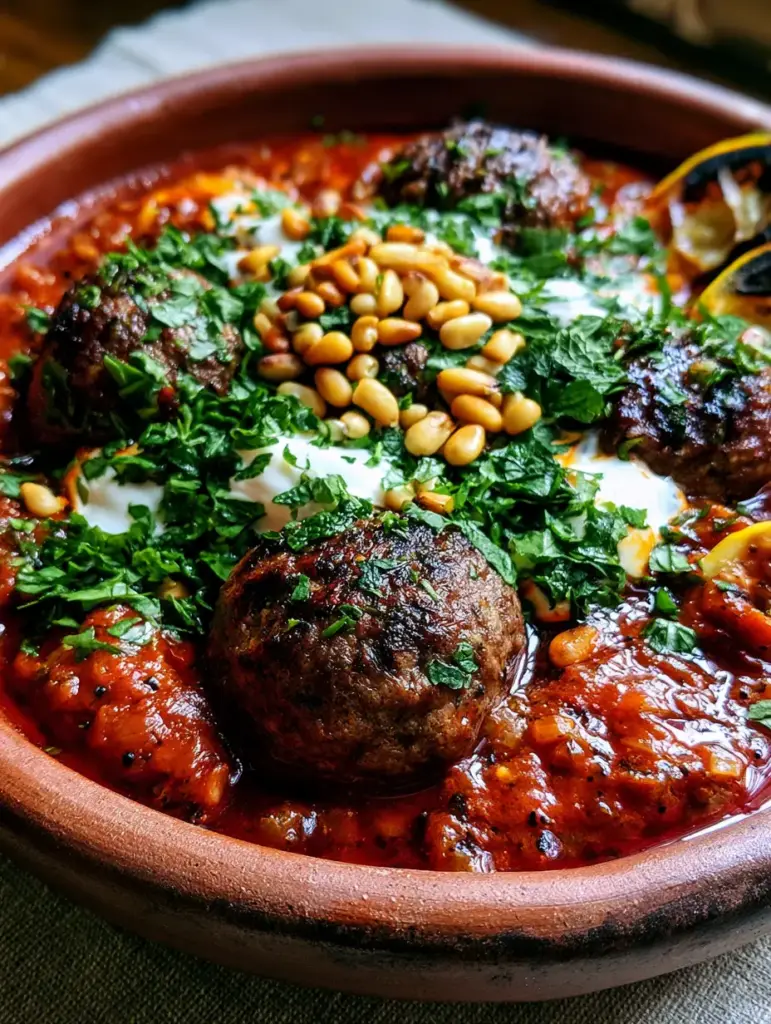
Roll the mixture into small, uniform balls, roughly the size of a golf ball. This ensures they cook evenly and fit perfectly “half-submerged” in the final sauce presentation.
Achieving the Signature Char
Heat 2 tbsp (30ml) of olive oil in your terracotta pot or skillet over medium-high heat. Once the oil is shimmering, add the meatballs in batches, leaving enough space so they don’t steam.
Sear the meatballs for 2-3 minutes per side until a deep golden-brown crust and visible char marks form. Remove the meatballs from the pan and set them aside; they will finish cooking in the sauce later.
Building the Vibrant Harissa Sauce
In the same pan, add the remaining diced onions and sauté in the leftover beef drippings until softened and slightly caramelized. Stir in the harissa paste and tomato paste, cooking for 1 minute to “bloom” the spices and deepen the red color.
Pour in the crushed tomatoes and a splash of water if needed. Simmer the sauce for 10-15 minutes until it thickens into a rich, deep-red consistency where the flecks of onion are still visible but tender.
The Final Simmer and Charred Lemon
Gently place the seared meatballs back into the simmering sauce. They should be roughly half-submerged. While the meatballs finish cooking (about 8-10 minutes), place lemon slices in a separate hot pan until they are charred and slightly softened.
Check the internal temperature of the meatballs; they should reach 160°F (71°C). The sauce should be glistening, with steam wisps rising from the pot as you prepare to serve.
Pro Secrets for Tender and Juicy Moroccan Meatballs
- Cold Meat is Key: Keep your ground beef chilled until the moment you mix it. Cold fat stays within the meat fibers, ensuring a juicier result after searing.
- Don’t Over-mix: Over-handling the beef develops the proteins too much, resulting in a rubbery meatball rather than a tender one.
- The Toasting Rule: Always toast your pine nuts in a dry pan over low heat. They go from golden to burnt in seconds, so stay attentive!
- Balance the Heat: If your harissa is particularly spicy, add a teaspoon of honey to the sauce to balance the capsaicin with a hint of sweetness.
Storing and Reheating Your Spicy Kefta
Moroccan meatballs actually taste better the next day as the spices have more time to meld. Store leftovers in an airtight container in the refrigerator for up to 3 days.
To reheat, place the meatballs and sauce in a small saucepan over low heat. Add a tablespoon of water or beef broth to loosen the sauce, as it will thicken significantly when cold.
You can also freeze these meatballs in the sauce for up to 2 months. Thaw overnight in the refrigerator before reheating gently on the stovetop.
The Best Sides to Pair with Your Spicy Beef Bites
For a complete feast, serve these meatballs alongside a bowl of Moroccan chicken and rice (coming soon) to soak up every drop of the harissa sauce. The aromatic grains provide a perfect textural contrast to the soft beef.
If you prefer something lighter, a crisp cucumber salad or a traditional Greek salad offers a refreshing crunch that balances the spicy heat of the harissa. For a vegetable-heavy meal, try pairing them with these zucchini side dishes.
Looking for a fun appetizer to start the evening? These cowboy butter steak bites share a similar savory profile and make for a decadent start to a Mediterranean-themed dinner party.
Common Questions About Making Meatballs in Harissa Sauce
Absolutely! A heavy cast-iron skillet or a Dutch oven is a perfect substitute. The key is using a pan that holds heat well for a good sear.
Toast them in a dry skillet over medium-low heat. Shake the pan constantly and remove them as soon as they turn light brown, as they continue to cook after leaving the pan.
Harissa varies by brand, but it generally provides a medium-high heat. You can control the spice level by starting with 1 tablespoon and increasing it to your preference.
Charring the lemons softens their sharp acidity and adds a subtle smoky sweetness, which balances the heat of the harissa sauce perfectly.
A ground beef blend with 20% fat is ideal for juiciness, though traditional recipes often use a mix of ground beef and ground lamb for a more authentic, gamey flavor.
The Ultimate Moroccan Meatball Recipe Card

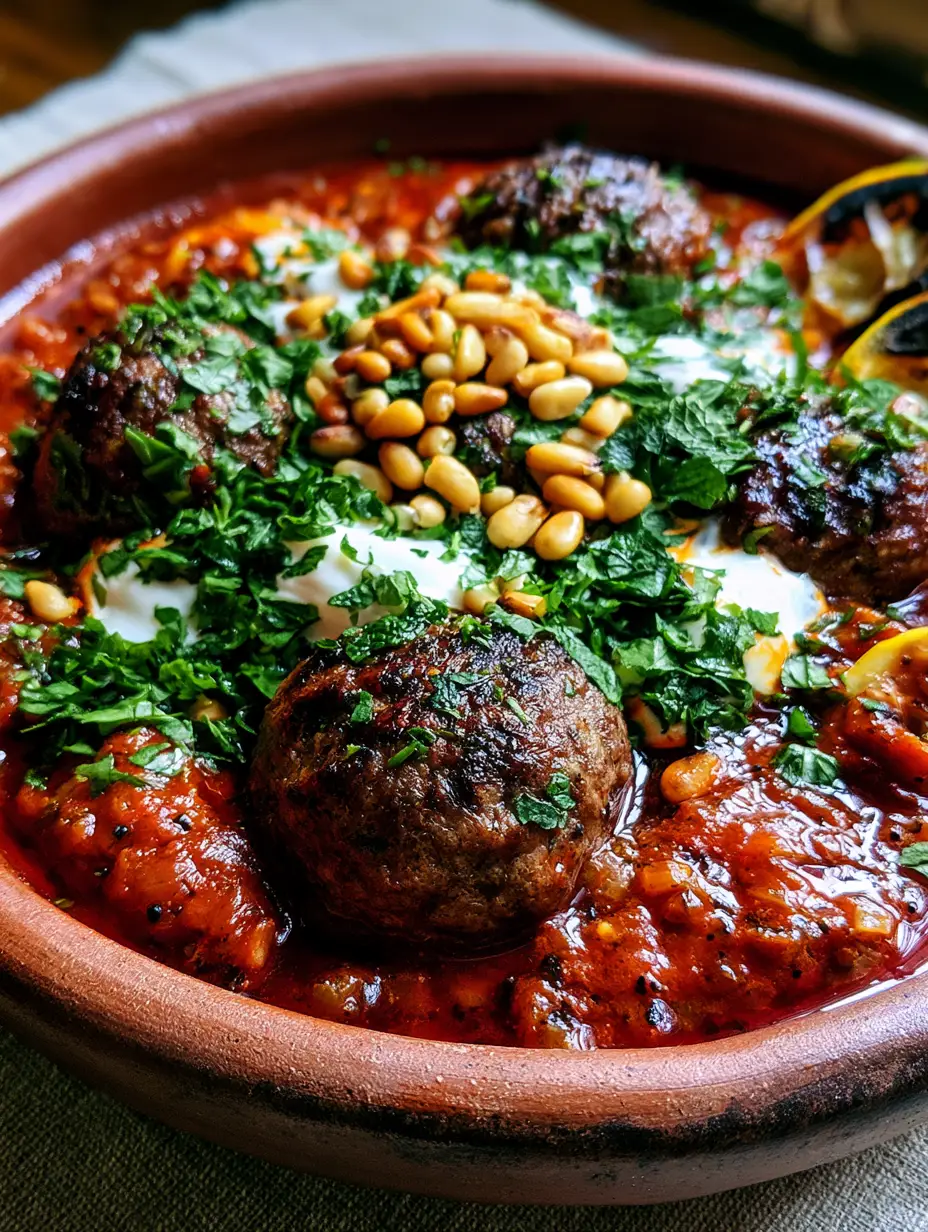
Moroccan Meatballs with Spicy Harissa Tomato Sauce and Toasted Pine Nuts
Ingredients
Equipment
Method
- In a bowl, combine ground beef, half the diced onions, garlic, cumin, coriander, cinnamon, and half the herbs.
- Roll into golf-ball sized rounds, ensuring they are uniform for even cooking.
- Heat oil in a tagine or skillet and sear meatballs until char marks appear, then remove.
- Sauté remaining onions, stir in harissa and tomatoes, and simmer until thick.
- Return meatballs to the sauce, simmer until cooked through, and top with yogurt, nuts, and fresh herbs.
Notes
Adjust the amount of harissa paste based on your preferred spice level.
Bring the Flavors of Marrakesh to Your Table
There is something uniquely comforting about a one-pot meal that looks as beautiful as these Moroccan meatballs. From the charred lemon slices to the glistening harissa sauce, every element of this dish is designed to impress the senses. It is a testament to how simple ingredients, when treated with professional technique, can create an extraordinary dining experience.
If you enjoyed this journey into North African flavors, please leave a comment below and let us know how your meatballs turned out! Don’t forget to share your creations and follow us for more culinary inspiration on Pinterest.