Mastering the perfect Cauliflower Shrimp Fried Rice is a culinary tightrope walk between achieving a crispy, charred texture and avoiding the dreaded “mushy vegetable” trap. If you have ever felt disappointed by soggy cauliflower rice, this technique-driven guide is your solution. We are moving away from steaming and toward high-heat dry-searing to create a dish that rivals any traditional takeout.
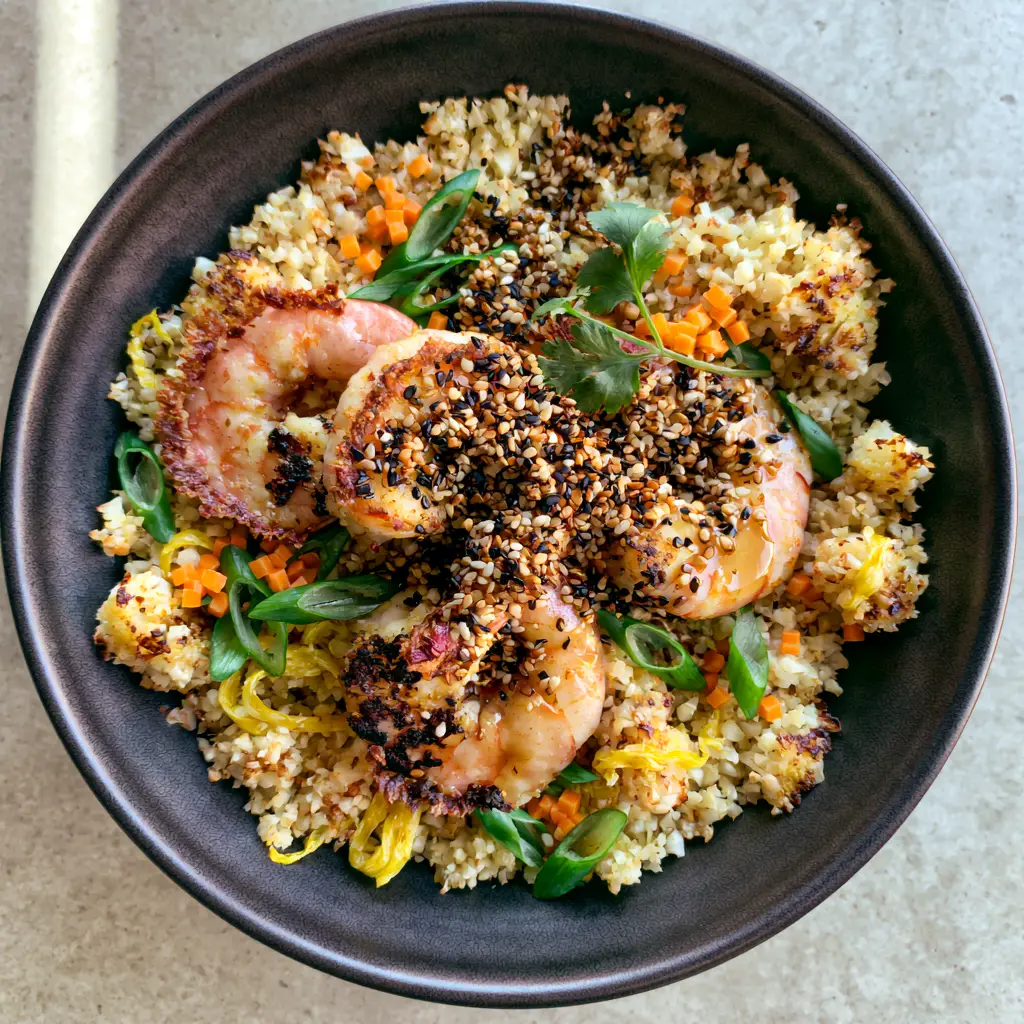
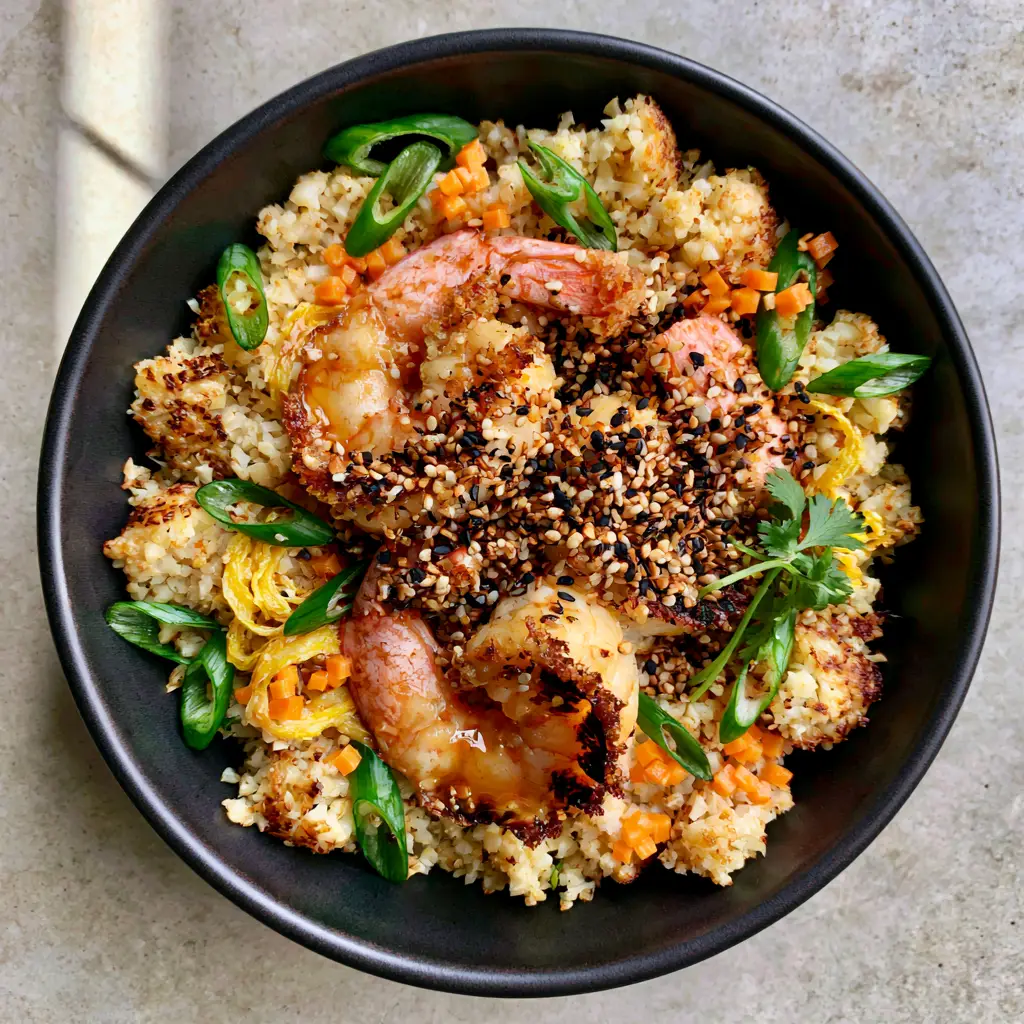
Visualize a matte black ceramic bowl piled high with grains of cauliflower that have been transformed by the heat of a scorching pan. The edges are golden-brown and toasted, providing a nutty depth that pairs perfectly with plump, jumbo shrimp. These shrimp aren’t just cooked; they are pan-seared until their edges are crispy pink with dark, authentic wok sear marks.
Every bite of this Cauliflower Shrimp Fried Rice offers a symphony of textures, from the delicate ribbons of golden scrambled egg to the crunch of micro-diced carrots and a heavy sprinkle of toasted sesame seeds. This isn’t just a healthy alternative; it is a visual and sensory masterpiece that stands on its own merits as a gourmet meal.
Why This Wok-Style Cauliflower Stir-Fry Works
- The Dry-Sear Technique: By cooking the cauliflower rice in a wide, hot pan without crowding, we evaporate moisture instantly, ensuring the grains stay distinct and fluffy rather than clumping together.
- Structural Integrity: Using jumbo shrimp provides a meaty contrast to the light rice, while finely diced carrots add a necessary bite that mimics the texture of traditional fried rice.
- Visual Contrast: The combination of vivid green scallions, bright orange carrots, and a heavy duo of black and white sesame seeds makes this dish pop against a neutral backdrop.
- Umami Glaze: A final light glaze of toasted sesame oil adds a professional glisten and a deep, aromatic finish that lingers on the palate.
Essential Components for the Perfect Charred Result
Riced Cauliflower: Use 4 cups (680g) of fresh riced cauliflower. For the best results, ensure it is completely dry before it hits the pan to achieve those signature toasted edges.
Jumbo Shrimp: You will need 1 lb (450g) of jumbo shrimp, peeled and deveined. Look for a “crispy pink” finish by patting them dry before searing to encourage rapid browning without overcooking the centers.
Large Eggs: 2 large eggs are whisked and cooked into a thin crepe before being sliced into elegant ribbons. This technique ensures the egg is evenly distributed and visually distinct from the rice grains.
Micro-Diced Carrots: 1/2 cup (65g) of carrots, diced as finely as possible. This ensures they soften slightly in the quick sauté while maintaining a bright orange hue and a slight crunch.
Aromatic Base: 2 tbsp (30ml) of avocado oil for high-heat searing, plus 3 cloves of minced garlic and 1 tbsp (15g) of fresh grated ginger for that essential stir-fry fragrance.
The Garnish Trio: 2 tbsp (16g) of green scallions, 1 tsp (3g) each of toasted black and white sesame seeds, and fresh cilantro sprigs. These aren’t just for show; they provide the fresh, herbal finish that cuts through the savory sesame oil.
Seasoning Sauce: 3 tbsp (45ml) of coconut aminos or low-sodium soy sauce, mixed with 1 tsp (5ml) of toasted sesame oil for the final glaze. If you enjoy this flavor profile, you might also love our shrimp avocado bowls for a fresh lunch option.
Professional Tools for Heat Management
To achieve the “wok-heir” or breath of the wok flavor, a heavy-bottomed 12-inch cast iron skillet or a traditional carbon steel wok is mandatory. These materials retain the high heat necessary to sear the Cauliflower Shrimp Fried Rice without the temperature dropping when ingredients are added. You will also need a wide metal spatula to aggressively toss the rice, ensuring every grain hits the hot surface for that charred finish.
Step-by-Step: Mastering the Wok-Seared Texture
Phase 1: Searing the Jumbo Shrimp
Heat 1 tbsp (15ml) of avocado oil in your skillet over medium-high heat until it just begins to shimmer. Add the jumbo shrimp in a single layer, ensuring they do not touch. Sear for 2 minutes per side until you see dark sear marks and a crispy pink exterior. Remove the shrimp from the pan and set aside; they will be nestled back on top later to maintain their plump texture.
Phase 2: Creating the Golden Egg Ribbons
Wipe the pan quickly and add a tiny drop of oil. Pour in the whisked eggs, tilting the pan to create a very thin, even layer. Once set (about 45 seconds), slide the “egg crepe” onto a cutting board. Roll it up tightly and slice crosswise into thin ribbons. This presentation is much more sophisticated than standard scrambled chunks.
Phase 3: The Critical Dry-Sear of the Cauliflower
Turn the heat to high and add the remaining oil. Toss in the riced cauliflower and carrots. Spread them out and let them sit undisturbed for 2-3 minutes. Listen for the aggressive sizzle; this is the sound of moisture leaving the vegetable. Stir once and let sit for another 2 minutes until you see golden-brown toasted edges appearing on the “rice.” If you enjoy hearty rice textures, consider comparing this to our cajun sausage and rice skillet for another high-heat favorite.
Phase 4: Aromatics and Final Assembly
Push the rice to the edges of the pan and add the garlic and ginger to the center. Sauté for 30 seconds until fragrant, then incorporate back into the rice. Pour the coconut aminos mixture over the rice and toss rapidly. The liquid should evaporate almost instantly, leaving a light glisten of sesame oil rather than a puddle of sauce.
Expert Tips for Success
- Avoid the “Frozen” Trap: If using frozen cauliflower rice, you MUST thaw it and squeeze it dry in a kitchen towel. Excess water is the enemy of the sear.
- High Heat is Non-Negotiable: If your pan isn’t smoking slightly, it isn’t hot enough. The goal is to toast the exterior before the interior becomes mushy.
- Layer the Flavor: Don’t season with the sauce until the very end. Salt draws out moisture, and adding it too early will steam the cauliflower.
- Crowd Control: If you are doubling the recipe, cook in two batches. Overcrowding the pan causes the temperature to plummet, resulting in boiled cauliflower.
Storage, Reheating & Freezing
This Cauliflower Shrimp Fried Rice is best enjoyed immediately to preserve the crispy edges of the rice. However, you can store leftovers in an airtight container in the refrigerator for up to 2 days. To reheat, avoid the microwave as it will make the dish soggy. Instead, toss the mixture back into a hot, dry skillet for 3-4 minutes until warmed through and re-crisped.
We do not recommend freezing the finished dish, as the cauliflower will lose its distinct grain structure upon thawing. For a meal-prep friendly option that freezes better, try our taco rice casserole which utilizes grains that hold up better to temperature changes.
What to Serve With This Dish
This recipe is a complete meal on its own, but it pairs beautifully with other Asian-inspired textures. For a refreshing side, try a crisp cucumber salad. If you’re looking for more seafood inspiration, our grilled shrimp bowl offers a similar high-protein, low-carb profile that fits perfectly into a healthy weekly rotation.
Frequently Asked Questions
Yes, but you must thaw it completely and wring out all excess moisture using a clean kitchen towel or cheesecloth before cooking to ensure it toasts rather than steams.
The secret is to dry-sear the cauliflower in a very hot pan with minimal oil. Avoid overcrowding the pan and do not add salt or sauces until the very end, as salt draws out moisture.
Yes, by using cauliflower instead of rice and coconut aminos instead of sugary sauces, this dish is naturally low-carb and high-protein, making it perfect for a keto lifestyle.
Egg ribbons are made by cooking a thin egg crepe and slicing it into strips. This prevents the egg from clumping and ensures a more elegant, uniform distribution throughout the rice.
Avocado oil has a higher smoke point (520°F/270°C), which is necessary for the intense heat required to achieve charred edges on the cauliflower and shrimp without the oil breaking down.
The Ultimate Cauliflower Shrimp Fried Rice Recipe
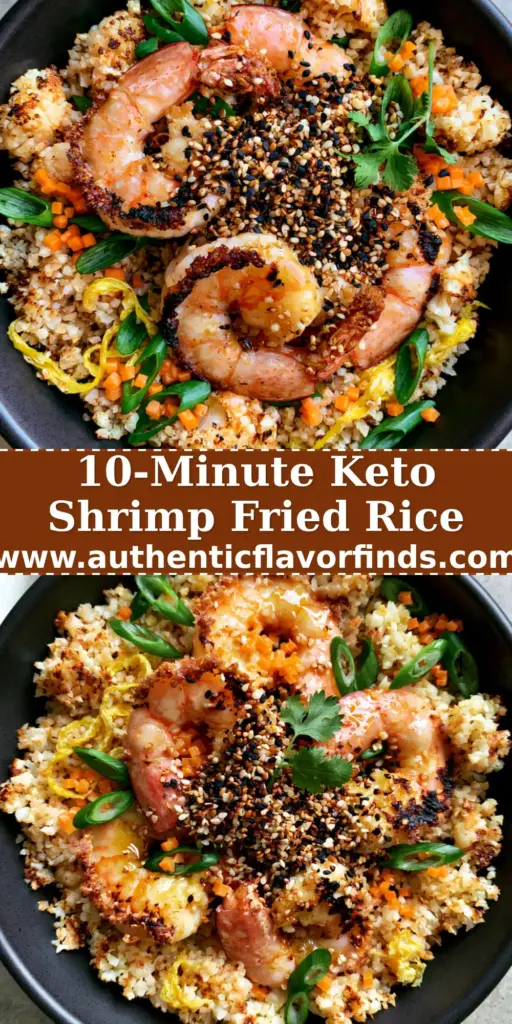
Cauliflower Shrimp Fried Rice: The Ultimate Wok-Seared Low-Carb Recipe
Ingredients
Equipment
Method
- Pat jumbo shrimp dry. Heat 1 tbsp (15ml) avocado oil in a wok over medium-high heat. Sear shrimp for 2 minutes per side until crispy pink with dark sear marks. Remove and set aside.
- Pour whisked eggs into the pan, tilting to form a thin crepe. Once set, roll the crepe and slice into thin ribbons. Set aside.
- Heat remaining oil on high. Add cauliflower and micro-diced carrots. Spread in an even layer and sear undisturbed for 3 minutes until charred edges form. Toss and repeat for 2 minutes.
- Add garlic and ginger, stir for 30 seconds. Pour in coconut aminos and sesame oil. Toss to coat evenly. Fold in egg ribbons.
- Top with seared shrimp, sliced scallions, toasted black and white sesame seeds, and fresh cilantro sprigs.
Notes
Use high heat to avoid a mushy texture.
Closing & Call to Action
Achieving a restaurant-quality Cauliflower Shrimp Fried Rice at home is all about heat management and moisture control. With those charred edges and plump, seared shrimp, you won’t even miss the traditional grains. If you loved this technique, please leave a comment below and let us know how your sear turned out!
Don’t forget to share your creations and follow us on Pinterest for more visually stunning and delicious recipes. Pin this to your “Healthy Dinners” board so you always have the secret to the perfect dry-sear at your fingertips!
### Block 2: JSON-LD Schema Markup