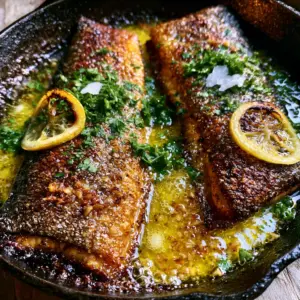
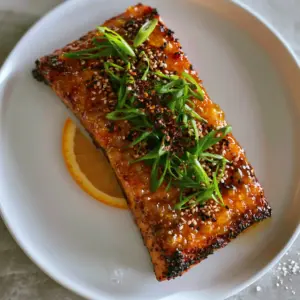
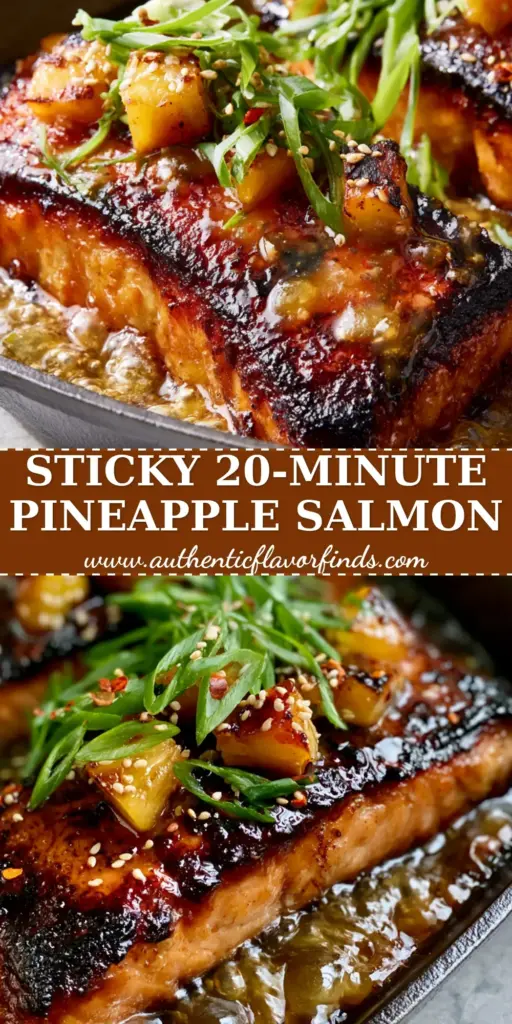
Pineapple Glazed Salmon is the ultimate intersection of tropical sweetness and savory umami, creating a restaurant-quality dinner in under 30 minutes. Imagine thick, flaky salmon fillets with deeply caramelized edges, resting in a dark cast iron skillet, drenched in a translucent amber glaze that bubbles with a sticky, honey-like consistency.
This recipe isn’t just about flavor; it is a visual masterpiece designed to impress the most discerning home cooks. The vibrant contrast of bright green scallions and tiny red chili flakes against the golden-hued fish makes it a staple for anyone seeking a vibrant, high-protein meal.
Whether you are a fan of essential salmon marinade techniques or you prefer quick pan-seared methods, this Pineapple Glazed Salmon will become your new gold standard. Let’s dive into the culinary science of achieving that perfect, glistening sheen.
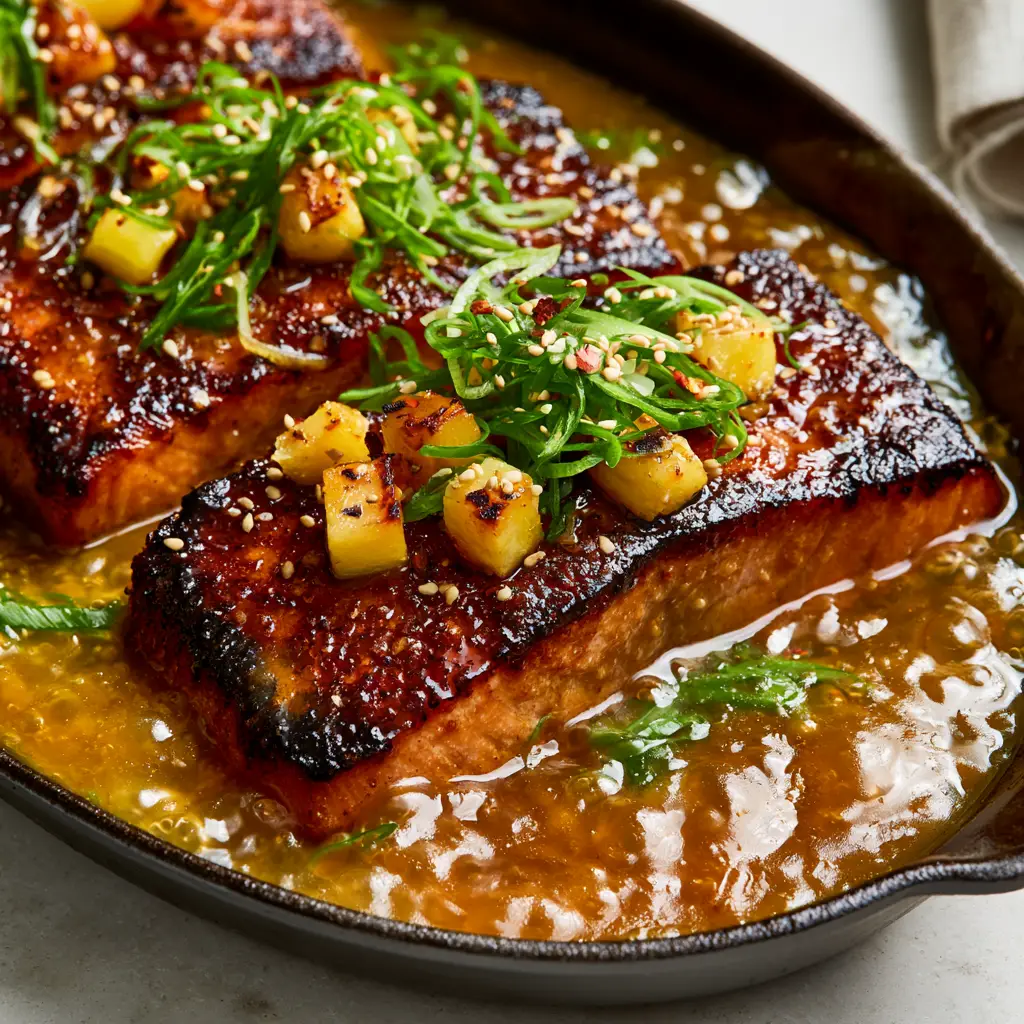
Why You Will Love This Sticky Skillet Salmon
- Deep Caramelization: Using a cast iron skillet ensures the salmon develops crispy, golden-brown edges that provide a satisfying textural contrast to the tender interior.
- Visual Glisten: The pineapple glaze is engineered to be translucent and amber-colored, creating a professional food-photography sheen that looks as good as it tastes.
- Balanced Flavor Profile: The heat from red chili flakes cuts through the natural sugars of the charred pineapple, while toasted sesame seeds add an earthy depth.
- One-Pan Simplicity: From searing the fish to charring the fruit and reducing the sauce, every step happens in a single skillet for maximum flavor retention.
The Anatomy of Pineapple Glazed Salmon Ingredients
Creating a dish that looks exactly like a professional food shoot requires specific ingredients chosen for their chemical properties and visual impact. Each component plays a role in the final architecture of the plate.
The Protein and The Produce
Salmon Fillets: You will need 4 fillets (approx. 6 oz (170g) each). High-quality salmon provides the necessary fats to withstand the high heat of a cast iron sear without drying out.
Fresh Pineapple Chunks: Use 1 cup (165g) of fresh pineapple cut into small 1/2-inch cubes. Fresh fruit is essential here because the natural sugars char beautifully, unlike canned varieties which can be overly soft.
Scallions: 3 medium scallions, thinly sliced on a bias. These provide a sharp, fresh bite and a pop of bright green color that cuts through the rich amber sauce.
The Components of the Amber Glaze
Pineapple Juice: 1/2 cup (120ml) of 100% juice serves as the acidic and sweet base for our reduction. It provides the core tropical flavor profile.
Brown Sugar: 2 tbsp (25g) of packed light brown sugar. The molasses content in brown sugar is what gives the glaze its characteristic amber color and sticky, tacky texture.
Soy Sauce: 1 tbsp (15ml) for umami and salt. This rounds out the sweetness and adds a darker tint to the translucent glaze.
Rice Vinegar: 1 tbsp (15ml) of acidity. This is the secret “invisible” ingredient that balances the sugar and prevents the dish from feeling cloying.
Cornstarch Slurry: 1 tsp (3g) cornstarch mixed with 1 tsp water. This ensures the sauce reaches that thick, translucent consistency described in our visual blueprint.
Garnishes for Texture and Heat
Toasted White Sesame Seeds: 1 tsp (3g) for a nutty crunch. Toasting them beforehand enhances their aromatic oils.
Dried Red Chili Flakes: 1/2 tsp (1g) or more to taste. These tiny red flecks provide a heat baseline that makes the pineapple pop.
Neutral Oil: 2 tbsp (30ml) of avocado or grapeseed oil. A high smoke point oil is required for the initial sear in the cast iron skillet.
Essential Tools for Culinary Success
To achieve the “handheld smartphone photo” quality of this dish, your equipment matters. A 12-inch cast iron skillet is non-negotiable for heat distribution and retention.
You will also need a flexible fish spatula to flip the fillets without breaking the delicate flesh. A small whisk is helpful for ensuring the cornstarch slurry is perfectly smooth before it hits the hot pan.
If you enjoy this style of cooking, you might also find our honey garlic ground beef bowl techniques useful for mastering high-heat skillet reductions.
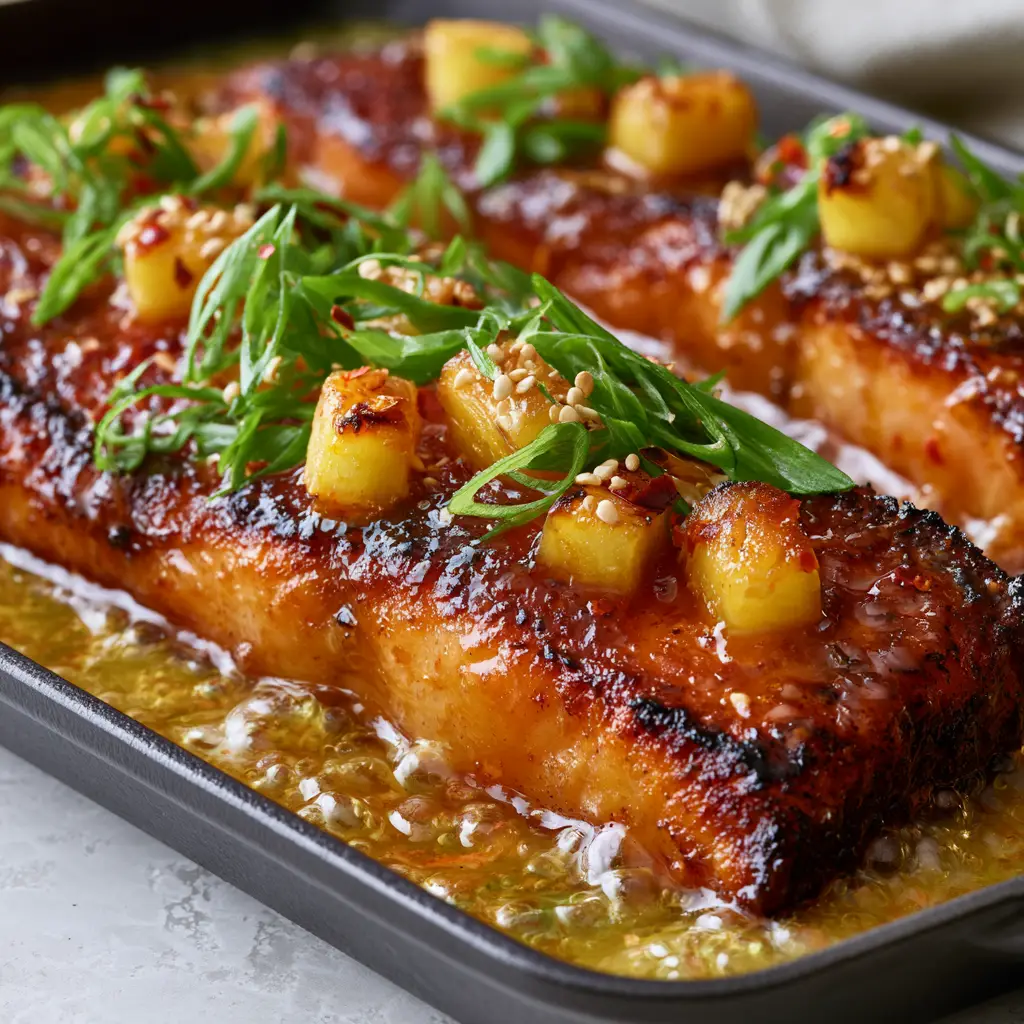
Step-by-Step Instructions for Pineapple Glazed Salmon
Step 1: Preparing the Salmon and Glaze
Pat the salmon fillets extremely dry with paper towels. Moisture is the enemy of a good sear; any water left on the skin or flesh will steam the fish rather than caramelize it.
Season the fillets generously with kosher salt and cracked black pepper. In a small bowl, whisk together the pineapple juice, brown sugar, soy sauce, rice vinegar, and grated ginger.
Step 2: The Perfect Cast Iron Sear
Heat your cast iron skillet over medium-high heat until the oil is shimmering and just beginning to wisps of smoke. Place the salmon fillets flesh-side down into the pan.
Sear for 4-5 minutes without moving them. You are looking for a deep golden-brown crust to form. Once the edges look opaque and crispy, flip the fillets carefully using a fish spatula.
Step 3: Charring the Pineapple and Reducing the Glaze
Immediately toss the fresh pineapple chunks into the empty spaces of the skillet around the salmon. Allow the pineapple to sit undisturbed for 2 minutes until one side is deeply charred and dark golden.
Pour the prepared juice mixture into the skillet. The liquid will bubble vigorously. Lower the heat to medium and stir in the cornstarch slurry.
Step 4: Basting to a Glistening Amber Finish
Use a spoon to continuously baste the salmon with the bubbling sauce. As the water evaporates, the sauce will thicken into a translucent, sticky amber glaze that clings to the fish.
Cook for another 2-3 minutes until the salmon is moist and flaky, reaching an internal temperature of 130°F (54°C). The sauce should look like liquid gold in the pan.
Expert Tips for a Flawless Glaze
- Don’t Overcrowd the Pan: If your skillet is too small, sear the salmon in batches. Overcrowding drops the pan temperature and prevents that “deeply caramelized” edge we want.
- Watch the Sugar: Because of the brown sugar and pineapple juice, the glaze can go from “sticky” to “burnt” quickly. If the sauce looks too dark, add a teaspoon of water to loosen it.
- Use Fresh Ginger: While ground ginger works, fresh grated ginger provides a zingy aromatic quality that balances the heavier sweet notes of the amber sauce.
- Rest the Fish: Let the salmon sit in the pan for 2 minutes off the heat before serving. This allows the juices to redistribute, ensuring a moist and flaky bite.
Storing and Reheating Your Tropical Salmon
Pineapple Glazed Salmon is best enjoyed immediately to preserve the crispiness of the edges. However, you can store leftovers in an airtight container for up to 2 days in the refrigerator.
To reheat, avoid the microwave, which will make the salmon rubbery. Instead, place the fish in a cold skillet with a splash of water, cover with a lid, and heat over low until warmed through. This gently steams the fish while keeping the glaze moist.
What to Serve with Pineapple Glazed Salmon
To round out this meal, you need sides that can soak up that extra sticky amber glaze. A simple bed of jasmine rice is the traditional choice, similar to how one might serve a Salmon Rice Bowl Recipe.
For a lower-carb option, consider pairing this with savory zucchini side dishes or a crisp refreshing cucumber salad to provide a cooling contrast to the chili flakes.
If you are looking for a different flavor profile for another night, our citrus-forward orange glazed salmon offers a similar cooking technique with a brighter, tangier finish.
While canned pineapple works in a pinch, fresh pineapple is highly recommended because it holds its structure better and contains natural sugars that char beautifully without becoming mushy.
The secret is the cornstarch slurry and proper reduction. Ensure your cornstarch is fully dissolved in cold water before adding it, and let the sauce bubble until it transitions from opaque to a clear, glistening amber.
No, the 1/2 teaspoon of red chili flakes provides a mild background heat that balances the sweet pineapple. You can omit them for a completely mild dish or double them if you prefer a spicy kick.
You can use either, but for this specific recipe, skin-off fillets allow the glaze to coat more surface area and develop a better crust on both sides of the fish.
A heavy-bottomed stainless steel pan will work, but you may need a bit more oil to prevent sticking. Cast iron is preferred for the superior heat retention that creates those signature caramelized edges.
The Ultimate Pineapple Glazed Salmon Recipe
Pineapple Glazed Salmon with Charred Pineapple and Sticky Amber Sauce
Ingredients
Equipment
Method
- Pat salmon fillets extremely dry with paper towels to ensure a crispy sear.
- Whisk pineapple juice, brown sugar, soy sauce, and vinegar in a small bowl.
- Heat oil in a cast iron skillet over medium-high heat. Sear salmon flesh-side down for 4-5 minutes until caramelized.
- Flip the salmon and add pineapple chunks to the pan. Cook until pineapple is charred in spots.
- Pour in the juice mixture and cornstarch slurry. Baste the salmon continuously as the sauce bubbles and thickens into a sticky amber glaze.
Notes
Use fresh pineapple for superior texture and char compared to canned.
Final Thoughts on this Skillet Masterpiece
This Pineapple Glazed Salmon is more than just a quick dinner; it’s a sensory experience. The sound of the bubbling glaze, the smell of charred fruit, and the sight of that glistening amber sauce make it a recipe you’ll return to again and again.
If you enjoyed this recipe, please leave a comment below and let us know how your sear turned out! Don’t forget to follow us on Pinterest for more visually stunning recipe inspiration and share your photos using the hashtag #AuthenticFlavorFinds.