Raw vegan wraps are the ultimate solution for those seeking a vibrant, nutrient-dense meal that doesn’t compromise on architectural beauty or deep, satisfying flavor. This recipe transforms the humble collard leaf into a supple, emerald-green vessel for a rainbow of crunchy, buttery, and zesty ingredients.
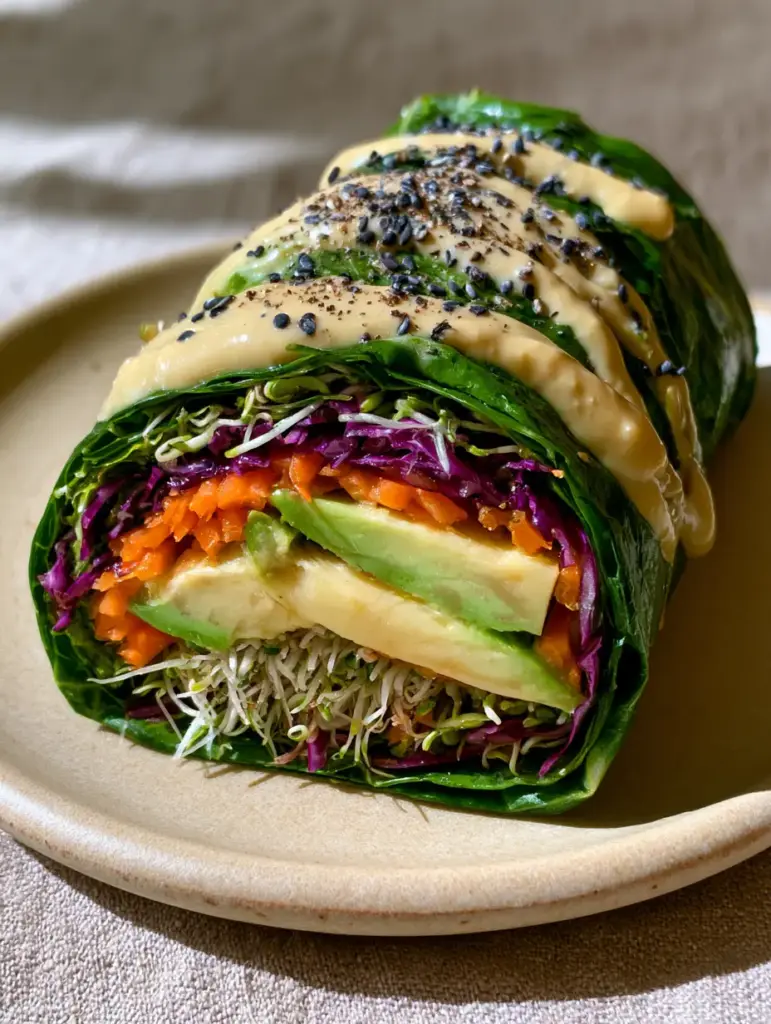
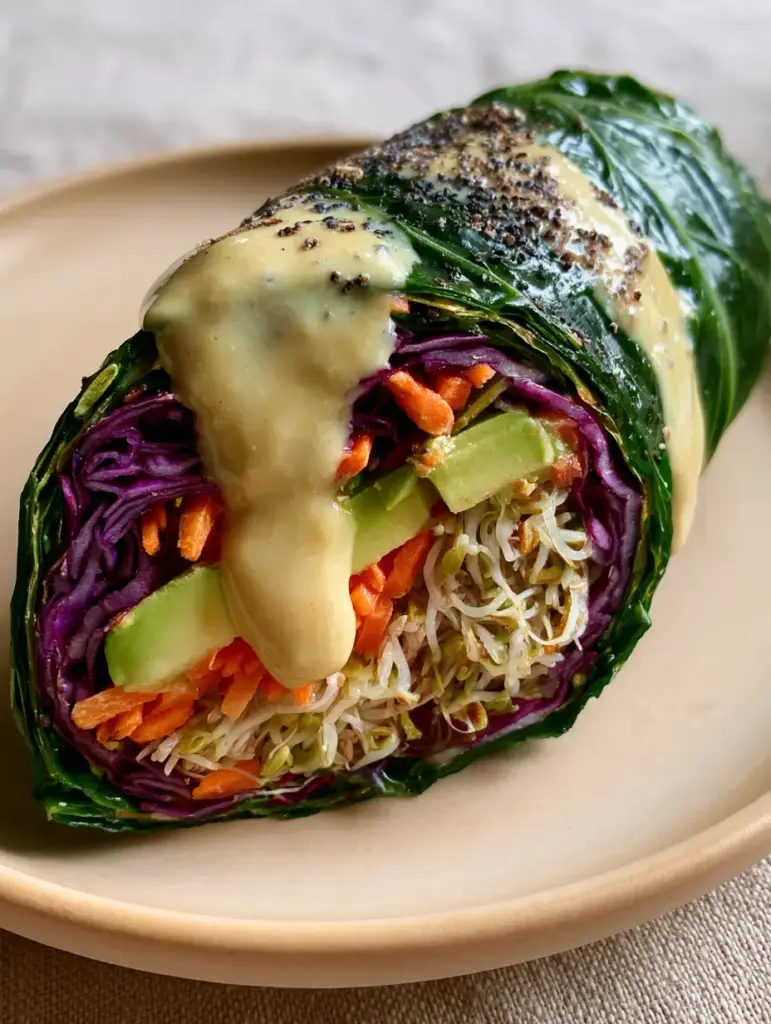
Imagine a handheld feast that looks as good as it tastes—a perfectly rolled, structural wrap sliced at a sharp diagonal to reveal tight layers of purple cabbage and orange carrots. The natural afternoon sunlight catches the glossy texture of the blanched leaf, highlighting the thick, pale-gold tahini sauce clinging to the fresh alfalfa sprouts.
Whether you are a seasoned raw food enthusiast or simply looking for a refreshing lunch, these wraps provide a professional-grade culinary experience right in your home kitchen. We have meticulously designed this recipe to ensure every bite is a balance of creamy avocado and crisp heirloom vegetables.
The Anatomy of a Perfect Raw Plant-Based Wrap
- Structural Integrity: Using a blanched collard leaf provides a pliable, durable base that won’t tear like standard flour tortillas.
- Vibrant Color Palette: The contrast between the deep purple cabbage ribbons and the bright orange matchstick heirloom carrots creates a stunning visual appeal.
- Creamy Viscosity: A thick, opaque lemon-tahini dressing offers a rich mouthfeel that bridges the gap between the crunchy vegetables and the buttery Hass avocado.
- Nutrient Density: Every ingredient is selected for its raw enzymes, vitamins, and minerals, providing sustained energy without the mid-afternoon slump.
The Vibrant Palette: What You Will Need
Large Collard Green Leaves: These serve as the “tortilla.” Look for leaves that are wide, deep green, and free of significant tears to ensure they can hold the dense fillings.
Purple Cabbage: When sliced into paper-thin ribbons, purple cabbage provides a peppery crunch and a stunning magenta hue that defines the interior cross-section.
Heirloom Carrots: Using heirloom varieties adds subtle earthy sweetness and a rustic orange tone; slicing them into uniform matchsticks ensures even distribution in every bite.
Hass Avocado: One large, ripe avocado provides the “buttery” fat necessary to make the wrap feel indulgent and satiating while adding a soft, lime-green layer to the architecture.
Fresh Alfalfa Sprouts: These dense, thread-like sprouts act as a soft “pillow” for the other vegetables, helping to hold the dressing and fill any structural gaps within the roll.
Premium Tahini: The base of our sauce should be 100% ground sesame seeds; it provides the pale-gold color and the viscous, creamy consistency required for the drizzle.
Fresh Lemon Juice: This acid is critical for thinning the tahini and brightening the overall flavor profile, ensuring the wrap tastes fresh and zesty.
Black Sesame Seeds & Cracked Black Pepper: These are your finishing touches, providing a fine dusting of visual contrast against the pale sauce and a subtle heat on the palate.
Foundational Salt & Water: A pinch of fine sea salt enhances the vegetable flavors, while filtered water is used to achieve the exact “clinging” consistency for the dressing.
Essential Tools for Precision Slicing
To achieve the “architectural” look of a professional food blog photo, you will need a sharp Chef’s knife for the diagonal cut. A mandoline slicer is highly recommended for creating those uniform cabbage ribbons and carrot matchsticks that make the interior look so organized.
You will also need a wide, shallow skillet for the quick blanching process and a large bowl filled with ice water. This “shocking” technique is the secret to getting that glossy, emerald-green color while keeping the leaf supple and pliable for rolling.
Architecture of the Wrap: Step-by-Step Instructions
Preparing the Collard Green Base
Start by trimming the thick woody stem from the bottom of each collard leaf. Use a paring knife to carefully shave down the thickest part of the central rib that runs up the back of the leaf; this makes the leaf lie flat and prevents it from snapping during the rolling process.
Bring a wide pan of salted water to a light simmer. Submerge the leaf for exactly 15-20 seconds until it turns a vibrant, glossy emerald green. Immediately plunge the leaf into an ice bath to stop the cooking; pat it completely dry with a lint-free towel to ensure the dressing adheres later.
Mastering the Vegetable Interior
Slice your purple cabbage into ribbons as thin as possible. For the heirloom carrots, aim for 3-inch (7.5cm) matchsticks; consistency here is key for a tight, professional-looking roll. Halve your Hass avocado and create thick, even slices, squeezing a drop of lemon over them to prevent browning.
In a small bowl, whisk together 1/4 cup (60ml) of tahini with 2 tablespoons (30ml) of lemon juice. Slowly add cold water, one teaspoon at a time, whisking vigorously until the sauce turns from a paste into a thick, opaque, pale-gold cream that holds its shape when drizzled.
The Rolling and Slicing Technique
Lay your prepared collard leaf flat on a clean cutting board. Place a dense layer of alfalfa sprouts in the center, followed by a stack of cabbage ribbons, carrot matchsticks, and three thick slices of avocado. Ensure the ingredients are oriented parallel to the central rib of the leaf.
Fold the sides of the leaf inward, then roll from the bottom up, keeping the tension tight—just like a burrito. Use your sharpest knife to slice the wrap at a 45-degree diagonal. This reveal is the most satisfying part, showcasing the vibrant, architectural layers of your raw vegan wraps.
Expert Tips for Culinary Success
- The Snap Test: If your leaf snaps when you try to fold it, you haven’t shaved the rib down far enough or the blanching time was too short.
- Dressing Thickness: If your tahini sauce is too runny, it will soak into the sprouts and disappear. Aim for a “viscous” consistency that leaves a visible trail on top of the vegetables.
- Tension is Key: When rolling, use your pinky fingers to tuck the corners in. A loose wrap will fall apart the moment you make that diagonal cut.
- Season Every Layer: A tiny pinch of cracked black pepper directly on the avocado slices before rolling makes a world of difference in flavor depth.
Storage and Meal Prep Advice
These raw vegan wraps are best enjoyed immediately to appreciate the contrast between the crisp vegetables and the creamy dressing. However, you can store the blanched leaves and chopped vegetables separately in the fridge for up to 3 days.
If you must transport them, keep the lemon-tahini dressing in a separate small container and drizzle it over the cross-section just before serving. This prevents the alfalfa sprouts from becoming soggy and maintains the structural integrity of the roll.
What to Serve With Your Raw Wraps
To round out a healthy lunch, pair these wraps with a crispy cucumber salad for extra hydration. If you are serving these as part of a larger plant-based spread, they go beautifully alongside roasted zucchini side dishes or a refreshing Greek salad. For those who appreciate the aesthetic of the dish, these wraps are so beautiful they almost look like modern kitchen decor.
Frequently Asked Questions
Nutritionally, yes. They are lower in carbs and higher in vitamins A, C, and K. Culinarially, they offer a unique crunch and a beautiful emerald color that enhances the meal’s visual appeal.
Yes, but store the sauce separately. The vegetables and blanched leaves stay fresh for up to 3 days, but the sprouts can get soggy if the dressing is applied too early.
The secret is to use a paring knife to shave down the thickest part of the central rib on the back of the leaf. Additionally, a quick 20-second blanching makes the leaf significantly more pliable.
Harder vegetables like purple cabbage, heirloom carrots, and bell peppers provide the best structural integrity and crunch to contrast the creamy avocado.
Whisk the tahini with lemon juice first (it will seize and thicken). Then, slowly add ice-cold water while whisking vigorously to emulsify it into a pale, viscous cream.
The Ultimate Raw Vegan Wrap Recipe
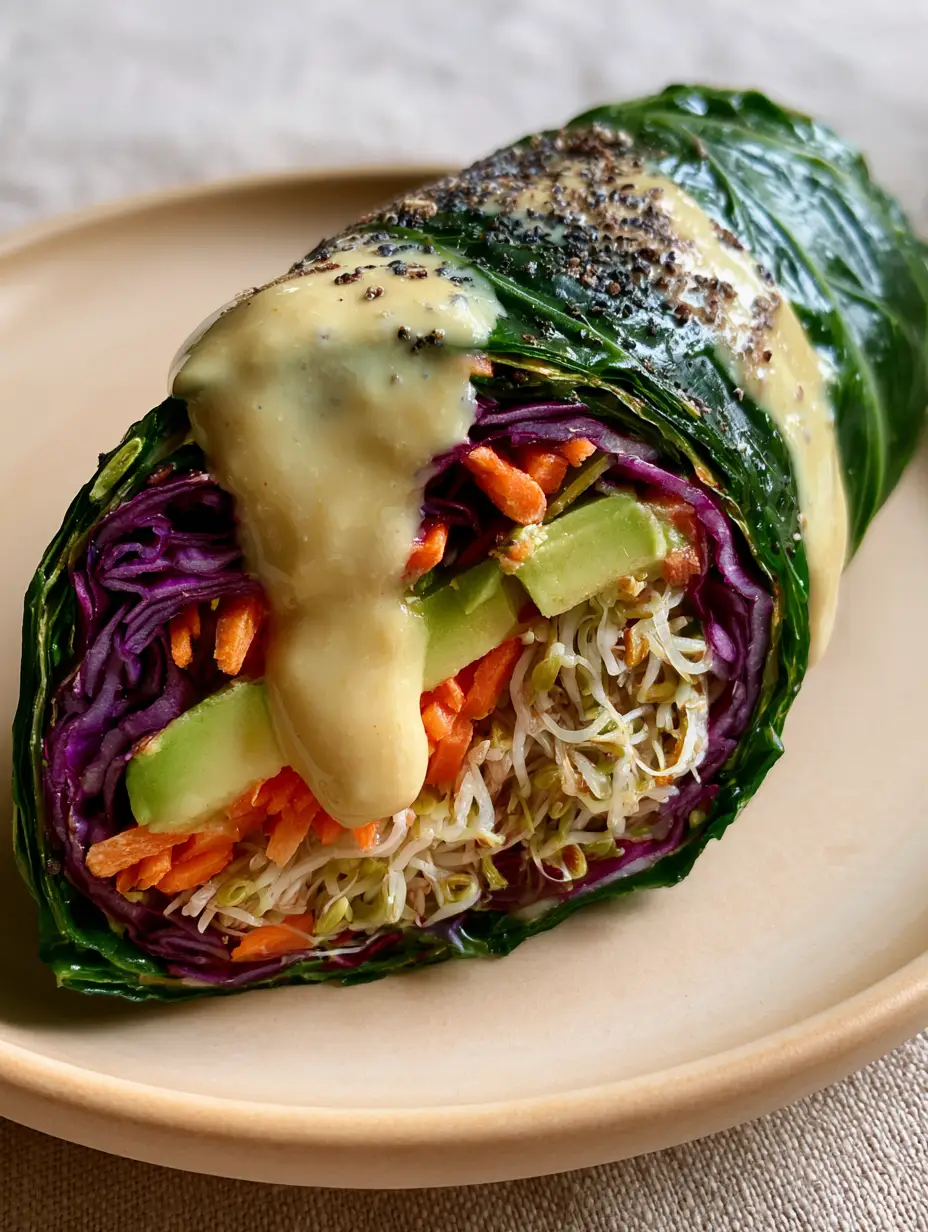
Raw Vegan Wraps with Lemon-Tahini Drizzle and Heirloom Vegetables
Ingredients
Equipment
Method
- Submerge collard leaves in simmering water for 15-20 seconds until glossy green, then shock in an ice bath and pat dry.
- Whisk tahini and lemon juice, adding water slowly until a thick, pale-gold viscous consistency is reached.
- Layer sprouts, cabbage ribbons, carrots, and avocado in the center of the leaf.
- Fold sides in and roll tightly like a burrito. Use a sharp knife to slice at a sharp diagonal.
- Drizzle with tahini sauce and sprinkle with black sesame seeds and cracked pepper.
Notes
Use cold water for the tahini sauce to create a fluffier, more opaque texture.
Closing & Call to Action
Creating these raw vegan wraps is more than just making a meal; it’s an exercise in culinary mindfulness. The combination of the supple leaf, the crunch of heirloom carrots, and that viscous lemon-tahini drizzle makes for an unforgettable eating experience that leaves you feeling energized.
If you enjoyed this recipe, please leave a comment below and let us know how your wraps turned out! Don’t forget to share your creations on Pinterest and tag us so we can see your beautiful architectural layers.