When it comes to refreshing side dishes that define Middle Eastern hospitality, few things compare to a perfectly executed Arabic salad. This dish is far more than just a mix of vegetables; it is a masterclass in texture, acidity, and herbaceous depth. Imagine a bowl where every bite offers the cooling crunch of Persian cucumbers and the juicy sweetness of sun-ripened Roma tomatoes.
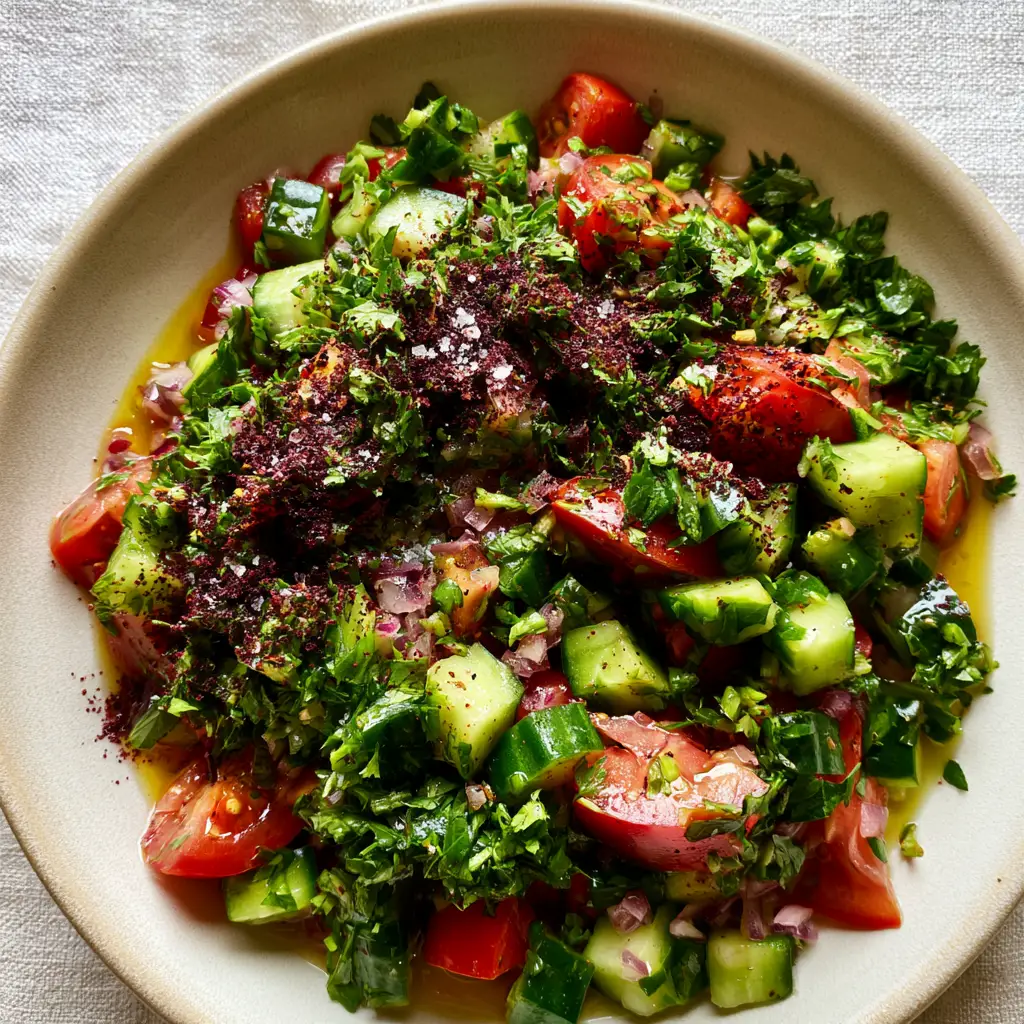
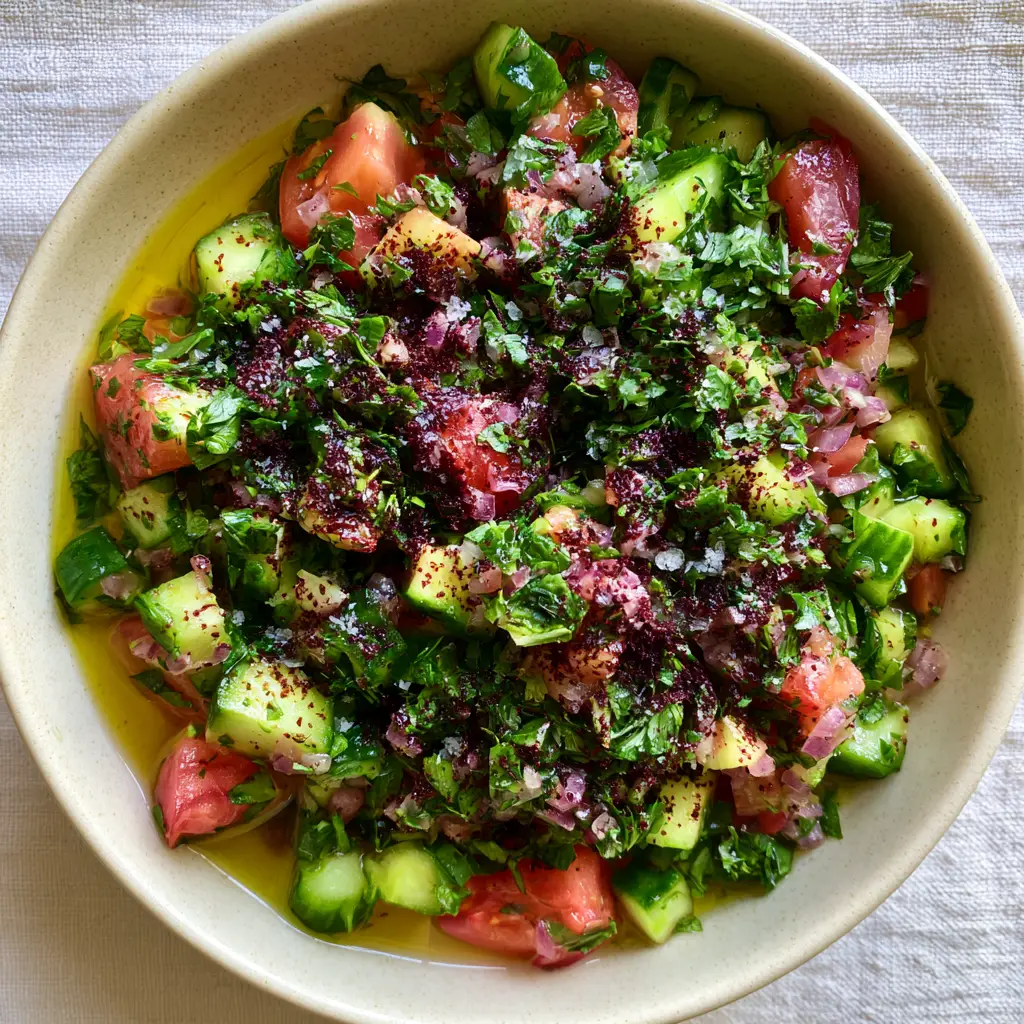
The visual appeal is just as striking as the flavor profile. Our recipe focuses on a meticulous dice that allows the golden extra virgin olive oil to coat every surface, making the vegetables glisten under the light. The final dusting of dark purple sumac adds a tangy, citrus-like finish that sets this traditional staple apart from any standard garden salad.
Whether you are hosting a summer barbecue or looking for a vibrant addition to your weeknight dinner, this Arabic salad provides the perfect balance of nutrition and zest. It is a dish that celebrates simplicity while demanding high-quality ingredients to truly shine on the plate.
Why You’ll Love This Vibrant Herb-Loaded Bowl
- Textural Contrast: The combination of firm, skin-on cucumbers and soft, diced Roma tomatoes creates a satisfying mouthfeel in every spoonful.
- Citrusy Depth: Unlike salads that rely solely on vinegar, this version uses fresh lemon juice and ground sumac for a complex, layered acidity.
- Herb-Forward Aroma: With a lush carpet of flat-leaf parsley and torn mint, the fragrance of this salad hits the table before the bowl even touches the surface.
- Visual Sophistication: The deep reds, bright greens, and translucent purples of the onion make this a centerpiece-worthy side dish.
The Essential Elements for the Perfect Crunch
Persian Cucumbers: Use 4-5 small Persian cucumbers (approx. 450g). Their thin skins provide a beautiful bright green border to each cube and a snap that thicker-skinned varieties lack.
Firm Roma Tomatoes: You will need 3 large Roma tomatoes (approx. 300g). Choosing firm tomatoes is crucial; they must hold their cubed shape without turning into a watery pulp when tossed with the dressing.
Red Onion: Half of a small red onion (approx. 50g), finely minced. This provides a sharp, translucent bite that balances the sweetness of the tomatoes and the richness of the oil.
Fresh Flat-Leaf Parsley: One full bunch (approx. 60g) of parsley, finely chopped. This isn’t just a garnish; it forms the herbaceous “foundation” of the salad’s flavor profile.
Fresh Mint Leaves: About 1/4 cup (10g) of torn mint leaves. These tiny flecks of bright green provide a refreshing finish that cuts through the savory notes of the sumac.
Extra Virgin Olive Oil: Use 3 tablespoons (45ml) of high-quality, cold-pressed oil. The oil should be golden and visible, providing a luxurious glisten to the finished dish.
Fresh Lemon Juice: The juice of one large lemon (approx. 30ml). Always use fresh juice to ensure the “droplets” of acidity pop against the earthy sumac.
Ground Purple Sumac: 1 tablespoon (8g) of dark purple-red sumac. This Middle Eastern spice offers a unique tartness and an intricate textural detail on top of the vegetables.
Coarse Sea Salt Flakes: 1 teaspoon (5g) for seasoning. The large flakes provide a deliberate crunch and help draw out the natural juices of the tomatoes just before serving.
Tools for Precision Dicing
To achieve the “small-cubed” aesthetic described in our visual blueprint, you will need a very sharp Chef’s knife. A dull blade will bruise the parsley and crush the tomatoes rather than slicing through them cleanly. A large matte-finish ceramic bowl is also recommended to allow for easy tossing without overcrowding the ingredients.
Using a wooden cutting board is preferable as it provides the necessary grip for mincing the red onion into tiny, translucent pieces. Finally, keep a small citrus juicer on hand to ensure you catch every drop of lemon juice while keeping seeds out of your vibrant Arabic salad.
Mastering the Uniform Dice: Step-by-Step Instructions
Step 1: Preparing the Base Vegetables
Start with your Persian cucumbers. Leave the skin on for that signature bright green visual. Slice them into consistent 1/4-inch (6mm) rounds, then stack the rounds and dice them into small, uniform cubes. Transfer these to your ceramic bowl.
Step 2: Dicing the Roma Tomatoes
Slice the Roma tomatoes lengthwise and remove the watery seeds if they seem overly juicy. Dice the flesh into cubes that match the size of your cucumbers. This uniformity is the secret to a professional-looking Arabic salad where every ingredient is evenly distributed.
Step 3: Mincing and Herbing
Finely mince the red onion until the pieces are almost translucent. Next, bunch the flat-leaf parsley tightly and chop it finely until it resembles a lush green carpet. Hand-tear the mint leaves into tiny flecks to prevent the edges from bruising or turning black prematurely.
Step 4: The Art of the Glistening Drizzle
Scatter the herbs and onions over the diced vegetables. Drizzle the golden extra virgin olive oil in a circular motion, ensuring a light coating on all pieces. Follow with the fresh lemon juice, looking for those distinct droplets that catch the light.
Step 5: The Final Textural Flourish
Just before serving, sprinkle the ground purple sumac and coarse sea salt flakes over the top. Do not over-mix after this step; you want the dark red spice and white salt crystals to remain visible as an intricate top layer for the best sensory experience.
Pro-Tips for the Most Glistening Vegetables
- Salt Timing: Only add the sea salt flakes immediately before serving. Adding salt too early will draw out too much moisture, turning your crisp salad into a soup.
- Temperature Matters: Serve the Arabic salad at room temperature or slightly chilled. If the vegetables are too cold, the flavors of the olive oil and sumac will be muted.
- The Sumac Quality: Look for sumac that is deep purple-red. If it looks brown, it is likely old and will have lost its signature citrusy punch.
- Knife Skills: Aim for cubes no larger than 1/2 centimeter. The smaller the dice, the more surface area there is for the lemon juice and oil to cling to.
Preserving the Garden Freshness
This salad is best enjoyed within an hour of assembly to maintain the peak crunch of the cucumbers. If you have leftovers, they can be stored in an airtight container in the refrigerator for up to 24 hours. Note that the tomatoes will soften and the herbs will wilt slightly over time.
We do not recommend freezing this dish. The high water content of the cucumbers and tomatoes causes them to lose their structural integrity once thawed, resulting in a mushy texture that contradicts the “firm and vibrant” requirement of a true Arabic salad.
Perfect Pairings for a Middle Eastern Feast
This salad is an incredible accompaniment to grilled meats and hearty grain bowls. It provides a necessary acidic “cut” to richer dishes. If you enjoy this flavor profile, you might also want to explore our variations of cucumber salads for more refreshing summer ideas.
For those looking to build a full Mediterranean spread, try serving this alongside a traditional Greek salad or a protein-rich medley of bean salads. It also works beautifully as a fresh topping for a warm roasted chicken salad or a zesty street corn cucumber chicken salad.
Frequently Asked Questions
While not traditional for a classic Salata Arabieh, adding feta can provide a creamy saltiness similar to a Greek salad. If you do, add it at the very end to keep the vegetables crisp.
No, Persian cucumbers have very thin, edible skin. Leaving the skin on provides a beautiful bright green visual contrast and extra crunch that is essential for this recipe.
Use firm Roma tomatoes and remove the seeds if they are very juicy. Most importantly, only add the salt flakes immediately before serving to prevent the vegetables from releasing their liquid.
While sumac has a unique earthy tartness, you can substitute it with a little extra lemon zest and a pinch of black pepper, though you will lose the signature purple-red visual detail.
Both are very similar, featuring finely diced cucumbers and tomatoes. However, Arabic salad often emphasizes the use of sumac and a heavy layer of fresh flat-leaf parsley and mint for a more robust herbaceous profile.
The Ultimate Arabic Salad Recipe
Arabic Salad with Sumac and Fresh Herbs
Ingredients
Equipment
Method
- Dice skin-on Persian cucumbers and firm Roma tomatoes into uniform 1/4-inch cubes. Place in a shallow cream bowl.
- Finely mince the red onion until translucent. Chop the parsley into a fine carpet and hand-tear the mint into tiny flecks.
- Scatter onion and herbs over the vegetables. Drizzle with golden olive oil and fresh lemon juice until glistening.
- Dust generously with dark purple sumac and coarse sea salt flakes just before serving for maximum texture.
Notes
Always dice vegetables to a uniform size to ensure the perfect bite.
Join the Authentic Flavor Community
We hope this Arabic salad brings a burst of Middle Eastern sunshine to your kitchen. The combination of sumac and fresh mint is truly life-changing for salad lovers! If you made this recipe, please leave a comment below and tell us how your dice turned out.
Don’t forget to follow us on Pinterest for more visually stunning recipe inspiration. Share your creations by tagging us—we love seeing your glistening vegetable bowls! Sign up for our newsletter to receive the latest healthy recipes directly to your inbox.