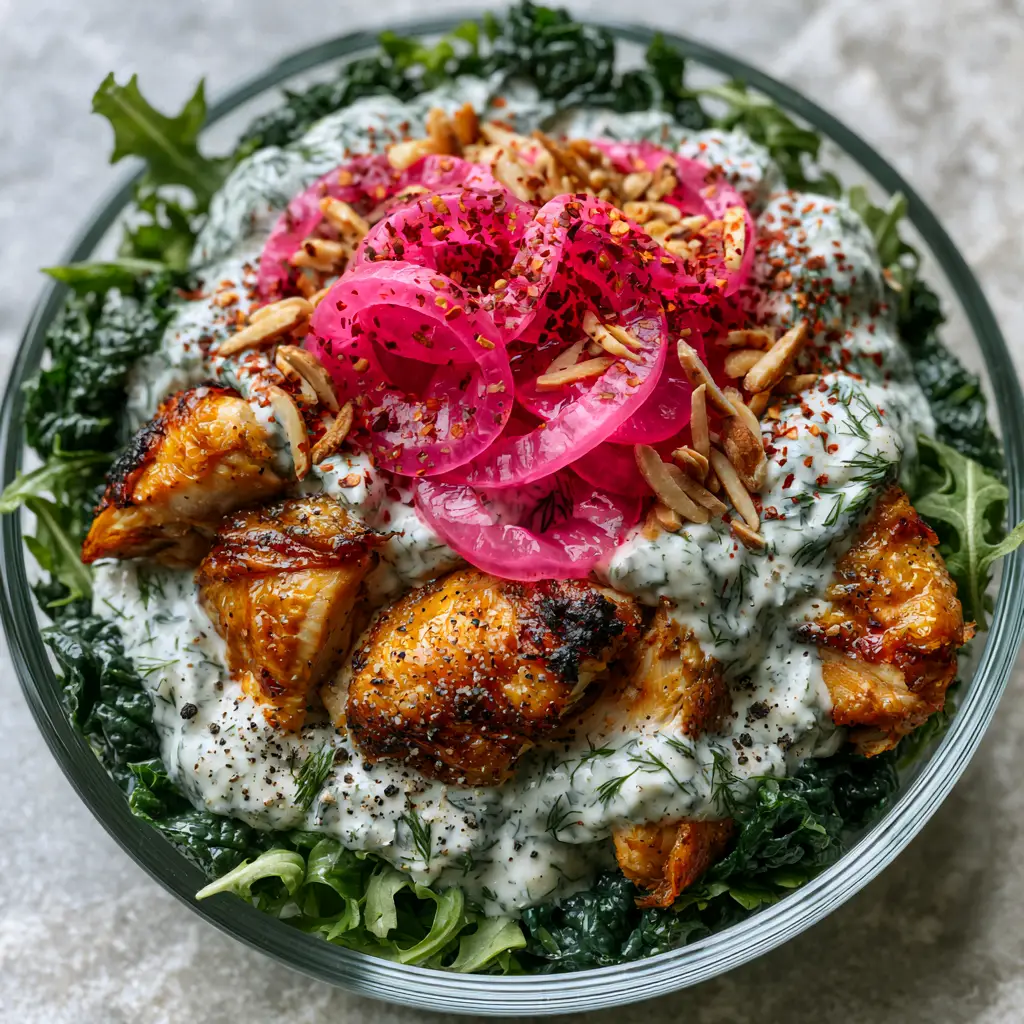
The perfect roasted chicken salad is not merely a collection of leftovers; it is a calculated masterpiece of texture, temperature, and acidity. When you look at a bowl filled with glistening golden-brown chicken skin and vibrant neon-pink pickled onions, you aren’t just looking at lunch—you are looking at a culinary triumph designed for both the palate and the camera lens.
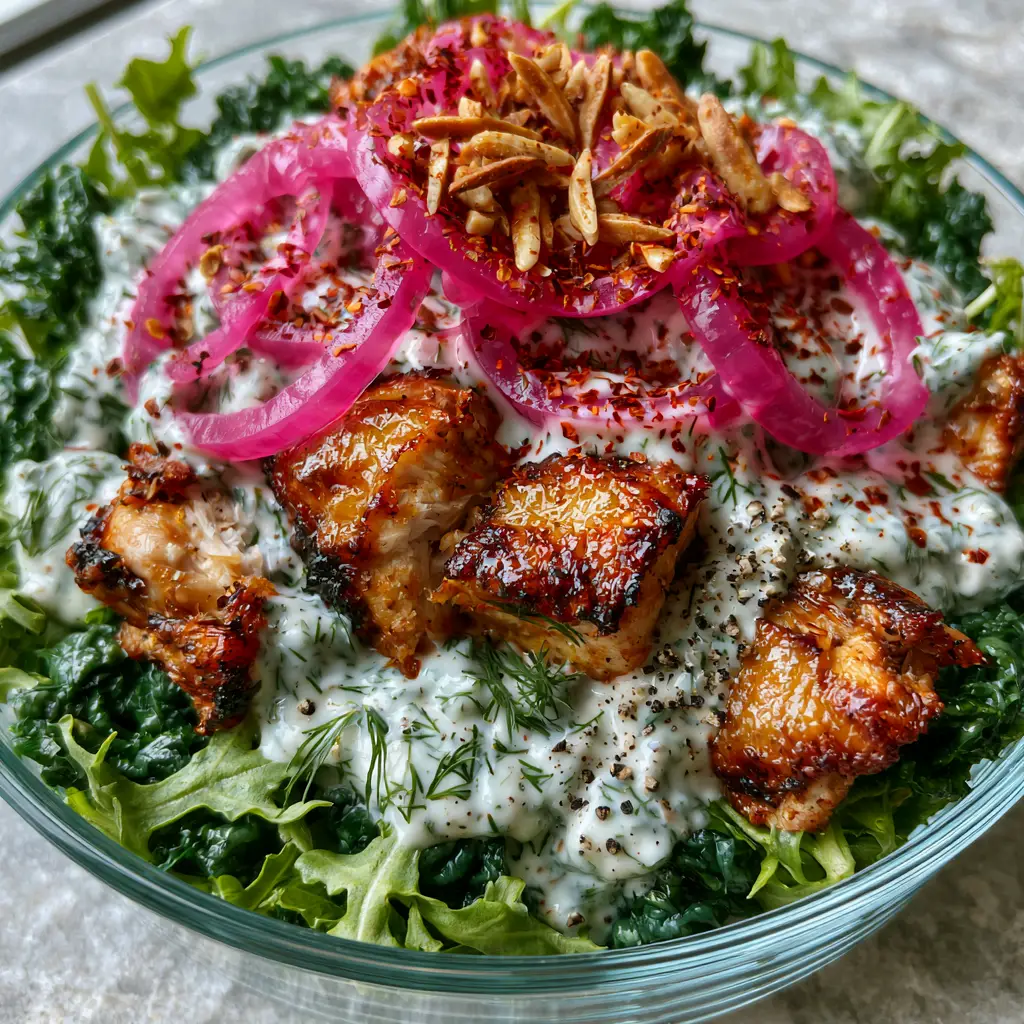
This particular roasted chicken salad leans into the rustic elegance of hand-torn rotisserie chicken, contrasting it against the sturdy, earthy crunch of emerald massaged kale and the peppery spark of baby arugula. It is a dish that commands attention, whether it sits on a clean neutral stone countertop or tucked inside a premium clear glass meal prep container for a high-performance weekday meal.
By focusing on the “Forensic Visuals”—the charred skin, the translucent onion rings, and the velvety white herb dressing—we elevate a simple concept into a gourmet experience. This guide will walk you through the professional techniques required to achieve that exact macro-shot perfection every single time.
Why This Roasted Chicken Salad Defines Gourmet Meal Prep
- The Texture Hierarchy: We combine the tender, juicy pull of hand-torn chicken with the specific crunch of toasted slivered almonds and the structural integrity of massaged kale.
- Vibrant Acid Balance: Quick-pickled neon-pink onions don’t just provide a visual pop; they cut through the richness of the rotisserie skin and the thick herb dressing.
- Chef-Level Dressing: Moving beyond basic vinaigrettes, our creamy herb sauce uses fresh dill and chives to create a velvety white coating that clings to every leaf.
- Visual Sophistication: Every component, from the dusting of red chili flakes to the cracked black pepper, is designed to create a high-contrast, professional-grade presentation.
The Anatomy of Ingredients: Foundational and Visual
To recreate the roasted chicken salad seen in our blueprints, we must distinguish between the visible stars and the invisible workhorses. Every ingredient serves a specific structural or flavor purpose.
The Protein and Greens Base
1 Whole Rotisserie Chicken: You want a bird with glistening, golden-brown charred skin. Hand-tearing the meat instead of cubing it creates more surface area for the dressing to cling to and provides a more rustic, high-end appearance.
4 cups (120g) Lacinato Kale: Also known as dinosaur kale, its dark emerald hue provides the deep color base described in our visual prompt. It requires “massaging” to break down its fibrous structure.
2 cups (40g) Baby Arugula: This adds a bright green contrast and a peppery bite that complements the heavier kale. It should be layered in fresh to maintain its delicate shape.
The Velvety Herb Dressing
1/2 cup (120g) Greek Yogurt or Sour Cream: This forms the base of the thick, velvety white herb dressing. It provides the “body” needed to see visible highlights in the sauce under natural daylight.
1/4 cup (60ml) Mayonnaise: The “invisible” stabilizer that ensures the dressing doesn’t separate and provides a rich mouthfeel.
2 tbsp (8g) Fresh Dill and 2 tbsp (10g) Minced Chives: These are the visible green flecks within the white sauce that signal freshness to the diner.
The High-Contrast Toppings
1 Small Red Onion: When sliced into thin, translucent rings and submerged in acid, these transform into the bright neon-pink pickled onions required for the visual blueprint.
1/4 cup (35g) Slivered Almonds: These must be toasted until golden to provide a Maillard-reaction nuttiness and a distinct geometric crunch.
Red Chili Flakes and Cracked Black Pepper: The final “dusting” that provides micro-visual detail and a subtle, lingering heat.
Professional Equipment for Forensic Accuracy
To achieve the “macro top-down” look of a professional food photograph, your tools matter as much as your ingredients. You will need a large stainless steel bowl for massaging the kale without crowding the leaves.
A mandoline slicer is highly recommended for achieving those perfectly thin, translucent onion rings. For the chicken, rely on your hands—hand-tearing is a specific culinary technique that preserves the grain of the meat better than a chef’s knife.
Finally, for storage and presentation, use clear glass containers. Glass provides the clarity needed to see the “velvety white” dressing against the “dark emerald” kale, which is a hallmark of a high-quality roasted chicken salad.
Step-by-Step Construction of the Ultimate Salad
1. The Quick-Pickle Transformation
Start by slicing your red onion into paper-thin rings. In a small bowl, whisk together 1/2 cup (120ml) apple cider vinegar, 1 tsp (5g) sugar, and a pinch of salt. Submerge the onions completely.
Within 20 minutes, the onions will transition from a dull purple to a vibrant neon-pink. This acidity is crucial for balancing the fat in the classic roasted chicken salad components.
2. Massaging the Kale for Texture
Remove the woody ribs from the kale and tear the leaves into bite-sized pieces. Drizzle with 1 tsp (5ml) extra virgin olive oil and a pinch of sea salt.
Use your hands to firmly squeeze and rub the leaves for 2-3 minutes. You will feel the leaves soften and see them turn a darker, more translucent emerald green. This step is non-negotiable for a palatable roasted chicken salad.
3. Preparing the Hand-Torn Chicken
Remove the skin from the rotisserie chicken in large pieces and set aside. Tear the warm meat into large, irregular chunks, following the natural muscle fibers.
Chop the crispy skin into smaller shards. This ensures that the “glistening, golden-brown charred skin” is distributed throughout the salad, providing salty bursts of flavor in every bite, similar to the textures found in crispy rice salad variations.
4. Whisking the Velvety Herb Dressing
In a medium bowl, combine the yogurt, mayonnaise, a splash of lemon juice, minced chives, and chopped fresh dill. Whisk vigorously until the sauce is smooth and thick.
Season heavily with cracked black pepper. The goal is a “velvety white” sauce where the herbs and pepper are suspended visibly, creating a high-end aesthetic.
Expert Tips for Success
- Preserve the Skin: If your rotisserie chicken skin has softened in its packaging, place the skin-side-up pieces under a broiler for 60 seconds to regain that charred, glistening texture.
- Temperature Contrast: Serve the chicken slightly warm against the cold, crisp greens. This creates a sensory experience that defines a professional roasted chicken salad.
- Layering Strategy: Do not toss the entire salad at once. Start with the kale and arugula, add the chicken, and then “generously drizzle” the dressing to maintain the visual highlights seen in the prompt.
- Nut Toasting: Always toast slivered almonds in a dry pan over medium heat for 3-5 minutes. They should be fragrant and golden-brown, not just for flavor, but for the “toasted” visual requirement.
Storage, Reheating, and Meal Prep Logistics
This roasted chicken salad is an elite candidate for meal prep. Because kale is a sturdy brassica, it will not wilt as quickly as traditional lettuces when dressed.
However, for maximum freshness, store the “velvety white herb dressing” in a separate small container. The pickled onions should also be stored in their brine to maintain that “bright neon-pink” color.
When stored in a premium clear glass meal prep container, this salad will remain vibrant for up to 4 days in the refrigerator. Do not freeze this salad, as the creamy dressing and fresh arugula will lose their structural integrity.
What to Serve With Your Roasted Chicken Salad
While this salad is a complete meal, it pairs beautifully with light, acidic side dishes. Consider serving it alongside a refreshing crisp cucumber salad to double down on the fresh vegetable components.
If you are looking for a more global flavor profile, you might enjoy exploring traditional Arabic salads which also emphasize the use of fresh herbs and bright acids. For those who prefer a bit of heat, this recipe serves as a great foundation before trying a spicier jalapeño-based version.
Frequently Asked Questions
Yes, but you will miss the specific texture of the hand-torn pieces and the salty, charred flavor of the rotisserie skin which are key to this recipe’s visual and flavor blueprint.
The bright color comes from the reaction between the red onion’s anthocyanins and the acidity of the apple cider vinegar. Slicing them thin ensures a quick and vibrant transformation.
When stored in an airtight glass container, the greens and chicken will stay fresh for up to 4 days. Keep the dressing separate to prevent the arugula from wilting.
Yes, this recipe is naturally low in carbohydrates and high in healthy fats and protein, making it excellent for keto or low-carb lifestyles.
Massaging kale with olive oil and salt breaks down the tough cellulose structure, making it tender, less bitter, and easier to digest while giving it a beautiful emerald sheen.
Roasted Chicken Salad with Massaged Kale and Herbs
Roasted Chicken Salad with Massaged Kale and Creamy Herb Dressing
Ingredients
Equipment
Method
- Combine sliced red onions with apple cider vinegar and a pinch of sugar. Let sit for at least 20 minutes until they turn neon-pink.
- Place slivered almonds in a dry skillet over medium heat. Shake frequently until they are golden-brown and fragrant.
- Place torn kale in a large bowl with olive oil and salt. Firmly massage with your hands for 2-3 minutes until emerald green and tender.
- Hand-tear the rotisserie chicken into large chunks. Chop the crispy skin into small bits for texture.
- Whisk together yogurt, mayo, dill, chives, and lemon juice until a thick, velvety white sauce forms.
- Toss kale and arugula together. Top with chicken, drizzle generously with dressing, and finish with pickled onions, almonds, chili flakes, and black pepper.
Notes
If meal prepping, store the dressing and pickled onions in separate containers to keep the arugula crisp.
The Final Word on This Culinary Masterpiece
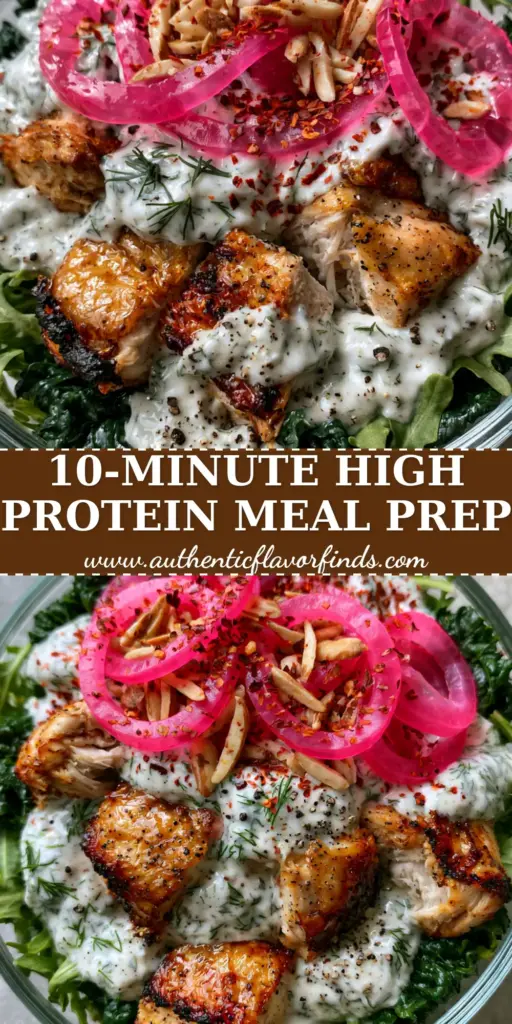
Mastering the roasted chicken salad is about respecting each ingredient’s visual and textural potential. From the hand-torn chunks of chicken to the dusting of red chili flakes, every element plays a role in the final high-resolution result. This dish proves that healthy eating does not have to sacrifice aesthetic beauty or deep, savory satisfaction.
If you enjoyed this forensic look at recipe development, please leave a comment below and share your results! You can find more visual recipe inspiration by following us on Pinterest.