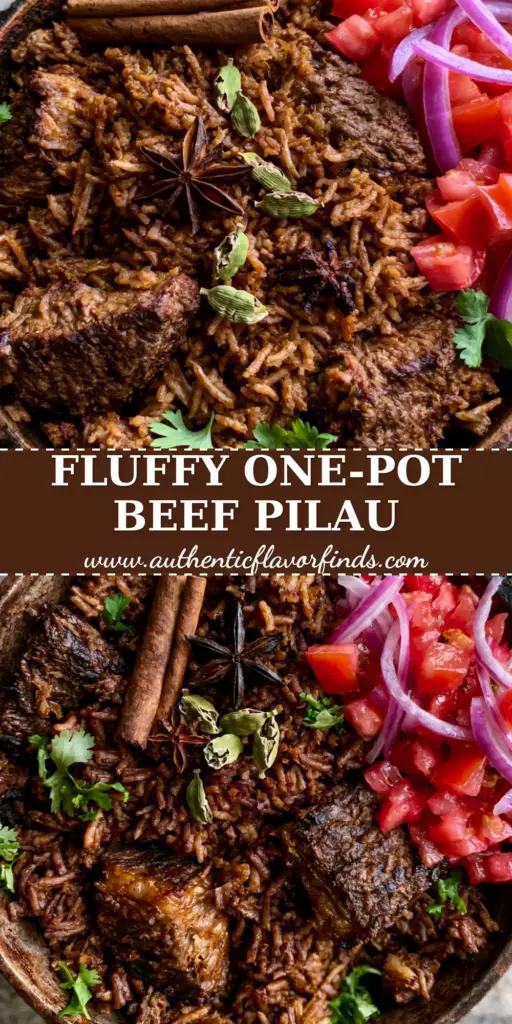
There is a specific, intoxicating aroma that fills a kitchen when a true East African Pilau Rice is simmering on the stove. It is a scent defined by warm cloves, toasted cumin, and the deep, earthy sweetness of caramelized onions. Unlike any other rice dish, an authentic Pilau is celebrated for its striking, deep mahogany brown hue and rice grains so perfectly separated they practically dance off the fork.
Achieving this visual and culinary masterpiece requires more than just mixing spices; it is an art of patience and precision. From the way the beef cubes are seared to the exact moment the water hits the toasted rice, every step is designed to create a multi-sensory experience. This recipe brings the soul of the Swahili coast directly to your table, mirroring the rustic, vibrant aesthetic of a home-cooked feast served in a heavy cast iron pot.
Whether you are a seasoned explorer of traditional African dishes or a curious home cook looking to expand your repertoire, this guide will show you how to master the “Pilau glow.” We will dive deep into the science of rice hydration and the Maillard reaction to ensure your beef is succulent and your spices are perfectly bloomed. Get ready to transform humble long-grain basmati into a mahogany-colored treasure trove of flavor.
The Signature Appeal of Authentic Swahili Beef Pilau
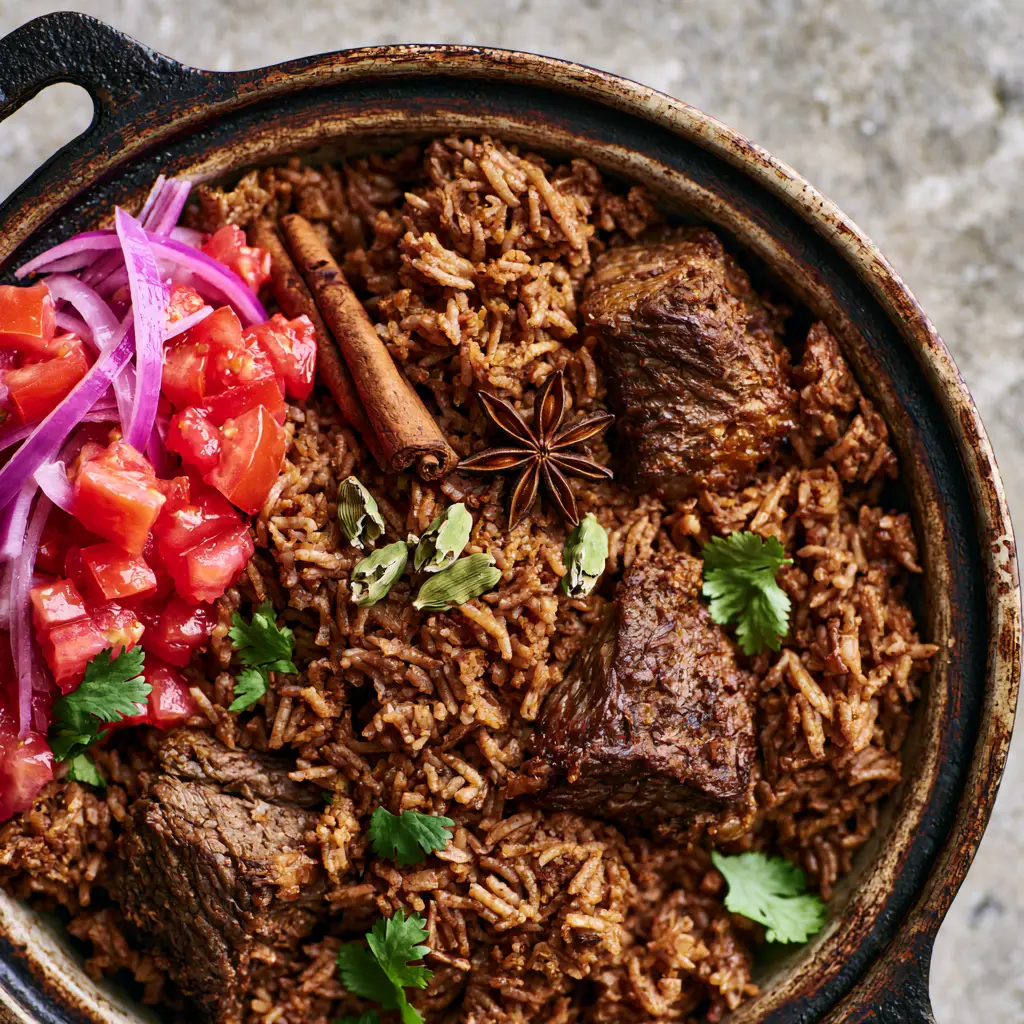
What sets this East African Pilau Rice apart from a standard biryani or a Ghanaian Jollof rice is the specific technique of “browning” without the use of artificial colors or soy sauce. The beauty of this dish lies in its sophisticated simplicity and the following key characteristics:
- Separated Grain Perfection: Each grain of long-grain basmati remains individual, fluffy, and firm, avoiding the dreaded clumping often found in one-pot meals.
- The Mahogany Infusion: A rich, dark brown color achieved solely through the deep caramelization of red onions and the blooming of whole spices.
- Textural Contrast: Succulent, tender beef cubes with visible seared edges provide a meaty counterpoint to the aromatic rice.
- Visual Spice Profile: Whole cinnamon sticks, star anise, and cracked green cardamom pods are nestled within the rice, signaling the complexity of the flavor profile.
- Vibrant Side Garnish: The “Kachumbari” (a fresh tomato and onion salad) provides a sharp, acidic, and colorful contrast to the deep tones of the rice.
The Secret Pantry for Authentic Swahili Flavors
To achieve the result shown in our visual blueprint, you must curate specific ingredients that contribute to both the structural integrity and the flavor profile of the East African Pilau Rice. Each component plays a vital role in the final mahogany masterpiece.
Long-Grain Basmati Rice: 3 cups (600g). This variety is essential because its low starch content allows the grains to stay separate and elongated during the steaming process.
Beef Chuck or Stew Meat: 1.5 lbs (680g). Choosing a cut with a bit of marbling ensures the beef remains juicy even after being seared and simmered within the rice.
Red Onions: 2 large (300g), thinly sliced. These are the “engine” of the recipe; their natural sugars provide the deep mahogany color when caramelized to the brink of darkness.
Pilau Masala (The Spice Blend): 2 tbsp (12g). A potent mix of ground cumin, black pepper, cloves, cinnamon, and cardamom that creates the backbone of the dish’s aroma.
Whole Spices: 3 cinnamon sticks, 5 green cardamom pods (cracked), and 2 star anise. These are toasted in oil to release essential oils, providing a layered “top note” to the fragrance.
Fresh Garlic and Ginger Paste: 2 tbsp (30g). This aromatic base cuts through the richness of the beef and adds a necessary zing to the savory rice.
Diced Fresh Tomatoes: 2 medium (200g). While the onions provide color, the tomatoes add moisture and a slight acidity that balances the warm spices.
Vegetable Oil or Ghee: 4 tbsp (60ml). A high-smoke point fat is required to sear the beef properly and to coat each grain of rice, preventing them from sticking together.
Beef Broth or Water: 5 cups (1.2L). Using broth adds an extra layer of umami, though water is traditional and allows the spice flavors to shine purely.
Fresh Cilantro (Dhania): 1/2 cup (15g), chopped. This adds a final pop of green color and a herbal finish that brightens the entire plate.
Essential Tools for a Perfect One-Pot Result
Creating a professional-grade East African Pilau Rice requires tools that manage heat distribution effectively. Since we are aiming for that rustic, cast-iron look, your choice of cookware is paramount.
A heavy-bottomed Dutch oven or a seasoned cast iron pot is the best choice for this recipe. These vessels retain heat evenly, which is crucial for achieving the Maillard reaction on the beef and for even steaming of the rice later on.
You will also need a fine-mesh strainer to rinse the rice until the water runs clear. Removing excess surface starch is the “secret weapon” for ensuring those individual, non-clumpy grains that define high-quality Pilau.
Step-by-Step Mastery: Achieving the Perfect Mahogany Infusion
Step 1: The Maillard Reaction – Searing the Beef
Heat 2 tablespoons (30ml) of oil in your pot over medium-high heat. Add the beef cubes in a single layer, ensuring you don’t crowd the pan, which would cause the meat to steam rather than sear.
Look for the visual cue of deep, caramelized brown edges on the beef. This “crust” is where the concentrated savory flavor lives; once seared, remove the beef and set it aside on a plate.
Step 2: The Color Foundation – Caramelizing the Onions
In the same pot, add the remaining oil and the sliced red onions. This is the most critical stage for achieving the East African Pilau Rice color.
Sauté the onions until they are a very dark brown—much darker than you would for a standard stir-fry. They should look like charred mahogany; this is the pigment that will eventually dye the rice grains naturally.
Step 3: Blooming the Aromatics
Lower the heat slightly and add the ginger-garlic paste, the Pilau Masala, the whole cinnamon sticks, star anise, and the cracked cardamom pods. Stir constantly for 60 seconds.
You will know it’s ready when the kitchen is filled with a spicy, warm aroma and the spices look slightly toasted. Add the diced tomatoes at this point, cooking until they soften and form a thick, dark paste.
Step 4: The Infusion Simmer
Return the seared beef to the pot and pour in the beef broth or water. Bring the mixture to a boil, then reduce the heat to low, cover, and simmer for 20-25 minutes.
This step ensures the beef is “fork-tender” and the liquid is fully saturated with the spice essence. The liquid should look like a dark tea at this stage.
Step 5: Toasting and Steaming the Basmati
Add the washed and drained rice to the pot. Stir gently to ensure every grain is coated in the dark liquid and spice oil. Increase the heat to bring it back to a gentle simmer.
Once the liquid level drops to just below the surface of the rice (you will see “steam holes” forming), cover the pot with a tight-fitting lid or a layer of foil followed by the lid. Reduce heat to the absolute lowest setting and steam for 18-20 minutes.
Step 6: The Fluff and Garnish
Turn off the heat and let the pot sit, undisturbed, for another 5 minutes. This allows the moisture to redistribute, preventing the grains from breaking when you fluff them.
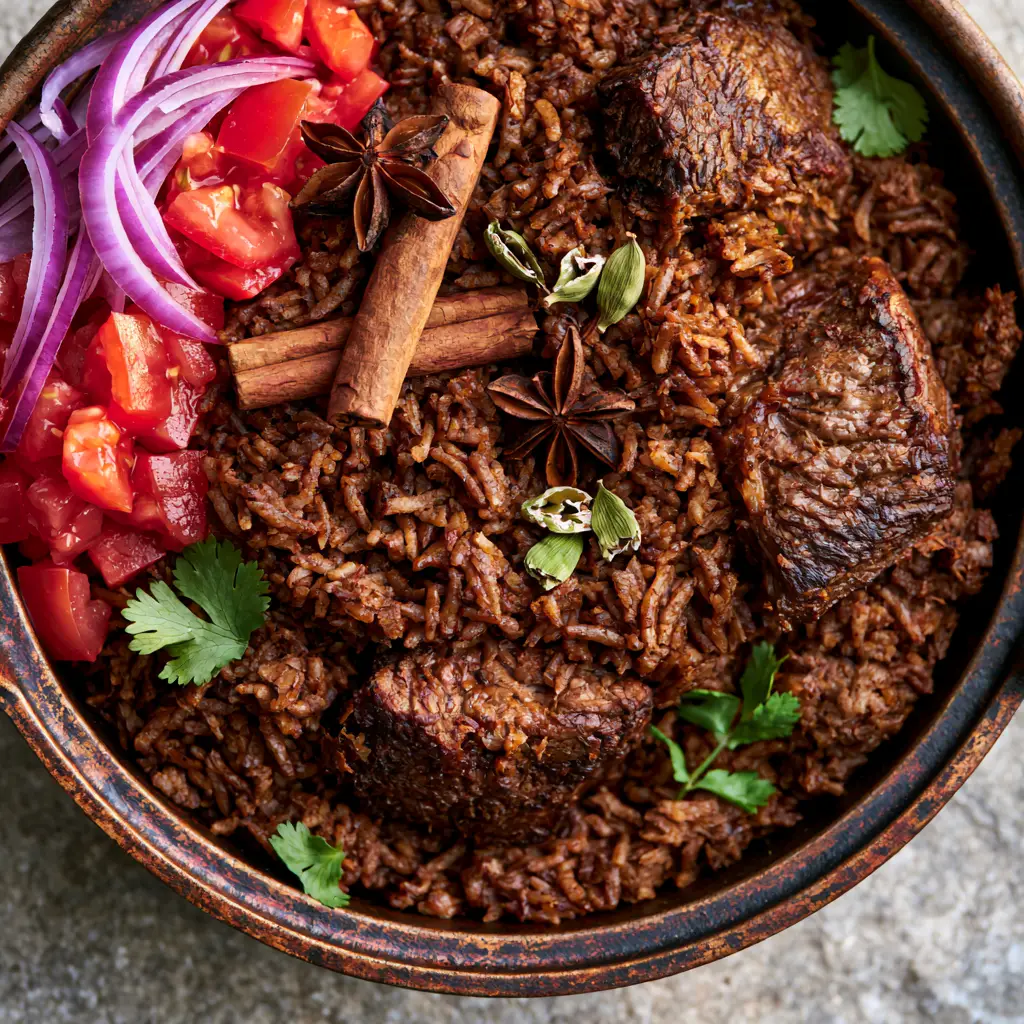
Use a fork to gently lift and fluff the rice, revealing the perfectly separated, mahogany-colored grains. Garnish with fresh cilantro and serve with the vibrant Kachumbari on the side.
Expert Tips for Pilau Success
- Rinse, Rinse, Rinse: Never skip rinsing your basmati rice. Rinsing away the surface starch is the only way to achieve the “individual grain” look seen in the professional photos.
- Don’t Fear the Dark Onions: Many beginners pull the onions off the heat too early. To get that rich brown color, the onions must be very dark—just a few seconds away from burning.
- The Foil Trick: If your pot lid isn’t perfectly airtight, place a piece of aluminum foil over the pot before putting the lid on. This traps every bit of steam, ensuring the rice cooks through without becoming mushy.
- Salt Timing: Season your broth slightly more than you think you need. The rice will absorb the salt, and a well-seasoned broth leads to a perfectly seasoned grain.
The Best Ways to Store and Reheat Your Pilau
East African Pilau Rice is one of those rare dishes that tastes even better the next day as the spices continue to meld. Store leftovers in an airtight container in the refrigerator for up to 4 days.
When reheating, avoid the microwave if possible, as it can dry out the beef. Instead, place the rice in a skillet with a tablespoon (15ml) of water, cover, and heat on low until steaming. This “re-steams” the rice, restoring its fluffy texture.
This dish also freezes beautifully. Place cooled rice in freezer-safe bags and store for up to 3 months. Thaw overnight in the fridge before reheating using the skillet method mentioned above.
Perfect Pairings for a Complete African Feast
While this beef pilau is a meal in itself, it truly shines when paired with traditional sides that offer a break from the warm spice profile. The classic accompaniment is Kachumbari—a simple mix of tomatoes, onions, and lime juice.
For those who love variety, you can serve this alongside other heritage recipes. If you’re looking for a refreshing vegetable side that isn’t traditional but complements the spices well, consider these chilled cucumber salads or even a simple sautéed zucchini.
If you have leftover seared beef or want to experiment with different meat textures, you might find inspiration in these garlic butter steak bites for a fusion twist. The richness of the butter sauce pairs surprisingly well with the dry heat of the Pilau spices.
Frequently Asked Questions
Yes! Chicken Pilau is very popular. Use bone-in chicken thighs for the best flavor, and sear them just like the beef to ensure they contribute to the mahogany color and savory depth.
Yes, it is traditional to serve the rice with the whole cinnamon sticks and cardamom pods. They continue to infuse flavor, though you should avoid eating the whole spices themselves.
The deep mahogany color comes from caramelizing the red onions until they are a very dark brown. This, combined with the Pilau Masala spice blend, naturally dyes the rice grains during the steaming process.
Authentic Pilau Masala is a warm blend of ground cumin, black pepper, cloves, cinnamon, and cardamom. Some variations also include a touch of ginger or garlic powder.
Mushy rice is usually caused by excess starch or too much liquid. Always rinse your basmati rice until the water runs clear to remove surface starch, and ensure you follow the 1:1.5 or 1:2 rice-to-liquid ratio strictly.
The Ultimate East African Beef Pilau Recipe
East African Pilau Rice: The Ultimate Guide to Fragrant Beef and Spice-Infused Basmati
Ingredients
Equipment
Method
- Rinse the basmati rice in cold water multiple times until the water runs completely clear. Soak for 20 minutes, then drain.
- Heat oil in the pot. Sear beef cubes until they have deep, caramelized brown edges. Remove and set aside.
- In the same oil, fry the red onions until they reach a dark mahogany brown color. This is the key to the rice's color.
- Add ginger-garlic paste, Pilau Masala, cinnamon, cardamom, and star anise. Stir for 1 minute until fragrant. Add tomatoes and cook until soft.
- Add seared beef and broth. Bring to a boil, then simmer for 20 minutes on low heat until beef is tender.
- Stir in the drained rice. Bring to a simmer. Once liquid is mostly absorbed, cover tightly and steam on the lowest heat for 20 minutes.
- Remove from heat, let rest for 5 minutes. Fluff with a fork and garnish with fresh cilantro and diced tomatoes/onions.
Notes
If you don't have Pilau Masala, blend cumin, cloves, cardamom, cinnamon, and black pepper.
Bring the Flavors of East Africa to Your Kitchen
Mastering the East African Pilau Rice is a milestone for any home cook. It is a dish that proves how simple ingredients—onions, rice, and beef—can be transformed into something regal through the power of technique and spice. The deep mahogany color and the aromatic steam rising from the pot are guaranteed to impress your guests and satisfy your cravings for authentic world flavors.
Did you manage to get that perfect mahogany glow? We would love to hear about your culinary journey! Leave a comment below, share your results, and don’t forget to follow us on Pinterest for more global recipe inspiration. Pin this recipe to your “World Cuisines” board so you always have it on hand!