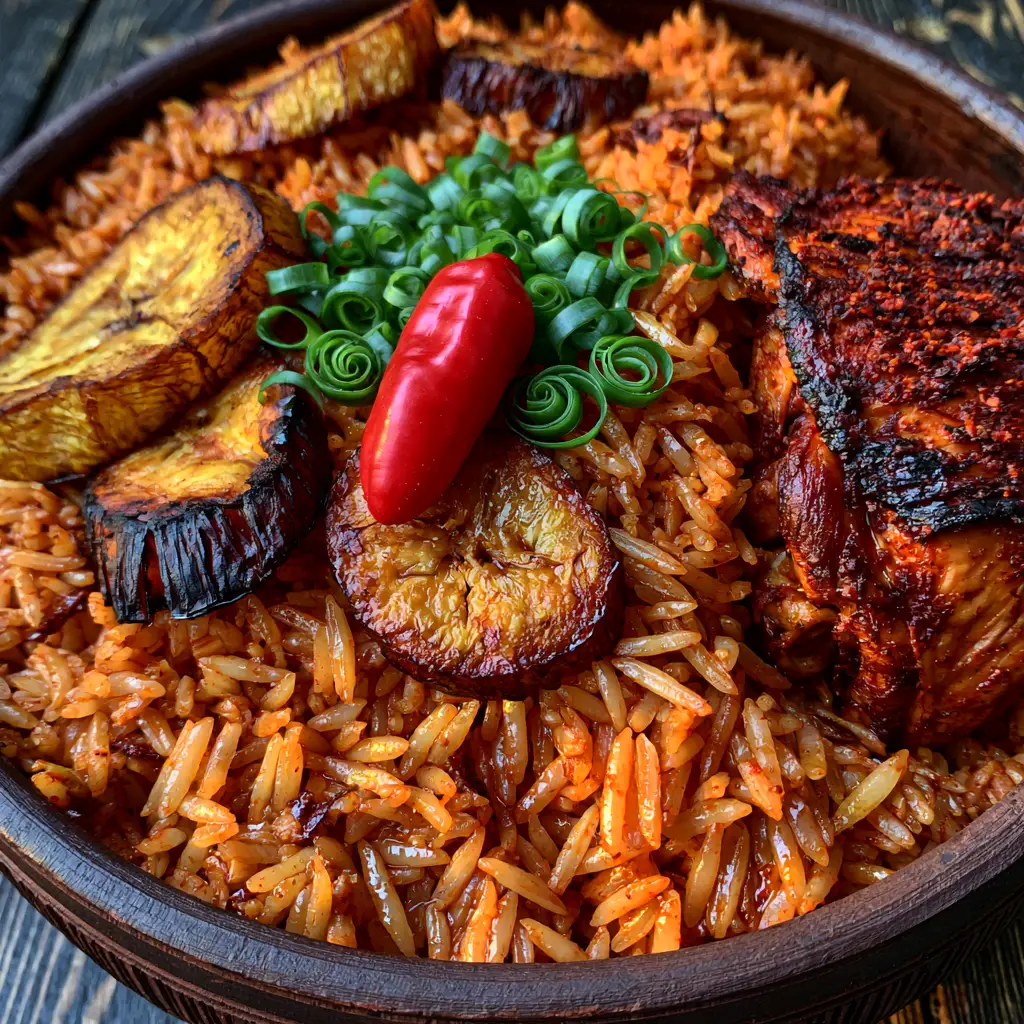
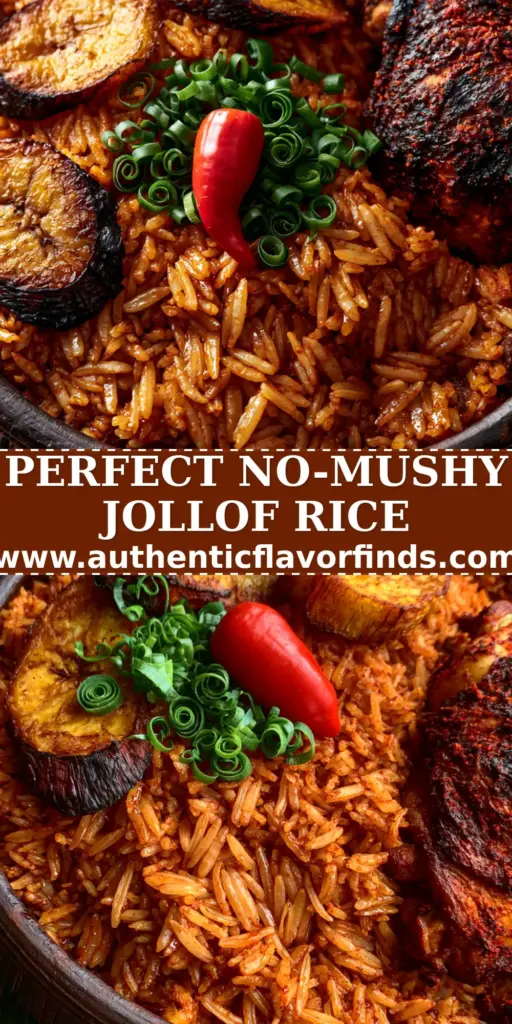
There is nothing quite like the sight of a steaming Asanka bowl filled with authentic Ghanaian jollof rice. The deep, reddish-orange hue of the rice, glistening under soft morning sunlight, promises a symphony of spice, smoke, and savory depth.
In this guide, we are diving deep into the art of West African “party rice.” We will ensure every individual grain of long-grain parboiled rice is perfectly separated and infused with a rich tomato and red pepper stew base.
From the caramelized edges of fried plantains to the succulent, charred skin of grilled chicken thighs, this recipe captures the forensic visual accuracy of a true Ghanaian feast. Let’s master the techniques required to achieve that iconic, non-clumpy texture and vibrant color.
The Visual and Culinary Appeal of This West African Icon
- Perfectly Defined Grains: Using parboiled long-grain rice ensures a glistening, individual texture that never turns to mush.
- Rich Crimson Stew Base: A concentrated blend of roasted peppers and tomatoes provides the signature deep orange-red color.
- The “Bottom Pot” Essence: Learn how to achieve a subtle smokiness that mimics the traditional firewood cooking method.
- Vibrant Textural Contrast: Sliced fresh green scallions and a whole red scotch bonnet pepper provide an elite aesthetic finish and aromatic heat.
- Caramelized Sweetness: Golden-brown fried plantains with dark, sugary edges balance the savory heat of the rice perfectly.
The Essential Pantry for Authentic West African Flavor
To achieve the result seen in high-end food photography, we must start with the correct aromatics. Ginger and garlic are the heartbeat of the Ghanaian jollof rice flavor profile, providing a sharp, warming base.
Long-Grain Parboiled Rice: 3 cups (600g) of parboiled rice are essential. Unlike standard basmati, parboiled rice has been partially boiled in the husk, which helps it maintain its structural integrity during the long steaming process.
The “Obonu” Stew Components: You will need 4 medium Roma tomatoes (approx. 400g) and 2 large red bell peppers (300g). These are blended to create the thick, colorful base that stains the rice that iconic reddish-orange.
Ginger and Garlic Aromatics: A 3-inch (7.5cm) piece of fresh ginger and 6 cloves of garlic are non-negotiable. These are blended into the stew base to provide an underlying zesty heat that defines the Ghanaian variation.
Chicken Thighs with Skin: 4-6 bone-in, skin-on chicken thighs (approx. 1kg). The skin is vital for achieving that deeply charred, spicy visual described in our blueprint.
The Garnish & Heat: 1 whole red scotch bonnet pepper and 3 scallions (green onions). The scallions should be sliced into precise curls, while the scotch bonnet remains whole to perfume the pot without overwhelming it with heat.
Sweet Plantains: 2 very ripe plantains (yellow with black spots). These will be fried to create those dark caramelized edges that look stunning against the orange rice.
Implicit Foundations: You will also need 1/2 cup (120ml) of vegetable oil for the stew, 2 medium red onions (200g), 3 tbsp (45g) of tomato paste, 2 tsp (10g) of salt, and 1 tbsp (15g) of chicken bouillon powder.
Must-Have Tools for the Professional Home Cook
A heavy-bottomed pot or a Dutch oven is the most important tool for cooking Ghanaian jollof rice. It ensures even heat distribution, which prevents the rice from scorching unevenly while it steams.
You will also need a high-speed blender to achieve a perfectly smooth tomato and pepper purée. For the garnish, a sharp chef’s knife is required to create those delicate green scallion curls.
Finally, a roll of aluminum foil is the “secret weapon” for the steaming phase. It creates a tight seal under the lid, trapping the steam and ensuring every grain of rice cooks through without needing excess water.
Step 1: Preparing the Charred Spice-Rubbed Chicken
Start by marinating the chicken thighs in a blend of salt, half of the minced ginger, and a teaspoon of bouillon. Ensure the skin is dry before seasoning to help it crisp up later.
Heat a grill or cast-iron skillet over medium-high heat. Sear the chicken skin-side down until the fat renders and the skin becomes deeply charred and spicy in appearance.
Transfer the chicken to an oven set at 375°F (190°C) to finish cooking through while you prepare the rice. The goal is succulent meat with a skin that looks rustic and slightly blackened in spots.
Step 2: Crafting the Deep Red Stew Base
Blend the tomatoes, red bell peppers, the remaining ginger, and the garlic until smooth. In your large pot, heat the vegetable oil and fry the finely diced red onions until translucent.
Add the tomato paste to the oil and fry for 3-5 minutes. This step is crucial; you want the paste to lose its raw acidity and turn a dark, brick-red color.
Pour in the blended pepper mix. Simmer over medium heat for 15-20 minutes, stirring occasionally, until the oil begins to separate from the sauce and rises to the top.
Step 3: The Secret to Perfectly Separated Rice Grains
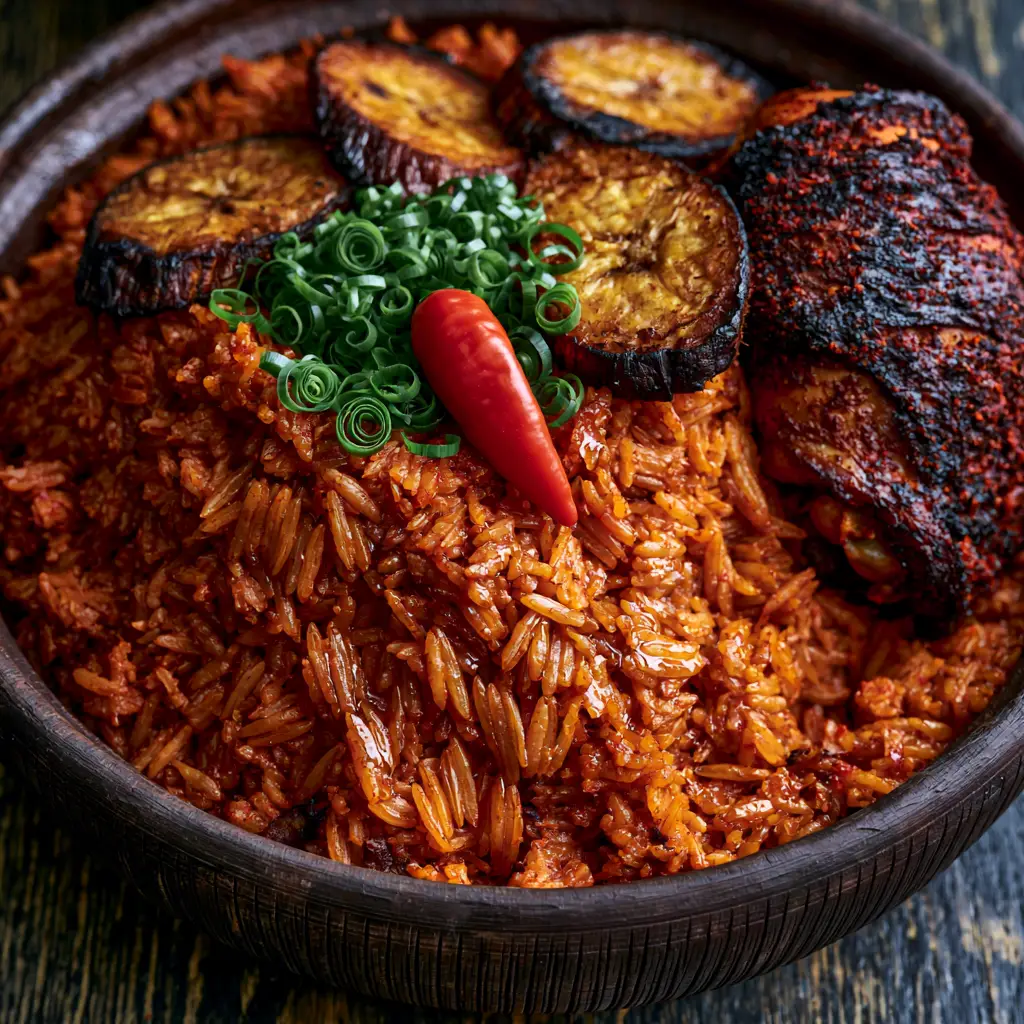
Wash the long-grain parboiled rice in a fine-mesh sieve under cold water until the water runs completely clear. This removes excess surface starch which is the primary cause of clumpy jollof.
Add the washed rice to the simmering stew base. Stir thoroughly to ensure every grain is coated in the glistening, flavorful oil and tomato mixture.
Add just enough chicken stock or water to barely cover the rice (usually a 1:1 ratio or slightly less since the stew is liquid). Unlike Nigerian Jollof rice, which often uses more water, Ghanaian jollof relies heavily on steam.
Place the whole red scotch bonnet pepper on top of the rice. Cover the pot with a layer of aluminum foil, then press the lid on tightly to create a pressurized environment.
Step 4: Caramelizing the Golden Plantains
While the rice steams on low heat for 25-30 minutes, prepare your plantains. Slice them on a sharp bias, about 1/2 inch (1cm) thick.
Fry in hot oil until they are golden-brown with dark, caramelized edges. These should be soft in the middle but slightly crisp on the perimeter.
Drain the plantains on paper towels. Their sweetness is the perfect foil for the bold, savory spices of the Ghanaian jollof rice.
Expert Tips for Success
- The “No-Stir” Rule: Once the foil is on, do not open the pot for at least 20 minutes. Peeking lets out the steam required to soften the parboiled grains.
- Manage the Heat: If your rice is still hard but the liquid is gone, add a splash of water *around* the edges and reseal the foil immediately.
- The Burn is Good: A slightly scorched bottom (the “party bottom”) adds an authentic smoky aroma to the entire pot.
- Slicing Scallions: Place scallion greens in ice water after slicing; they will curl up into the beautiful shapes seen in professional food photography.
Serving Suggestions and Flavor Pairings
Serve the rice in a traditional Asanka bowl to maintain heat and provide a rustic aesthetic. Place the charred chicken thigh and fried plantains on top, then garnish with the scallion curls and the steamed scotch bonnet.
For a lighter side, this dish pairs beautifully with a crisp chilled cucumber salad or a spicy zucchini and chickpea skillet.
If you enjoy rice-centric meals, you might also find our Moroccan chicken and rice (coming soon) or our aromatic East African pilau to be exciting additions to your rotation.
Frequently Asked Questions
You can, but the texture will be different. Basmati is softer and more prone to breaking. If using Basmati, reduce the liquid further and shorten the steaming time.
Allow the bottom of the rice to slightly scorch (create a ‘party bottom’). The trapped steam will carry that slightly burnt, smoky aroma throughout the rest of the grains.
Ghanaian Jollof typically uses long-grain parboiled rice and has a more pronounced ginger and garlic flavor profile, whereas Nigerian Jollof often uses long-grain basmati and focuses more on a smoky, tomato-heavy base.
Mushy rice is usually caused by using too much water or not washing the starch off the rice. Use long-grain parboiled rice, wash it until the water is clear, and rely on steam (foil seal) rather than excess liquid.
Authentic Ghanaian Jollof Rice Recipe
Ghanaian Jollof Rice: The Ultimate Guide to Perfect Smoky Grains and Charred Chicken
Ingredients
Equipment
Method
- Season chicken thighs with ginger, garlic, and bouillon. Sear skin-side down in a hot pan until charred and crisp, then finish in the oven at 375°F (190°C).
- Sauté diced onions and tomato paste in oil until dark red. Add blended tomato and pepper mix and simmer until oil separates.
- Stir washed parboiled rice into the stew. Add minimal stock, top with a scotch bonnet, seal tightly with foil and a lid, and steam on low for 30 minutes.
- Fry sliced ripe plantains until golden-brown with dark caramelized edges.
Notes
Do not omit the aluminum foil seal; it is the secret to even cooking.
Mastering the Art of West African Cuisine
Ghanaian jollof rice is more than just a meal; it is a cultural staple that represents celebration and culinary pride. By focusing on the quality of your stew base and the precision of your steaming technique, you can recreate this iconic dish with professional results.
The combination of individual, glistening grains and the smoky, spicy depth of the charred chicken makes this a recipe your family will request again and again. Don’t forget to share your results and tag us!
If you loved this recipe, please leave a comment below and share this post to your favorite board on Pinterest.